Category: TV Reality (Page 8 of 18)

2009: A Year’s Worth of Interviews – The Top 100 Quotes

Some people think that the life of a work-at-home entertainment writer is one of the most lax jobs out there, since the perception is generally is that all you do is sit around and watch DVDs, occasionally venture out of the house to see movies or concerts, and then sit in front of the computer and write about them. Okay, it’s a fair cop. But when you throw interviews into the mix, there’s a bit more work involved. First, you’ve got to get the interview (they aren’t always handed to you on a silver platter), then you’ve got to do the research to make sure that you can ask some halfway knowledgeable questions, and after you conduct the interview, let’s not forget that you’ve got to transcribe it, too. In other words, yes, there really is work involved…and when I went back and discovered that I’d done well over 130 interviews during the course of 2009, I suddenly realized why I’m so tired all the time.

For your reading enjoyment, I’ve pulled together a list of 100 of my favorite quotes from the various interviews I conducted for Premium Hollywood, Bullz-Eye, Popdose, and The Virginian-Pilot this year, along with the links to the original pieces where available. As you can see, I had some extremely interesting conversations in 2009. Let us all keep our fingers crossed that I’m able to chat with just as many fascinating individuals in 2010…
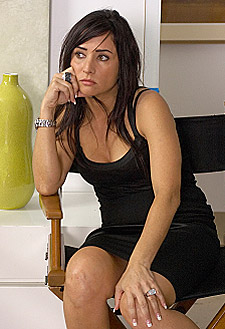
1. Pamela Adlon: “In the first season (of ‘Californication’), when we had the threesome with the nipple clamps, I was, like, ‘I don’t get this, I don’t know how you’re gonna do it.’ And then, all of a sudden, there’s a crane with a camera hanging over our heads, and you’re, like, ‘Okayyyyyyy. But how are you gonna sell this? How are you gonna make it work?’ And they ended up shooting it brilliantly, cutting it together, and it just all ended up working without me having to compromise my own personal morals.”

2. Jonathan Ames: “After my first novel, my mother said to me, ‘Why don’t you make your writing more funny? You’re so funny in person.’ Because my first novel was rather dark. And I don’t know, but something about what she said was true. ‘Yes, why don’t I?’ Maybe I was afraid to be funny in the writing. But since then, seven books later, almost everything I’ve done has a comedic edge to it.”
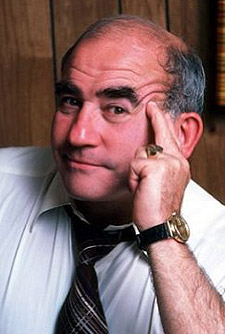
3. Ed Asner: “I loved journalism until the day my journalism teacher, a man I revered, came by my desk and said, ‘Are you planning on going into journalism?’ I said, ‘Yeah.’ He said, ‘I wouldn’t.’ I said, ‘Well, why not?’ He said, ‘You can’t make a living.’”

4. Sean Astin: “When somebody brings up a movie (of mine) that I haven’t heard about in a long time, I feel like a 70-year-old pitcher at a bar somewhere, and somebody walks in and says, ‘Oh, my God, I was in St. Louis and I saw you. You pitched a shutout.’ It’s real. I really did do that, because someone today remembers it.”

5. Darryl Bell: “The legend of ‘Homeboys in Outer Space’ has become much more incendiary than the actual show. It’s funny how I usually challenge most people who talk about how much they disliked ‘Homeboys’ to name me five episodes. Most of them can’t, because they just bought into the ‘oh, it’s awful, just the title. Oh, it’s terrible.’ What’s interesting is that I had a great conversation with Chi McBride, who was doing ‘The Secret Diary of Desmond Pfeiffer,’ which, if you want to talk about in terms of the imagery of what was wrong, that show was much more infamous than ‘Homeboys.’ Yet it’s not remembered in the same way because the title didn’t grab you in the same way. I remember Chi pulled me aside and he was, like, ‘Look, everyone who is criticizing what you’re doing would take your job from you in two seconds. All of them. So all I can tell you is that this is one blip on both of our careers, and we are moving on.’”

6. Adam Campbell: “For some reason, people always pick on the British sensibility, and we always come across as stupid, but remember: we used to run this country!”
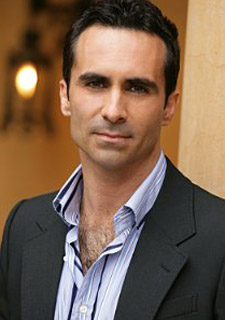
7. Nestor Carbonell: “Let me make this perfectly clear: I do not wear make-up, and I do not wear eye-liner. This is something I’ve had to deal with my whole life. I remember I was in college in Boston, I had a commercial agent, and they sent me out for some print commercial stuff. And they called me into the office and said, ‘Look, we called you in to talk to you because we just want you to know that…well, we don’t think you need to wear eyeliner.’ And I’m, like, ‘What?’ ‘Yeah, it’s okay, you don’t have to wear it for print ads.’ ‘No, I’m not wearing eyeliner!’ And I kept dabbing my eyes and saying, ‘Look! No eyeliner! I’m not wearing any!’”

8. Elaine Cassidy: “The last two days of shooting (‘Harper’s Island’) was probably the most hardcore, the coldest anyone has ever been. It was like your head was freezing, and my motivation for most scenes was, ‘The minute this scene is over, I’m heading straight over to that heater to get warm.’”
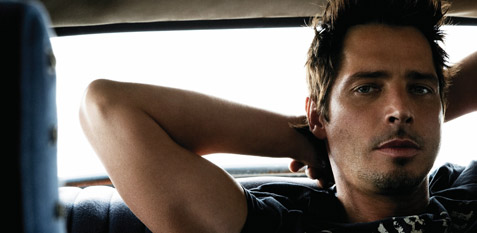
9. Chris Cornell: “I started as a drummer, so I sort of took on singing duties by default. I had sung backgrounds and some lead vocals from behind the drums in different bands that I’d been in, and I’d gotten great responses for the songs I would sing. I really started pursuing the possibility of being a lead singer based on the fact that I was working a full-time restaurant job and then playing gigs at night, hauling drums around. One day, it just dawned on me that, ‘Hey, I could be in a band and be the singer, and it would be a lot easier!’”

Continue reading »

TV/media in the 2000s: 10 (or so) key voices in left/right political media

Politically speaking, the aughts have been one long, strange trip. Just think about what we’ve seen this decade: a disputed presidential election in 2000, the largest terrorist attack in world history occurring on U.S. soil in 2001, followed by two wars, the partial erasure of New Orleans and much of the Gulf Coast, a congressional changing of the guard, the election of the first African-American president as well as the first with a foreign-sounding name, and the probable passage of a health care package which, depending on your point of view, is either historic, a mystery, a bit of a sham, or the first step on the road to a Stalinist U.S. of A.

Bubbling beneath all of this has been a series of remarkable changes in the world of media — television, movies, radio, and this thing we call the Internet — that have had a fairly profound impact on politics and, therefore, on real life. What follows are my choices for the ten most interesting and/or influential figures in the realm of political media. To try and slightly compensate for my obvious liberal bias (my side is far more facty, I tell ya!), I’ve got five spots each for conservative and liberal media figures respectively and I’ll be alternating and counting down from the bottom.

#5 Conservative

Trey Parker and Matt Stone — It’s possible that most regular viewers of “South Park” have little idea that Parker and Stone are self-described Republicans and I’m sure most of you don’t think of it as that much of a political show, even though rather subtle and often quite penetrating and/or infuriating thoughts about politics run through many, if not most, episodes. That’s because, like all great satirists, they are just as good at poking holes in the pretensions of their own side as that of the opposition, and their social liberalism puts them so at odds with the increasingly extremist faction that now controls much of the Republican party that some could easily mistake them for liberals. Actually, right now it’s easy to imagine them ditching the party indefinitely, along with any number of smart fellow conservatives who have already done so publicly.

parker-stone

Still, conservative and/or anti-liberal messages are often found on episodes of “South Park,” including attacks on such personal friends of the pair as George Clooney. Indeed, as early as 2001, famed blogger Andrew Sullivan described himself as a “South Park Republican.” (Sullivan is now one of those smart conservative ex-Republicans I mentioned above.) And, of course, there was no stronger, and certainly no funnier, attack on the antiwar efforts of the American left than “Team America: World Police” which had marionette versions of Michael Moore, Alec Baldwin, Matt Damon, and Janeane Garofalo working in tandem with North Korean madman Kim Jong-il in his plans to destroy Western civilization.

Since the film’s release in 2004, more doctrinaire conservatives have tried to follow suit with such liberal-bashing comedies as “An American Carol” and “The 1/2 Hour News Hour,” a truly wretched attempt to craft a conservative alternative to “The Daily Show,” but only Parker and Stone have been able to bash liberals and their ideas and make targets like Alec Baldwin love it.

Continue reading »

TV of the 2000s: 5 British Series That Didn’t Translate Nearly As Well As “The Office”

In “Star Trek II: The Wrath of Khan,” Spock casually observed, “As a matter of cosmic history, it has always been easier to destroy than create.” As such, it should come as no surprise that, when the networks have the opportunity to avoid creating something new in favor of destroying something old, they damned well take it. As we continue our look back at the TV of the 2000s, we decided to revisit several of the networks’ attempts to adapt popular British series to match American sensibilities. As “The Office” has proven, they can sometimes make it work, but as these five shows remind us, they very often can’t.

5. Eleventh Hour (CBS): In 2006, ITV broadcast a four-part series entitled “Eleventh Hour,” starring Patrick Stewart as Professor Ian Hood, a special advisor of the British government’s Joint Science Committee who investigated threats related to various scientific developments and experiments. Each episode was 90 minutes in length, and it was received well enough in the UK that CBS immediately set forth on a quest to develop the concept into a weekly series in the States. Stewart was switched out for another talented Brit – Rufus Sewell – and even though he dropped his accent in favor of going “American” with his character (now renamed Jacob Hood), we were still optimistic about the series. Alas, despite an intriguing premise, the adaptation suffered from a couple of major problems.

First off, critics perceived the show as “troubled” before its premiere because of the delay in releasing the first episode for review, but, fair enough, many series have managed to survive that particular issue. The bigger problem came from CBS’s steadfast determination to make “Eleventh Hour” fit into the same procedural mold utilized by all of its other series. As such, the predominant thrust tended to be about the crime of the week, leaving not nearly enough focus on Dr. Hood, whose considerable knowledge on scientific matters makes him an enigma. Viewers should’ve been left wondering, “Who is this guy? What’s his story?” But just as we were starting to learn about Hood’s past and getting the impression that he might actually be able to find romance for the first time since the death of his wife, the series steered back into a let’s-stick-to-the-case mindset, making its cancellation after only 18 episodes less disappointing than it might otherwise have been.

4. Worst Week (CBS): The original series – which bore the slightly longer title of “The Worst Week of My Life” – had three incarnations. The first focused on the week leading up to the marriage of its two lead characters, the second shone the spotlight on the week before the birth of their first child, and the whole thing culminated in a three-part holiday special entitled “The Worst Christmas of My Life.” Anyone who enjoys a good bit of slapstick would see the merit in trying to adapt the series for an American audience, but after watching the pilot, I wrote, “Despite the first episode being thoroughly hilarious, it’s hard to imagine how they’re going to keep up that kind of momentum on a weekly basis.” What I didn’t write – but what I did indeed wonder – was why, given how much testing goes into television nowadays, they didn’t change the title. I mean, c’mon, if you watched the show, then don’t tell me you didn’t find yourself wondering from Episode #1 just how long they were planning to drag things out. In the end, “Worst Week” ran for 16 episodes, and given that its final episode* was entitled “The Epidural,” it’s clear that the series never had a chance to expand much beyond its source material. Not that they could’ve managed it much faster: getting from premiere to bringing the pregnancy to fruition within five months is certainly nothing to sneeze at. Still, with all British-adapted series, the rule of thumb is that you should create your own identity as quickly as possible…and they didn’t.

* As far as the show’s chronology is concerned, anyway. The actual final episode was entitled “The Party,” and it should’ve actually been the fifth episode. Instead, it was held back from the initial run and was later (and somewhat inexplicably) thrown into the network’s Saturday night schedule some four months after “The Epidiural” aired.

Continue reading »

TV in the 2000s: The Shows that Defined the Decade

A recent issue of Time magazine has the phrase “The Decade from Hell” emblazoned across its front cover. It’s referring to everything America has gone through in the past ten years, and it’s difficult to argue such an assertion: it’s been a shitty decade on a national level. During such times of stress, people inevitably turn to entertainment as a form of release, and although the methods in which we’ve distracted ourselves over the last ten years have unquestionably diversified, television remains the most easily accessible outlet for most Americans.

Within the format itself, the whole concept of reality TV must surely have been the biggest revolution of the decade. It’s really easy to bag on reality TV – mostly because the bulk of it is so damned unreal – but anybody who spends any time in front of the tube has surely had at least a couple of reality series they consider appointment TV. The two concepts that paved the way for everything else are undoubtedly “Survivor” and “American Idol.” The former, of course, opened the floodgates for the genre, and while it’s seen a considerable dip in the ratings department over the years, 12 million viewers isn’t a viewing figure to sneeze at. The latter, despite all the bitching and moaning and cries of “it’s not as good as it used to be” that accompany each new season, remains one of the most watched shows on the tube, likely due to the fact that it’s strictly a talent competition.

On “American Idol,” the only backstabbers are the judges, and since they aren’t part of the competition, their amusing duplicity is championed. The contestants, on the other hand, are innocents, and once the competition is underway, we’re given no peek into any possible backstage drama, which is a good thing, because by the time the audition rounds are over, we’ve had enough drama to last the whole season. Everything that comes after is all about who can best transfix us for three minutes a week via one pop ditty. It actually says something positive about the U.S. that “American Idol” remains our #1 form of reality entertainment, even if the actual reality is that the vast majority of Americans couldn’t care less about buying the winner’s album six months after they’re crowned.

You might think reality TV is a bunch of crap, and in most cases you’d be right, but the whole idea of it, to my mind, led to an important revolution, and that is serialized nighttime television (the classic “soap” formula notwithstanding). Reality shows taught viewers how to become invested in characters, how to be concerned for their eventual fate, and, most importantly, how to pay attention to an ongoing storyline, and the need to tune in every week. It didn’t take long for the networks to figure out that there was an audience for shows that didn’t continually hit the reset button. “24” must have been the first successful show of the decade to embrace the serial formula, and it embraced it whole hog. It required you to tune in for every episode, because each installment was another hour of a single day in the life of Kiefer Sutherland’s Jack Bauer. That “24” premiered less than two months after the terrorist attacks on 9/11 was pure happenstance. That it became enormously popular with viewers? Probably not so much. America needed some fictitious reassurance that there were folks on the job who could get shit done, and “24” filled the prescription.

Strangely, “24” didn’t open the network floodgates for more such programming right away. It took a few years, and then “Lost” made its mark. The number of “Lost” episodes I’ve seen could be counted on two hands, but that’s not because I didn’t like it, but because real life got in the way of it being appointment TV. Yet I viewed the pilot for “Lost” several months before its 2004 premiere, and when it ended I was convinced that I’d seen the second best TV pilot ever made. (“Twin Peaks” stills sits at #1.) The fact that a show as intricate as “Lost” still has a hardcore, central audience is perhaps a testament to that pilot. “24” started a new story with each new season; “Lost” required that you tune in for every episode of every season.

Another sci-fi series that did just that was “Battlestar Galactica,” a show that, due it being on a niche network (Syfy), never amassed a huge audience yet snagged boatloads of publicity and awareness nonetheless. It was no small feat to take an utterly laughable short-lived series from the late ‘70s and re-envision it for modern audiences, but Ron Moore and company did just that…and they did it far more successfully that anyone ever guessed possible. Most amazingly, the show taught us a lot about ourselves, by thoroughly defining what it means to be human, and as the damaged ‘00s dragged on, there may not have been a more important lesson to be learned.

On the same day I saw the “Lost” pilot, I saw another pilot for a completely different kind of series. While I didn’t rank it as one of the greats, there was one thing I was sure of: it would be a massive hit…and it was. “Desperate Housewives” was precisely the sort of vapid, soapy fare that had been absent for far too long on American TV. It clued into the seemingly bland suburban construct which surrounds so many Americans, via the Lynchian notion that “all is not what it seems.” Most anyone who lives a suburban life can no doubt relate to that idea, because wherever there are groups of people, there are bound to be some of them that are fucked up. “Housewives” is littered with fucked up suburbanites of all shapes, sizes and types, but they’re kooky and funny and there’s always some twinkly music playing in the background that in the end makes everything OK. It is not great television, but over the years it has, for the most part, been immensely watchable in the most disposable sort of way.

Around the same time period as “Housewives,” “Grey’s Anatomy,” made some major waves. It’s a series I have never watched and never plan to, but I’d be foolish to omit it from discussion since it brought two annoyingly obnoxious terms to the TV table: McDreamy and McSteamy. I haven’t heard either in a few years, but there was a time when they seemed to define everything that was wrong with television. I assume “Grey’s” fans have grown out of it…or maybe the show killed one of those guys off? I’ve no idea and can’t be motivated to investigate. Presently, there’s a brand new version of it going around, through cinema, via Camp Edward and Camp Nimrod. People can be so easily distracted it makes you wonder why some shows actually try harder.

Continue reading »

Dancing with the Stars 9.21 — Season Finale

Osmond


Given the time of year, I’ve been very busy, so that’s why I’m posting my thoughts on the season finale of “Dancing with the Stars” a bit late. I’m still angry at the outcome.

Looking at each of the 16 couples out there, I can’t believe how long I’ve been writing about the show. It’s been a learning experience, that’s for sure. Hopefully this knowledge will be of use someday, but I’m having trouble picturing that scenario.

We haven’t seen Whitney Houston for a while. How many comebacks does one get before they’re just a nostalgia act? An artist can’t fail on their first comeback and then call their return a few years later another comeback. A comeback somehow implies success. I’d call Whitney Houston’s current situation an “attempt.”

Ashley Hamilton looks like a Target model.

I guess it’s exciting to see all these celebrities back on the dance floor. I forgot Macy Gray was a contestant. Watching Natalie kick ass again, it’s obvious that she should be in the finals. She has the strength, flexibility, and finesse that is made for ballroom dancing. She’s the only one who could have given Mya a run for her money. I still have no clue why fans didn’t vote for her.

Kelly Osbourne with Louie Van Amstel (Viennese waltz)

So, Kelly and Louis just made everyone cry. You know, as much as I hate buying into the simple stories of some of these celebrities, Kelly Osbourne’s progress on this show is quite touching. She and I are about the same age, and I specifically remember watching her on “The Osbournes” and thinking she was a terror. She’s redeemed herself on this show in my book. I just hope she doesn’t make a sex tape or land another reality gig.

Mya with Dmitry Chaplin (jive)

Yeah, yeah, we get it — you guys are going to win.

Donny Osmond with Kym Johnson (Argentine tango)

Was this dance this boring the first time? I imagine the steps are virtually the same, but it’s missing the gusto an Argentine tango should contain. Also, Donny nearly dropped Kym at the end.

How in the hell did Donny and Kym get first place for this final dance? Kelly and Louie produced the waterworks and they get third? Not fair.

I didn’t really pay attention to the “Michael Irvin vs. Jerry Rice” segment. You didn’t either.

Aaron Carter is a talented dancer. One could make a case that he belongs in the finals. What is he going to do now that his time on the show is complete? Oh yeah, we didn’t really know what he was doing before he learned to do the rumba.

The group mambo with Joanna Krupa, Steve Wozniak, Jerry Springer, and Cloris Leachman barely kept me awake. Is the finale always two hours? That’s a very long time to make us wait just to find out who the champion is.

More Whitney Houston. She came back. Another comeback.

Kelly and Louis just got third place. When did I start writing these things? Three months ago? Wow. It truly must have been a life-changing experience for Kelly. She brought something new to the table every week and it’s been exciting to witness her success on this show.

Congratulations to Donny and Kym for winning Season 9 of “Dancing with the Stars.” Throughout this competition, I’ve complimented Donny’s ability to be both technical and entertaining.

Mya is a different type of dancer. What are the words I’m looking for? Oh yes, she’s a better dancer. She’s a better dancer than Donny — easily. Every time she and Dmitry took the floor, I would forget about my obligation to critique her routine. Seriously, what are her flaws? I challenge any of my readers to state a convincing argument why Donny deserved to win

Donny owes the state of Utah a huge “thank you.” I don’t know why I’m so angry. Donny seems like a good guy, but he must know that Mya got screwed.

Lap it up, Utah. You have the new “Dancing with the Stars” and MLS Cup champions.

« Older posts Newer posts »

© 2026 Premium Hollywood

Theme by Anders NorenUp ↑