Tag: American Idol (Page 18 of 28)

American Idol: more of the same

Fox’s “American Idol” returned last night for the start of its ninth season, and while they can rotate judges and air this show right after Simon Cowell announced he is leaving the show, they can’t change the fact that the talent or lack thereof ultimately drives this thing. Last night was no exception, as we had to endure the first of seven or eight episodes of those initial auditions, showing us the very polarizing best and worst of the lot.

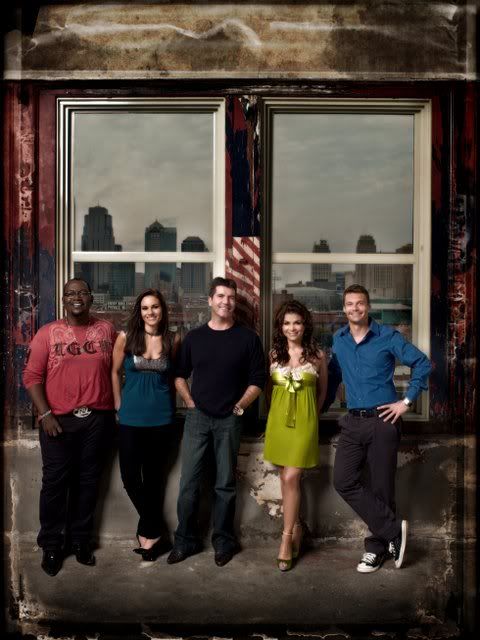
The first auditions were in Boston, and along with Cowell, the other judges were the returning Randy Jackson and Kara DioGuardi, with Victoria Beckham, a.k.a. Posh Spice, as a guest judge. As we do each season at this time, we’ll try to briefly summarize by separating the best and the worst.

Continue reading »

Breaking TCA News: Simon Cowell to leave “American Idol”

Fox’s executive panel at the TCA Press Tour was very late beginning this afternoon, but as Peter Rice (Chairman of Entertainment) and Kevin Reilly (President of Entertainment) took their seats, Rice assured the gathered group of television critics, “We have a good reason for keeping you waiting.”

He was right.

Minutes later, surprise guest Simon Cowell had stepped onto the stage, taken pen in hand, and officially signed the paperwork to bring his popular UK series, “The X Factor,” to Fox in 2011. He will serve as the show’s executive producer as well as a judge. There is, however, a down side to this development: it means that this will be Cowell’s final season as a judge on “American Idol.”

Prior to Cowell’s surprise arrival, Rice had acknowledged that Cowell’s future on Fox was directly connected to whether or not the network would pick up “The X Factor,” a series for which he has long established considerable passion.

“There has been a lot of speculation, partly because we didn’t have an an agreement,” said Cowell, after taking his seat. “We reached an agreement at about half past ten this morning.”

“More like half past eleven,” corrected Rice, with a laugh.

“I’ve always had a fantastic relationship with Fox,” Cowell continued. “We did talk about me staying on both shows, but then when we looked at the practicalities of that, it was just impossible. I made a commitment to staying on the show in the UK, and I didn’t think it was right for me to also do two shows in America. I can barely manage to do ‘American Idol’! We had a lot of discussions about it, a meeting with Peter in October, but it was done very gentlemanly, the whole thing.”

As far as Cowell’s departure from “American Idol,” he likens it to having a good player on a good football team: they work well together, but when the player retires, the team is still successful. In the end, it comes down to the fact that “American Idol” is not Cowell’s show, whereas “The X Factor” is.

“It’s still close to me,” he said, “and I made sure that ‘Idol’ would be protected. The show could last for ten or twenty more years. I’m confident that it will continue to be the #1 show, and everyone’s committed to keeping it that way.”

Rice described Cowell as “irreplaceable,” taking a pass on making any comment about who the network might be pursuing to fill his spot on the series while offering assurances that the network is fully aware of the necessity of maintaining the same level of energy for “American Idol.”

TCA Press Tour: CBS Executive Session

Nina Tassler, President of CBS Entertainment, favored us with her presence this morning at the TCA tour, sitting down for an executive session which provided us with the following quotes and tidbits:

* Regarding the decision to place the new reality series “Undercover Boss” in the plum spot following the Super Bowl, she said that it was a combination of good timing and a good series. “We’re very high on the show, but we spent a lot of time talking about what the right strategy would be,” she said. “We’ve seen five or six episodes of ‘Undercover Boss’ by now, and there is a tone and a quality to the show that we felt was a great fit after the Super Bowl. It is aspirational. It is a feel-good program.
Everybody who is sitting and watching the Super Bowl, be you 8 or 80, can stay right there and enjoy the program. I think 15 years ago, that spot was used to launch new programming. Obviously, in the last 10, 15 years it’s been used more as a platform to get greater exposure for existing shows. But we thought, ‘You know what? We have a great project, we’re very high on it, and we think we’re going to launch another big-branded reality show.'”

* Obviously, NBC’s continued fall from grace via the great failure that was “The Jay Leno Show” was a topic of conversation that everyone wanted Tassler to weigh in on. “Through it all, we have to realize that ABC, CBS and FOX…we’ve all fared, I think, very well during this experimental phase for NBC,” she said. “But if we can harken back to when there was that grand proclamation about 8 o’clock at NBC…? Remember? We all wrote about that: 8 o’clock was over at NBC. They were going to have a whole different strategy developing for 8 o’clock. And then along came 10 o’clock, and they were going to have a whole different strategy for 10 o’clock. You know, I think ultimately, there is no substitute for developing great shows, working with great talent, and getting your program on the air.”

“The unfortunate thing is that our creative community was to some degree somewhat bruised by this,” she continued. “I think that the talent as this was taking place, a lot of people were put out of work. A lot of people really saw this as having a pretty negative impact on our business. But I think right now for us, it just allowed us to get a bigger piece of the ad revenue pie at 10 o’clock, and again, what I have the most trouble with is for their company, their decision to do what they did, to sort of turn that and say that his is a reflection on the whole network business, I think is misguided. Our business is thriving right now. We are enjoying success with new hit shows, as is ABC, as is FOX. So I think at the end of the day, it was an experiment that obviously did not work, but for us, like I said, there’s no substitute for just developing and producing and launching great shows.”

There’s certainly no question that a couple of CBS earned some additional success from viewers’ indifference to “The Jay Leno Show.” As Tassler observed, “We moved ‘The Mentalist’ to 10 o’clock on Thursday night and launched ‘The Good Wife,’ so 10 o’clock has been good business for us.”

Continue reading »

TV in the 2000s: The Shows that Defined the Decade

A recent issue of Time magazine has the phrase “The Decade from Hell” emblazoned across its front cover. It’s referring to everything America has gone through in the past ten years, and it’s difficult to argue such an assertion: it’s been a shitty decade on a national level. During such times of stress, people inevitably turn to entertainment as a form of release, and although the methods in which we’ve distracted ourselves over the last ten years have unquestionably diversified, television remains the most easily accessible outlet for most Americans.

Within the format itself, the whole concept of reality TV must surely have been the biggest revolution of the decade. It’s really easy to bag on reality TV – mostly because the bulk of it is so damned unreal – but anybody who spends any time in front of the tube has surely had at least a couple of reality series they consider appointment TV. The two concepts that paved the way for everything else are undoubtedly “Survivor” and “American Idol.” The former, of course, opened the floodgates for the genre, and while it’s seen a considerable dip in the ratings department over the years, 12 million viewers isn’t a viewing figure to sneeze at. The latter, despite all the bitching and moaning and cries of “it’s not as good as it used to be” that accompany each new season, remains one of the most watched shows on the tube, likely due to the fact that it’s strictly a talent competition.

On “American Idol,” the only backstabbers are the judges, and since they aren’t part of the competition, their amusing duplicity is championed. The contestants, on the other hand, are innocents, and once the competition is underway, we’re given no peek into any possible backstage drama, which is a good thing, because by the time the audition rounds are over, we’ve had enough drama to last the whole season. Everything that comes after is all about who can best transfix us for three minutes a week via one pop ditty. It actually says something positive about the U.S. that “American Idol” remains our #1 form of reality entertainment, even if the actual reality is that the vast majority of Americans couldn’t care less about buying the winner’s album six months after they’re crowned.

You might think reality TV is a bunch of crap, and in most cases you’d be right, but the whole idea of it, to my mind, led to an important revolution, and that is serialized nighttime television (the classic “soap” formula notwithstanding). Reality shows taught viewers how to become invested in characters, how to be concerned for their eventual fate, and, most importantly, how to pay attention to an ongoing storyline, and the need to tune in every week. It didn’t take long for the networks to figure out that there was an audience for shows that didn’t continually hit the reset button. “24” must have been the first successful show of the decade to embrace the serial formula, and it embraced it whole hog. It required you to tune in for every episode, because each installment was another hour of a single day in the life of Kiefer Sutherland’s Jack Bauer. That “24” premiered less than two months after the terrorist attacks on 9/11 was pure happenstance. That it became enormously popular with viewers? Probably not so much. America needed some fictitious reassurance that there were folks on the job who could get shit done, and “24” filled the prescription.

Strangely, “24” didn’t open the network floodgates for more such programming right away. It took a few years, and then “Lost” made its mark. The number of “Lost” episodes I’ve seen could be counted on two hands, but that’s not because I didn’t like it, but because real life got in the way of it being appointment TV. Yet I viewed the pilot for “Lost” several months before its 2004 premiere, and when it ended I was convinced that I’d seen the second best TV pilot ever made. (“Twin Peaks” stills sits at #1.) The fact that a show as intricate as “Lost” still has a hardcore, central audience is perhaps a testament to that pilot. “24” started a new story with each new season; “Lost” required that you tune in for every episode of every season.

Another sci-fi series that did just that was “Battlestar Galactica,” a show that, due it being on a niche network (Syfy), never amassed a huge audience yet snagged boatloads of publicity and awareness nonetheless. It was no small feat to take an utterly laughable short-lived series from the late ‘70s and re-envision it for modern audiences, but Ron Moore and company did just that…and they did it far more successfully that anyone ever guessed possible. Most amazingly, the show taught us a lot about ourselves, by thoroughly defining what it means to be human, and as the damaged ‘00s dragged on, there may not have been a more important lesson to be learned.

On the same day I saw the “Lost” pilot, I saw another pilot for a completely different kind of series. While I didn’t rank it as one of the greats, there was one thing I was sure of: it would be a massive hit…and it was. “Desperate Housewives” was precisely the sort of vapid, soapy fare that had been absent for far too long on American TV. It clued into the seemingly bland suburban construct which surrounds so many Americans, via the Lynchian notion that “all is not what it seems.” Most anyone who lives a suburban life can no doubt relate to that idea, because wherever there are groups of people, there are bound to be some of them that are fucked up. “Housewives” is littered with fucked up suburbanites of all shapes, sizes and types, but they’re kooky and funny and there’s always some twinkly music playing in the background that in the end makes everything OK. It is not great television, but over the years it has, for the most part, been immensely watchable in the most disposable sort of way.

Around the same time period as “Housewives,” “Grey’s Anatomy,” made some major waves. It’s a series I have never watched and never plan to, but I’d be foolish to omit it from discussion since it brought two annoyingly obnoxious terms to the TV table: McDreamy and McSteamy. I haven’t heard either in a few years, but there was a time when they seemed to define everything that was wrong with television. I assume “Grey’s” fans have grown out of it…or maybe the show killed one of those guys off? I’ve no idea and can’t be motivated to investigate. Presently, there’s a brand new version of it going around, through cinema, via Camp Edward and Camp Nimrod. People can be so easily distracted it makes you wonder why some shows actually try harder.

Continue reading »

TV in the 2000s: My Top Reality Shows For the Decade

Reality TV was kicking into high gear in the early part of the decade, and in 2002 Fox’s “American Idol” changed many things about how we watch TV, how we view the music industry, and how we view Paula Abdul. These are all shows that I blog about, so suffice to say that while I have become somewhat knowledgeable about each show, I do enjoy watching them, and enjoy them immensely. Here is how I rank them…..

“American Idol” (Fox)—It’s hard to argue with ratings and how this show has become the #1 show, maybe of all-time. And while we have taken issue with the judges, the producers and oftentimes, the talent, the fact remains that the concept of “American Idol” is awesome –to let viewers determine who they want to be a pop star. And it’s likely exceeded the expectations of producers and industry execs, particularly with the careers of Kelly Clarkson and Carrie Underwood. In fact, without Idol, what would those two be doing right now?

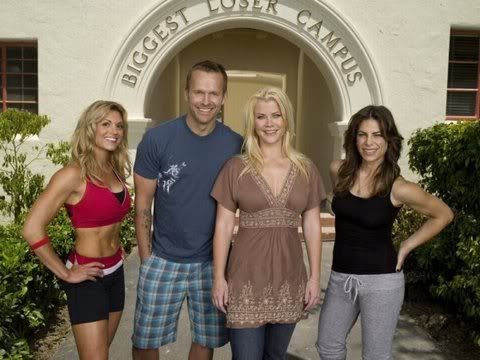
“The Biggest Loser” (NBC)—It’s hard to believe no one thought of a show like this long before reality TV came to be. And what could be more inspiring to Americans than to prove that those of us getting fat while watching reality TV and eating bad food and not exercising, that we can actually lose weight, and a lot of it, if we put the effort in. But seeing how the show transforms the lives of its contestants is must-see TV, and can be downright heartwarming. Sometimes, however, the producers let gameplay take over, which can cloud the purpose of the show. But still, the show is already in its 8th season and shows no signs of slowing down.

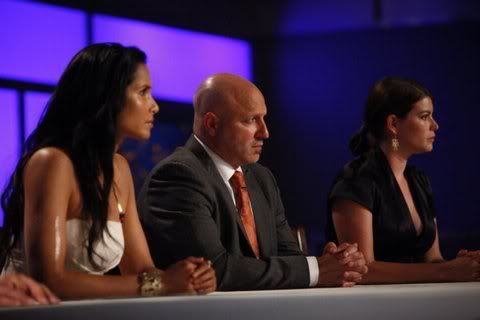
“Top Chef” (Bravo)—Admittedly, I only started watching this one in Season 5, but became hooked faster than I’ve been hooked by any reality show. It’s so well done, and has made me notice things in the production, like lighting and music and continuity, that I’ve never noticed in shows like this before. Then there is the competition itself, and it’s a show that pits, well, top chefs, against each other—chefs that know fine dining but have to stay on the cutting edge of cuisines and techniques for survival on the show.

“Hell’s Kitchen” (Fox)—The boisterous Gordon Ramsay became a fixture in our living rooms a few yeas back, and “Hell’s Kitchen” was an awesome concept for the first two or three seasons. After that, it began to lose some of its appeal—mostly because they have stuck to the same format again and again without much variation. Still a great show, but after six seasons, they need to take a break or change things up.

“The Next Food Network Star” (Food Network)—This show gained all of its credibility after the fact, once Season 2 champ Guy Fieri became a rock star almost overnight. But in the three seasons since, it’s failed to produce anyone like Guy, and maybe never will again. Plus, you can’t keep crowning a champ, and then give them 5-6 shows before letting them fade into oblivion. At least in my book, that hurts this show’s credibility.

Continue reading »

« Older posts Newer posts »

© 2023 Premium Hollywood

Theme by Anders NorenUp ↑