Last night began the new season of “The Next Food Network Star” and they changed things up dramatically this time. Instead of taking place in New York City near the network’s offices and studio, they moved it out to Los Angeles, putting the focus on the “star” portion of the show’s name. Also this season, in addition to regular judges Bobby Flay, Susie Fogelson and Bob Tuschman, the show added Giada Di Laurentiis as a mentor to the twelve contestants. Oh, and the fact that there are twelve instead of ten is also a change.
I’m going to go out on a limb and say that, no matter what happens in the season finale, this week’s installment of “Breaking Bad” will still go down as the best episode of Season 3. With that said, we’ve got plenty to discuss, but let’s start things off with a song, shall we?
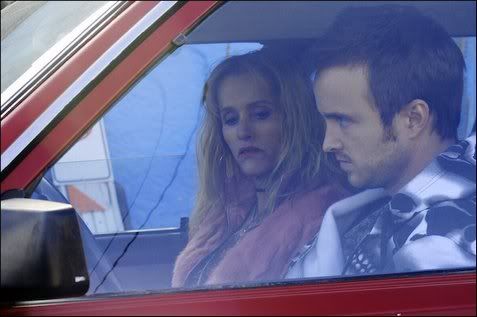
I don’t know about you, but, personally, I’m never going to be able to hear The Association’s “Windy” in the same way again. Here we go with another example of what I referenced last week, paying off longtime viewers by revisiting a long-dormant storyline. We haven’t seen Wendy since the early days of Season 2, but she’s back and, as we (and Jesse) can clearly see, business is still booming for this industrious young lady.
Despite Jesse’s assurances to Walt that Wendy had the necessary emotional stamina to help him with his plan, I knew she was acting way too hesitant about assisting him for things to go smoothly. Frankly, given the ominous green light in her room and the way she was gazing longingly at the blue meth, I figured we were looking at the very real possibility of an O.D. before her part in the proceedings ever came to pass. That’s not what happened, of course…but, then, given the way she shambled off after her dismissal, who knows what her eventual fate will be?
(Actually, it’s probably kinda like Lucy Lawless’s comment on “The Simpsons,” where, whenever you notice a continuity error on “Xena: Warrior Princess,” the explanation is that a wizard did it…except that anytime a character on “Breaking Bad” vanishes and is never seen again, you can presume that they either O.D.’ed on meth or were killed by a dealer. I mean, c’mon, if you do the stats, the law of averages speaks for itself on this matter.)
It was nice that Walt, Jr. got a chance behind the wheel, and it was even nicer that they kept it real and directly addressed how his medical condition would affect his driving. While Walt and son were bonding, however, Skyler was online, doing her research on money laundering so that she’d be properly prepared to pounce on Walt the second he arrived. That was a great scene, with the back-and-forth between them, each certain that the next words out of their mouths would give them the upper hand in the discussion, and even though Walt seemed to be bowing to her superior position, he ended triumphantly. (“…and THAT is how we’ll sell your little fiction!”)
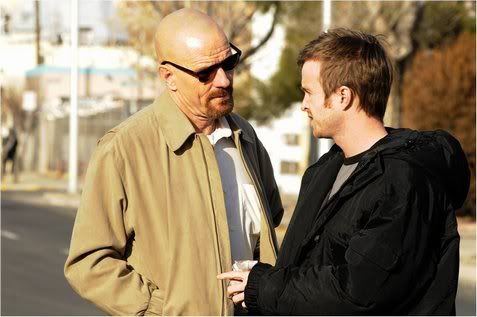
There were a lot of intense discussions this week, with the one between Walt and Skyler quickly followed by one between Walt and Jesse. This one, however, took place over the course of a couple of cold ones. (“No, seriously, get a beer with me.”) Looks like my concerns were correct: the dealers were some of Gus’s boys. Not that Jesse gives a rat’s ass about the possible end result of taking them out, since he’s angry about the situation on at least two levels, but Walt tries to talk some sense into him, anyway. (“Murder is not part of your 12-step program!”) Walt was making some pretty harsh statements, most notably underlining the fact that if Jesse had really been interested in revenge, he would’ve done something about the dealers weeks ago instead of just getting doped up, but surely he knew that his arguments were falling on deaf ears.
Jesse’s record for making rational decisions isn’t exactly unblemished, however, so not only was there never any way he was going to change his mind, but, frankly, I can’t believe Walt ever really expected Jesse to show up for the meeting at Saul’s office, either. Not that I’m really complaining: any scene with Saul is a good scene, and this one was no exception, thanks to his clarification to Walt about wearing orange jumpsuits and picking up trash along the highway (“That’s jail”) and his musing on the chancy bathrooms at Springer. What I found most enjoyable about the scene, though, was the way Bryan Cranston so effectively captured the feeling that Walt was just kinda spitballing ideas, with no real idea what to do about the situation.
Here we are, more or less mid-season, and as someone who’s recapping this block of episodes week in and out, as well as someone who’s been deconstructing this series for years now, I’m frankly a bit flummoxed by Steven Moffat’s inaugural year. It’s starting to feel as if the season is only going to make total sense once it’s over and done with. Some time ago, long before the season began, Moffat was saying that he wanted the season to be referred to as Season One, rather than Season Five, and that’s starting to make a whole lot more sense. Aside from the occasional references to the past, everything about this year feels as if some kind of reset button has been hit, and yet it remains difficult to watch without bringing the baggage of the last five years into the equation, even though I’m fairly certain Moffat would prefer that we didn’t. I mean, it’s hard to picture a character like Mickey Smith, for instance, fitting into any part of this narrative in any kind of believable manner, and yet you almost want somebody like him to turn up in a scene just to remind you that you’re still watching the same show.
I continue to want to compare this material to stuff from seasons’ past, and yet this nagging feeling keeps telling me that’s just an unfair thing to do. I wonder if Moffat’s even got some kind of grand master plan that extends beyond this block of 13 episodes? None of this means I’m not enjoying the season, just that it’s a much different kind of enjoyment than what I’ve become accustomed to during the Davies years, which began feeling predictable about three years in. Say what you will about this season, but, at least at this stage, it is most certainly not predictable. In some ways watching this season is as disorienting as the predicament in which our heroes find themselves in this week’s episode. As viewers, we’re experiencing a new reality of the series, while we keep thinking back on what we came to know prior to this season’s start. Which is the real “Doctor Who?” The Davies or the Moffat era? Both, or maybe neither? I’ll likely elaborate on all of this further during the final recap of the season.
Last night on the season premier of “Hell’s Kitchen” on Fox, the narrator promised that this season will push the envelope like no other–claiming that “this is the season you’ve been waiting for,” he mentioned that it will be more intense and have more sexual prowess and fighting than ever before. Of course, we know better. Shows like this always hype things way more than the actual plot delivers. Still, a program like this has to shake things up to stay fresh.
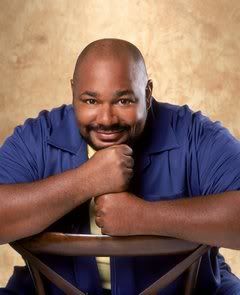
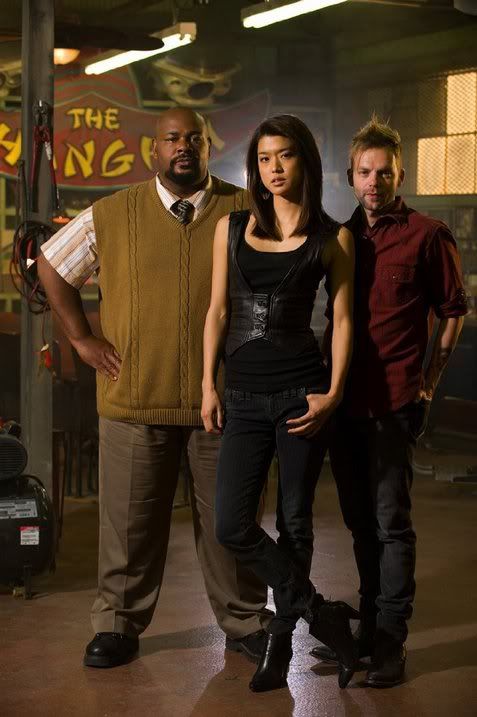
Given that the A&E drama “The Cleaner” only lasted for two seasons, it’s probable that there aren’t a great number of people who are clamoring for the answer to this question, but for those of you who did watch the series throughout its run, I’d like a show of hands if you wondered what happened to the character of Darnell McDowell – played by Kevin Michael Richardson – after the first season.
Not that Richardson hasn’t got more than enough work to keep himself busy: he’s one of the most prolific voice actors in the animation business. At present, you probably know him best as the voice of Cleveland, Jr. on Fox’s “The Cleveland Show,” but he’s also the voice of Maurice on “The Penguins of Madagascar,” turns up with some regularity on “Batman: The Brave and the Bold” (he voices Black Manta, B’Wana Beast, and – yes! – Detective Chimp), and, on a related note, did an admirable job of stepping into Mark Hamill’s shoes as The Joker on “The Batman.” But, still, I love the guy, I thought his character on “The Cleaner” was interesting, and when Season 2 of the series premiered and he wasn’t on it, I noticed.
I ran into Richardson briefly last year at the TCA Press Tour, and I asked him what happened. In truth, he seemed pleased that someone had even noticed his absence, but as far as the reason why he’d been written out of the show, he didn’t really have much of an answer, short of saying that he’d gotten the impression that the writers had kind of hit a brick wall as far as knowing what to do with the character of Darnell.
Okay, fair enough: I understand how the business works, and I also understand that shows evolve and characters originally intended to be series mainstays unexpectedly become superfluous. While screening “The Cleaner: The Final Season” in order to write my review of the DVD set, however, I remembered the biggest reason why I’d been so annoyed with Darnell’s departure: not only was he written out of the show, but there wasn’t even so much as a mention of Darnell, let alone any sort of clarification as to his ultimate fate. Given everything that he went through with the team during the course of Season 1, this seemed like the kind of oversight that would really irk fans of the show…like, say, me…so I did what any self-respecting journalist would do: I went on Facebook, found the page for the show’s head writer, Jonathan Prince, and asked A) why Darnell was written out of the show, and B) why there was no reference to his departure from the show.