Category: TV Dramas (Page 45 of 235)

Happy (Fake) Presidents Day! – A Collection of U.S. Presidents from TV and Film

Once upon a time, the third Monday in February was designated as a day to celebrate George Washington’s birthday. These days, however, although it varies from state to state, it tends to be known less specifically as Presidents Day, which means that we can ostensibly celebrate everyone who’s ever been the President of the United States. Here at Premium Hollywood, we’d also like to extend that to those who’ve served as our nation’s commander-in-chief on television and the silver screen.

Now, granted, that’s a lot of people…more, in fact, than we could possibly give shout-outs to in a single piece. As such, we decided to pare it down to the same number of individuals as have held the highest office in our land since its inception. Forty-four folks is still nothing to sneeze at, but we’re betting that we’ll still end up having left out someone’s favorite son (or daughter). To paraphrase one of our real presidents, you can please some of the people all of the time, and all of the people some of the time, but you can’t please all of the people all of the time. With that said, however, we still think we did a pretty solid job of picking the best candidates for the piece.

1. President Dwayne Elizondo Mountain Dew Herbert Camacho (Terry Crews), “Idiocracy”: Why are we leading off with President Camacho? Because, really, when you’ve got a fake President on your list who’s also a porn superstar and a five-time ultimate smackdown wrestling champion, why in God’s name would you wait any longer than necessary to trumpet his inclusion? Clearly, this man is the fake President to end all fake Presidents, and he’s #1 with a bullet. It’s all going to be downhill from here.

2. President Andrew Shepherd (Michael Douglas), “The American President”: President Shepherd is a widower who pursues a relationship with an attractive lobbyist — Sydney Ellen Wade, played by Annette Bening — while at the same time attempting to win passage of a crime control bill. Although the film was mostly ignored by the Oscars, it racked up several Golden Globe nominations and has since found its way into the #75 spot on the American Film Institute’s list of America’s Greatest Love Stories. Plus, its screenwriter managed to find a good use for the excess material that he didn’t have room to fit into the script…but we’ll get to that in our next entry.

3. President Josiah Bartlet (Martin Sheen), “The West Wing”: Yes, if you hadn’t figured it out already, “The American President” was written by Aaron Sorkin, which is why you may notice a resemblance between the mannerisms of Presidents Shepherd and Bartlet. Ironically, though, Sorkin had originally envisioned the series as revolving so much around the White House senior staff that viewers would rarely, if ever, see the president. Instead, what the nation got was an idealized leader, one who – in A Novel Approach to Politics, by Douglas A. Van Belle and Kenneth M. Mash – is referred to as the “most popular Democratic president in recent memory.” The book was written pre-Obama, mind you, but we’re pretty sure the title still stands.

4. President William Harrison Mitchell (Kevin Kline), “Dave”: Given the vaguely “The Prince and the Pauper”-esque premise of the film, which involes a guy who makes a few bucks on the side as a Presidential impersonator being asked to play the part for real when the actual President suffers an incapacitating stroke, there was every reason to believe that “Dave” would’ve been a trifle at best, but between Kline’s imminent likability and a fantastic supporting cast (Sigourney Weaver as the First Lady, Ben Kingsley as the Vice President, Frank Langella as Chief of Staff, and Charles Grodin as Dave’s accountant buddy, Murray), it often comes close to – even though it doesn’t quite reach – the heights of “The American President.”

5 – 8. President Thomas J. Whitmore (Bill Pullman), “Independence Day” / President Blake (Perry King) and President Becker (Kenneth Welsh), “The Day After Tomorrow” / President Thomas Wilson (Danny Glover), “2012”: As soon as you see the credit “directed by Roland Emmerich” on a disaster flick, you just know things are going to reach a point where the President of the United States is going to be brought into the discussion about whatever imminent danger may be about to thrust itself onto our planet.

There’s also a very good possibility that the ol’ rite of succession may come into play during the course of the film, such as it did in “The Day After Tomorrow,” when we lost President Blake after the blades of his helicopter froze. Say hello, President Becker! The same thing happened in “2012,” too, but we were so in awe of President Wilson’s selfless sacrifice – he stayed behind to help survivors in need, only to meet his death when the tidal wave struck the White House – that we’ve made an executive decision not to include Wilson’s successor, President Anheuser (Oliver Platt) in the list. Why? Because he’s a dick.

The definitive Emmerich-flick president, of course, is President Whitmore. During the course of “Independence Day,” he sees the White House blown up, loses his wife, fights off a psychic attack from an alien, and flies a goddamned jet fighter into battle to help save the day. Plus, he gives the most stirring speech this side of “Patton.” Hell, I’d vote for him.
Continue reading »

A Chat with Paterson Joseph (“Survivors”)

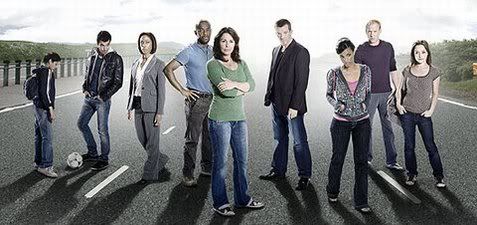
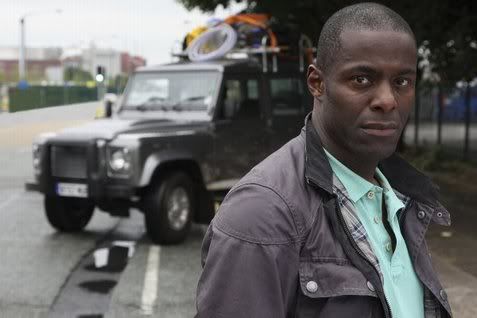
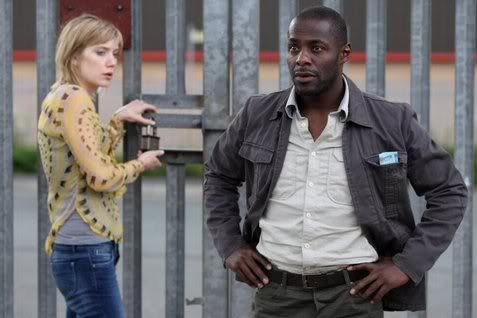
Paterson Joseph is the sort of actor whose face tends to be familiar more to the Anglophiles who frequent BBC America than to the average Stateside viewer, a fate owed to the fact that the majority of his projects – such as “Casualty,” “William and Mary,” “Peepshow,” and “Hyperdrive,” to name a few – have had highly limited screenings on our shores. They’ll soon see him, however, as one of the stars of BBC America’s latest import, “Survivors,” which premieres on Saturday, Feb. 13th. I was able to catch up with Joseph a few hours after he’d done the TCA panel for the series, but the start of our conversation was delayed momentarily by the fact that he popped into the bar just at the moment that I was saying good night to my daughter on the phone. Thankfully, however, he was quite tolerant of my family matters, and we soon settled in to talk about “Survivors,” though not until after I let him know why I recognized him.

Bullz-Eye: When I first started watching “Survivors,” I saw you and I kept thinking, “I know this guy. I know I know this guy.”

Paterson Joseph: Oh, really? (Laughs)

BE: And then I suddenly realized, “It’s the Marquis!”

PJ: Ah, yes: the Marquis De Carabas! (Smiles) I loved “Neverwhere.” Absolutely loved it. And I wish…see, if the “Doctor Who” we have now had happened that same year, before we did “Neverwhere,” then “Neverwhere” would’ve worked like a dream, because it would’ve had all the money that it needed. Unfortunately, at that point, the only proper sci-fi that we had was “Blake’s 7,” which had not gone down well at all…and I suspect you know exactly what I mean by your expression.

BE: I don’t know what you’re talking about. (Laughs)

PJ: (Laughs) And, so, sci-fi was persona non grata until “Doctor Who,” but then “Doctor Who” happened, and…well, you know all this, but now fantasy drama, sci-fi, has got lots of money. It’s a damned shame. But Neil Gaiman, I think, is still trying to get a movie done here. He’s working on it.

BE: I’m ready for it. I’m ready for “Neverwhere,” “American Gods,” and anything else of his that they want to adapt.

PJ: Yeah, he’s great, man. Great.

BE: So what was your familiarity with the original version of “Survivors”?

PJ: I probably saw the opening sequence when I was about 10…and then was told to go to bed. (Laughs) So I had never really seen it, but I did remember the opening sequence when I saw it on YouTube. It’s quite striking. And then I watched the first three episodes when I got this job, and…I might as well have done in some ways, because it’s so vastly different.

BE: Yeah, Adrian (Hodges) was just saying about how he made a point of changing a key moment in the first episode, just to keep people on their toes.

PJ: That’s right!

BE: So how developed was the character of Greg Preston when you first came aboard? Did he evolve at all once you got into the role?

PJ: He was always…I mean, I described it in my interview when I read it as…he seems a bit like a guy who’s basically walking on water. Everything seems fine, he’s walking away, everything’s very serene. But underneath is a sea of shit. That’s how I described it to them in the interview, and I think that’s right. I think Adrian always had that in mind, that there was a world of pain under Greg’s easygoing persona. Even in his sort of dismissive “I don’t need people” persona, there was a world of pain and desperation, and you see that in…well, for you guys, it’s in Episode 7. It all comes out. Literally. You see everything.

Continue reading »

Lost 6.3 – What Kate Does

Most episodes of “Lost” are usually filled with the kind of “wow” moments that make for great water cooler discussion, but in the case of tonight’s episode, it was a different kind of “wow” – as in “Wow, that was kind of boring.” I’m not exactly sure this was the best way to follow up such an eventful season premiere, because while I’m all for the slow burn of discovering what’s going on with this mirror universe (henceforth to be known as Earth-2 for all my fellow geeks out there), Kate’s stroll around L.A. didn’t seem to really achieve anything – at least, not to her benefit anyway. In fact, while I’ve expressed my displeasure for almost every Kate-centric story thus far, this had to be one of the worst.

Why? Well, because with the exception of a funny cameo by Artz, Kate’s entire Earth-2 storyline was a bit lackluster. There was definitely a feeling of déjà vu from when Kate took Claire to the DHARMA medical facility in Season Two, but what really tied the hospital visit together was the arrival of Claire’s doctor, who turned out to be none other than Ethan Rom, going by his given surname of Goodspeed. I guess that means the island sunk before he returned, which lends credit to the theory that the detonation of the hydrogen bomb is what caused it. Then again, if the bomb was detonated on the Earth-1 version of the island, why did it sink the one in Earth-2? It looks like we won’t know that answer for a while, so for the time being, we’ll just have to accept the fact that the only thing we really learned tonight was that Claire is probably going to keep her baby. The fact that she unconsciously had the name Aaron picked out for him also seems to indicate that there might be some kind of shared knowledge between the two worlds.

lost_6-3

I’m certainly hoping that’s the case, because the Earth-1 story is totally kicking Earth-2’s ass at the moment. Even the scenes between Kate and Sawyer were better, as Josh Holloway got a chance to show off his acting chops with arguably his character’s most emotional scene yet. It’ll be interesting to see if he retains any semblance of the leader he became during his relationship with Juliet, because it’s only been a few hours since he lost the woman he loved and already he’s slipping back into his old self. It didn’t take him very long to hang his friends out to dry, so we probably shouldn’t expect him to be much of a team player this season.

Meanwhile, the resurrection of Sayid is causing quite a stir around the temple, and though Jack wants answers, Dogen the temple master simply wants him to stay out of his way. After putting Sayid through some sort of test that included a little shock therapy and a hot branding (ah, the torturer becomes the tortured), Dogen comes to the conclusion that Sayid is infected. Infected by what, however, he won’t exactly say, but that doesn’t stop him from trying to convince Jack to give Sayid a mysterious pill that will “cure” him. When Jack refuses and takes the pill himself, Dogen forces him to spit it out before finally admitting that it’s poison. So what’s this mysterious infection that has taken over Sayid’s body? My guess is that it’s the same “sickness” Rousseau’s been preaching about for years. Dogen even tells Jack that the same thing happened to his sister Claire, and from the looks of the gun-toting Aussie in the final seconds, I’d say he might be on to something.

A Chat with Adrian Hodges (“Survivors,” “Primeval”)

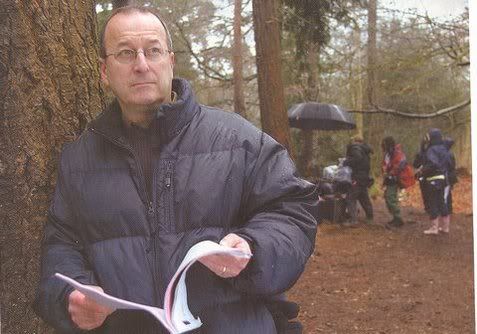
Adrian Hodges has been beloved by fans of BBC America’s ever-growing sci-fi lineup ever since presenting them with “Primeval,” which he created along with Tim Haines, but they’ll soon have a new reason to give him a hug when they seem him on the street. Americans may not be familiar with the 1970s British TV series known as “Survivors,” but, hey, that’s okay: it just means that they’ll be able to dig into Hodges’ new take on the series – which premieres this Saturday night on BBC America – without any preconceptions. Plus, as you’ll soon read in my chat with Mr. Hodges, which took place a few hours after the TCA panel for “Survivors,” he’s taken great pains to make sure even those who are familiar with the original series will, by the end of the first episode of this new version, realize that he’s got plenty of surprises in store for them, too. Oh, and listen up, “Primeval” fans: you’d well to read beyond the bits about “Survivors,” as we chatted about the status of the third series of “Primeval” as well as the oft-discussed feature film based on the show. There’s also some stuff about other items on Hodges’ C.V., and…well, you’d just better go ahead and read it for yourself, hadn’t you?

Adrian Hodges: Wow, look at your recorder. I used to do a bit of journalism when I first started out, but my tape recorder was… (Holds his hands several inches apart, then laughs) That’s technology for you!

Bullz-Eye: Hey, mine’s shrunk by two or three times in size just in the past few years! (Laughs) Well, first off, I just want to say that I’m a big “Primeval” fan.

AH: Thank you! Cool!

BE: I was not familiar with the original 1970s version of “Survivors,” but I take it that you were at least somewhat of a fan of it.

AH: Yeah, I was, in that kind of general way we are when we’re kids and we watch TV. I was maybe 15 or 16, something like that, and I remember very clearly the impact of the first episode. If I’m honest, I’m hazy about some of the other, later episodes, but I do remember the extraordinary shock of the imagery of a husband dying, of things that were stand-out images in my head, and you carry that through the years. It was something I remembered very well, so it was really kind of great to be asked to have another look at it, you know?

BE: So they pitched it to you, then?

AH: They did. What happened was that I’d done “Primeval,” as you know, and I was very actively looking for a genre show that I could do in a slightly…well, in Britain, it’s in a later timeslot. Something that was a bit more…I don’t want to say more adult, because I think that “Primeval” is adult, but not a family show in the same way. However you define “family.” (Laughs) So “Survivors” was perfect. BBC had had this great success with reviving “Doctor Who,” so they were looking at some of their old shows and saying, “Well, that one wouldn’t work, but maybe this one would.” And “Survivors” was one they thought might work again, so they basically came to me and said, “What do you think?” And I thought it was great, not so much because of the set-up, not just because of the post-apocalyptic thing, which is fascinating, but it’s kind of not the point. The point is what happens afterwards, and that’s the fun of it for me as a writer, ‘cause you don’t often get a chance to write about people in the most extreme situation. So that’s why I wanted to do it.

BE: What was the profile of the original show? Was it semi-high? I ask because I’m a kind of an Anglophile, so I was surprised that I hadn’t heard of it.

AH: I don’t think it was, really. In terms of being a success at the time, it was, but it wasn’t, like, a thing like with “Doctor Who,” where you carry that memory with you, and so that when it was revived, there was this huge desire to like it. It was one of those shows where…people didn’t want to not like “Doctor Who.” They wanted to like it. It was a nice thing to happen, and it doesn’t often happen. There aren’t many shows that people are so fond of that they can go with that attitude to them. Usually, as you know, when you remake or re-imagine a show, you get the opposite reaction, which is that people don’t really want you to do it, because they liked it the first time. And, now, there’s been such an acceleration of remaking of formats. It’s a very dangerous area. I thought “Survivors” was a good one because it was a success at the time, which proved that it was a strong idea, but it wasn’t so well known that it would be something that everybody would be saying, “Oh, but you didn’t do that scene, you didn’t do it like this, you didn’t do that.” The truth is, it was the best part of 40 years ago, and it’s not a classic. It’s a very good show. The first episode of the original is a model of brilliant series set-up writing, and, indeed, much of the rest of it. But it is fundamentally a show which was well-liked but probably not as well-remembered as some. Not everything can be a classic, you know. That’s the way it is. I couldn’t believe that “Edge of Darkness” was being remade. It’s amazing, after all these years, to suddenly see it. So stuff comes around.

BE: So did you revisit that first episode of “Survivors” before you made this new version, or did you just kind of go from memory and dive into the new version?

AH: I watched the whole of the first series before I started writing, and I don’t usually do that with things where there’s existing material. I mean, in a completely different genre, I’ve just done a new version of a film called “The Go Between.” I’ve adapted the L.P. Hartley novel, and I didn’t look at the film of that, because I deliberately didn’t want to be influenced by it. I’ve only looked at it relatively recently, and it’s interesting to see what they did and what I did, and that’s fine. But with “Survivors,” I thought that it was…well, because I was basing some of my material on that original material, it seemed respectful and sensible to look at the way they’d done it, and also to remind myself what they’d done well and maybe what they hadn’t done quite so well, just to see how it would go. I always knew I was going to move away from that version quite quickly, but I wanted to make sure that whatever was good…I mean, I’m not crazy: if it’s good, I’m going to do it again. (Laughs)

BE: How did you go about selecting your cast? Was it a case of finding folks you’d worked with in the past, or was it more of a standard audition process?

AH: There’s a little bit of that. I mean, because of the way television works, as you know, there’s a certain pressure to use a certain profile of actor in certain roles. We knew we needed a leading lady that meant something to the British audience, and that’s, in truth, not that big a pool of people. It’s tough to find exactly the right person, particularly a woman who’s grown up, a woman with children who’s believable as an ordinary woman. So Julie (Graham) was actually pretty straightforward, because she was one of only one or two who really fit the bill…and, luckily, she wanted to do it! So at that point, we closed that. That was done. The other guys…it’s an interest process. Paterson (Joseph), funnily enough, was a very early choice, and then we went ‘round the houses looking at other people and then came all the way back to Paterson. And that sometimes happens, ‘cause it’s a bit like when you get something right first time, and you think, “Have I really got it right?” And you go and try prove it sixteen other different ways, but you still come back to the right answer, so that was Paterson. The others…it’s just a question of trying to find the right faces for the roles, the right talent and the right look, and that’s hopefully what we did.

(SPOILER ALERT: If you haven’t watched the first episode of “Survivors” yet, then you’ll want to head off for a bit and pop back ‘round after you’ve had a chance to see it.)

Continue reading »

Filmgoing young females end the reign of the Na’vi, finally

arts-dear-john-584

Yes, so for those who read Friday’s post, The Hollywood Reporter‘s Carl DiOrio was wrong and Nikki Finke was more right than even she knew on her first, non-updated, version of her weekend box office post. The Nicholas Sparks adaptation starring Amanda Seyfried and Channing Tatum, “Dear John,” seriously exceeded even the most optimistic expectations this Superbowl weekend and took down, at last, the seven-weekend long domestic box office “Avatar”  juggernaut. The make-up of the audience that generated $32.4 million for Sony and Relativity Media according to Box Office Mojo was not surprising. As per Finke:

Females made up 84% of the opening weekend audience, while 64% of the moviegoers were under age 21.

Still, I should add that this was definitely a case of “Dear John” winning, not so much “Avatar” losing. James Cameron‘s science fiction spectacle from Fox is still holding remarkably well, dropping less than 25% this week and netting some $23.6 million. The distinctly shorter length of “Dear John” is another obvious advantage.

John Travolta in On the other hand, Pierre Morel’s all-out action picture, “From Paris with Love,” starring John Travolta and Jonathan Rhys Meyers is shorter still, but it’s possible this was just the wrong weekend to release that kind of a movie with male fans of balls-out action distracted by the year’s #1 sports event. The film came in a very poor third with only a bit over $8.12 million for Lionsgate. C’est la vie. And here’s one more plug for the Bullz-Eye feature on Parisian-based films of all genres, “We’ll Always Have Paris,” which I say completely without bias or pride of co-authorship.

In other news, “Crazy Heart,” the country music drama featuring a nearly certain Oscar-winning performance from Jeff Bridges, was not a tale of Americana-style heartbreak. It nailed a very respectable $3.65 million in 819 theaters, which got it into this week’s #8 position. The week’s biggest per-screen was for a movie that is technically a television miniseries. The “Red Riding” Trilogy, which originally aired on English television, nailed a per screen average of $15,500 thousand. Of course, that’s in exactly one theater. Still, not bad considering it’s actually three films.

« Older posts Newer posts »

© 2026 Premium Hollywood

Theme by Anders NorenUp ↑