Category: External Movies (Page 6 of 336)

Turner Classic Film Fest: A history of violence

I know, pretty dark headline for  a post about a really fun, glamor heavy film fest. All the more so because, at least for me, TCM  Fest is the kind of event that  can put you in a kind of steel bubble which the daily news can barely pierce. If another Cuban Missile Crisis happened during Comic-Con, what would happen? Maybe if it ended differently this time.

Indeed, even a momentous event  like the death of Osama Bin Laden could just barely penetrate TCM’s  mix of Hollywood fantasy and scholarship. For me, the news first came as I overheard another filmgoer during an intermission of “West Side Story,” which I had popped in on just to see how good the 70mm print was, say to another. “No, he’s really dead.” I figured it was another classic film star gone forever. George Chakiris, who played Sharks leader Bernardo, had introduced the screening, but how were Jets Richard Beymer and Russ Tamblyn doing?

Continue reading »

Easter with Tevye

I grew up in the kind of Jewish home where Santa Claus came on December 25 and a certain pagan rodent arrived on a seemingly random Sunday in the Spring, often accompanied by matzoh brie for breakfast if it was Passover.  Over the years, my inevitably confused interest in my Hebraic roots increased, and I quickly understood that the three holiest texts in Jewish scripture were the Torah, the Talmud, and Broadway’s Fiddler on the Roof.

With a book by Joseph Stein, music and lyrics by Jerry Bock and Sheldon Harnick and drawn from stories by pseudonymous Yiddish author Sholem Aleichem, often called “the Jewish Mark Twain,” no Jewish wedding or bar/bat mitvah was complete without half the score. A particular must for even a lot of the non-Jewish weddings I’ve attended remains “Sunrise, Sunset.” The song, a succinct expression of the bittersweet feelings involved with watching beloved children turn into adults, remains the most effective technology for extracting tears from parents known prior to the release of “Toy Story 3.”

The tale of a goodnatured, deeply religious milkman trying to marry off his three daughters in the face of pogroms and the onslaught of history in early 20th century Tsarist Russia did roughly what “The Godfather” did for Italian-Americans (ethnic controversy notwithstanding) and “Roots” did for African-Americans, create a sense of history during a time when present day changes often seemed overwhelming. If you hadn’t seen “Fiddler,” as my mother’s friends inevitably called it, on the stage, you were suspect. If you missed the movie, you might as well get baptized.

All of which is just a longwinded way of saying that, when we the 40th Anniversary Blu-Ray edition of director Norman Jewison’s 1971 film of “Fiddler on the Roof,” genetics pretty much forced me to raise my hand for it, though it hasn’t been a favorite since the day I got my cinephile magic decoder ring. The slightly grainy and slightly gauzy film — director of photography Oswald Morris shot it entirely through a woman’s stocking and won one of the film’s three Oscars — looks as good as you can probably hope for on Blu-Ray, naturally, and John William’s solid but occasionally too-pretty adaptation of Jerry Bock’s score sounds nice, too, but the movie remains problematic for this viewer.

It’s not so different from a lot of other awkward stage-to-film musical translations of its time. Chiefly, Canadian director Jewison tries to adopt a realist approach to try to sell the highly theatrical material in the unforgiving medium of film, which might have been next to impossible regardless. Though Jewison retained much of the choreography by the legendary Jerome Robbins (“West Side Story”), setting it in real or real-looking locations is a doomed strategy. The best strictly musical scenes, like the famous “bottle dance” wedding sequence and the rousing “L’Chaim,” were shot on a London soundstage.

A solid cast led by Israeli actor Topol as Tevye, the milkman, and featuring Yiddish theater legend Molly Picon and future “Starsky and Hutch” star Michael Glaser (he’d add “Paul” to his name later) among many others, helps. Chaim Topol, who played the part on stage in London and Tel Aviv, is a better choice than the brash and notoriously difficult to control original Broadway Tevye, Zero Mostel, would have been. Among other issues, Woody Allen in “Annie Hall” was not the first movie Jew to break the forth wall and address the camera directly. No one would accuse Topol of underacting, but if it had been Mostel talking and singing at us about the importance of “Tradition,” the audience would have been forced into a defensive crouch.

Of course, there’s much more to than issues like cinematic style and acting to the ongoing appeal of “Fiddler on the Roof.” It remains popular not only in the U.S. but is still performed even in Japan, where the story of the breakdown of ancient traditions has had an oddly logical resonance. No amount of quibbling is going to kill the film version of “Fiddler,” nor should it.

Oh, and happy Easter if that’s your thing. Have a chocolate bunny for me.

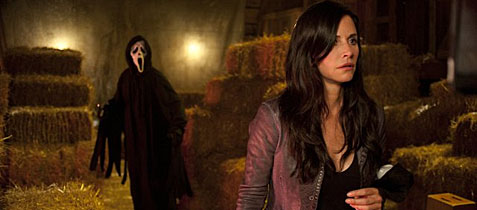
Forget about your favorite scary movie. Ghostface wants to know: What’s the worst horror sequel?

With “Scream 4” arriving in theaters this weekend, there’s been a lot of discussion over the Web about which “Scream” movie is the worst. Though reaction to the fourth installment has been pretty mixed, the general consensus seems to be that it’s a lot better than most people expected. Even our own David Medsker gave the film an enthusiastic 3 1/2 stars, suggesting that while it may not top the 1996 original, it should still satisfy fans of the series.

That’s not bad for a horror franchise whose last film (the terrible “Scream 3”) played a big role in why it’s taken 10 years to get another installment in theaters, especially because most horror franchises only seem to get worse with each successive sequel. The guys over at ScreenCrave recently put together a list of the five worst horror sequels ever made, and it’s hard to find any fault with their choices, even if there are plenty of candidates that could have easily been substituted. Check out the full list at ScreenCrave, along with breakdowns as to why they selected each film.

SXSW 2011: A Bag of Hammers

Not every film that played at SXSW this year was fortunate enough to walk away with a distribution deal (in fact, very few did), but if there’s one movie that deserved to, it’s “A Bag of Hammers.” A relatively clichéd dramedy with all the markings of an indie film, Brian Crano’s directorial debut nonetheless manages to carve out an identity of its own thanks to a great script and an even better ensemble cast. Jason Ritter and Jake Sandvig make an excellent team as childhood best friends Ben and Alan, a pair of misfit conmen who run a bogus valet service at funerals in order to steal cars and sell them for cash. It’s not the most lucrative career, but in addition to the money they earn from renting out the house in front of their laidback bachelor pad, they get by. But when their new tenants – the recently divorced Lynette (Carrie Preston of “True Blood”) and her neglected son Kelsey (Chandler Canterbury) – begin to attract unwanted attention, Ben and Alan decide to step in and create the family they’ve always needed.

a_bag_of_hammers-sm

Consider Crano incredibly lucky for getting the actors that he did, because it’s hard to imagine “A Bag of Hammers” working quite as well without them. Sandvig and Ritter are especially good in the film’s more comedic moments, while even Rebecca Hall manages to make the most of a role that requires she wear a silly waffle hat and perform an ever sillier dance. The real standout, however, is Preston, who delivers what is easily the most heartbreaking performance that I’ve seen this year as the hopelessly desperate single mother. Additionally, while the constantly shifting tone between quirky comedy and grim family drama may annoy some people, Crano actually handles it remarkably well, particularly when the movie enters some pretty dark territory midway through the story and never looks back. It’s a shame that he didn’t see that version of the film through to the end, because while there’s nothing wrong with the happy ending he opts for, “A Bag of Hammers” would have been so much more memorable with the disheartening, more realistic finale that he teases just before it.

SXSW 2011: The Greatest Movie Ever Sold

If there’s one thing you should know about Morgan Spurlock, it’s that he’s a remarkable showman. While his documentaries always contain some kind of academic value, his main intention seems to be entertaining the audience, and there’s absolutely nothing wrong with that. It’s what helped “Super Size Me” become such an immense success, and it played a big part in making “Where in the World is Osama Bin Laden?” – Spurlock’s much weightier follow-up – a lot more interesting than it would have been in the hands of another filmmaker. His latest project, “The Greatest Movie Ever Sold,” doesn’t pretend to be about anything nearly as important as the issues he’s tackled in the past (obesity and the war on terror), but it’s without a doubt his funniest and most creative documentary to date.

It’s no secret that product placement has become an integral part of the entertainment industry, with billions of dollars spent every year by corporations looking to inundate our movies and television shows with subliminal advertisements. In an attempt to learn more about the process of this rapidly growing business (and hopefully make people more aware of what they’re being exposed to), Spurlock has set out to make a documentary about branding, advertising and product placement that’s funded entirely by product placement. It’s an ingenious idea, as the film operates both as an eye-opening lesson in brand integration and a satirical, first-hand account of how movie studios obtain financing from corporations.

The first half of the documentary focuses on Spurlock’s attempt to pitch his idea to various Fortune 500 companies, with many refusing to even take a meeting with the infamous director at the risk of looking like a fool. After Ban Deodorant comes on board as the first official sponsor, however, Spurlock has more luck persuading corporate executives to invest in the movie – including companies like Jet Blue, Mini Cooper and Old Navy – with POM Wonderful agreeing to pay $1 million to buy the above title rights.

the_greatest_movie_ever_sol-sm

But what Spurlock soon discovers is that there are consequences that come with accepting that money, with some companies demanding creative control over the final cut of the movie or setting certain stipulations that he’s legally obligated to follow. Like, for instance, the idea that once POM Wonderful becomes the official drink of “The Greatest Movie Ever Sold,” he can no longer be filmed drinking anything made by their competitors. Obviously, Spurlock plays this for big laughs as he blurs out entire walls of Coca-Cola and Pepsi while shopping at the grocery store, and makes a point of zooming in on bottles of POM during interviews, but he also posits a good question about how much corporate interference is too much before you’re considered a sellout.

While guys like Ralph Nader and Noam Chomsky offer their opinions on the matter, Spurlock also speaks with those who have a little more experience dealing with brand integration in movies, including Quentin Tarantino, J.J. Abrams, and Brett Ratner, who not only admits that product placement is necessary, but when asked how it affects his artistic integrity bluntly replies, “Artistic integrity? Whatever.” You have to give Ratner credit for being honest, but Spurlock knows a great moment when he sees one, and his film is littered with other nuggets of comedic gold just like it – even manufactured ones, like a running joke involving Mane ‘n Hair shampoo with an awesome payoff in the end.

That may disappoint some people who feel like Spurlock’s shenanigans only dampen the impact of his message, but many moviegoers wouldn’t even be willing to sit through a documentary about product placement if it wasn’t so entertaining. The film will still teach you a thing or two along the way, but if you’re going to learn, you might as well as enjoy yourself while you do, because although it may not have the same cultural effect as “Super Size Me,” “The Greatest Movie Ever Sold” is Spurlock at the top of his game.

« Older posts Newer posts »

© 2023 Premium Hollywood

Theme by Anders NorenUp ↑