Category: TV Comedies (Page 32 of 154)

TV in the 2000s: The Decade in Whedonism – 10 Small Screen Masterpieces from Joss Whedon

Like an awful lot of film and TV geeks, and just plain geeks, I’m a pretty big Joss Whedon fan. In fact, my devotion to his unique blend of fantasy and science fiction melodrama, sometimes arch old-school movie-style witty dialogue blended with Marvel comics repartee, strong characterization, and often somewhat silly plots has at times gotten almost embarrassing. A few years back some of my very adult friends were suggesting in concerned tones that I should really marry the man if I love him so much.

JossWhedonPaleyAxe_1211932727-000

More recently, I thought my fandom was under relative control. But now, I’ve been asked my opinion on the ten best examples of small-screen work in this decade from the creator and guiding force of “Angel,” “Firefly,” the already canceled “Dollhouse,” and, of course, “Buffy, the Vampire Slayer.” I only have to be thankful for the fact that first four seasons of “Buffy,” which contain most of that show’s greatest episodes, are disqualified because they appeared on TV sets before 2000. We take our mercies where we find them. (And, yes, if you’re about to catch up with these on DVD, there are a fair number of spoilers below for the various series, though I’ve tried to keep a few secrets.) One word of warning: my relative ranking of these shows is a matter of mood and borders on the random. In other words — don’t hold me to these choices!

Out of competition:

The Body” (“Buffy, the Vampire Slayer”) – This episode usually ranks extremely high when people make these kind of lists. Entertainment Weekly named it as pretty much the best thing Joss Whedon has ever done and maybe the best TV thing ever. The truth of the matter is that, yes, the episode where Buffy Summers (Sarah Michelle Geller) discovers the already cold body of her mother, Joyce (Kristine Sutherland, a wonderful asset to the show for the five previous years), dead from an entirely natural brain tumor, was probably one of the most remarkable episodes of television ever shown, and probably the only thing I’ve seen that comes close to capturing the essence of what it feels like when someone dies unexpectedly. The problem was, I didn’t find it depressing; I found it real. I didn’t feel any more like repeating the experience than I would the death of an actual loved one.

Whedon – who wrote and directed the episode himself – deserves all the credit in the world for the brave choices he made, including shooting the episode in close to “real time” and not using any music. If I have one complaint with , it’s his tendency to close emotional episodes with, dare I say it, somewhat drippy montages. His choice to eliminate music from the kind of “very special” show where other creators would lay in with three or four montages of Joyce frolicking in the woods or what have you, shows Whedon is, at heart, an outstanding filmmaker. I’ve never had a problem with his much-noted tendency to kill off sympathetic and/or popular characters. It might anger some fans, but especially if you’re dealing with inherently violent material, there’s something morally wrong about not dealing with the fact that good people are just as mortal as bad people. Still, I don’t enjoy watching this episode. If this were a movie, maybe I’d be more in awe or eager for profundity. However, if I’m going to be honest, I can’t call “The Body” a favorite and I can’t be sure it’s one of the “best.”

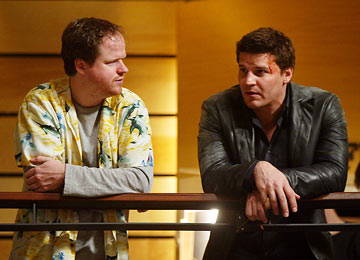
#10, Shiny Happy People (“Angel”) – Fans of the spin-off about Buffy’s ex, the vampire-with-a-soul detective (David Boreanaz), and various assembled demon-hunters and occasionally friendly demons, will be scratching their heads at this choice. It’s an unpopular episode from a widely and justly derided storyline involving a very weird affair between Angel’s unbalanced super-powered teenage son from another dimension, Connor (Vincent Kartheiser, now of “Mad Men“), and a suddenly evil Cordelia (Charisma Carpenter), a former high school mean girl turned lovably complex grown-up foil for her vampire boss. And, yeah, it was a little freaky for Cordy to give birth to a fully grown creature called Jasmine.
0000001044_20060919141143

However, as played by the wondrous Gina Torres of the then recently-canceled “Firefly,” Jasmine was freaky in a good way. A being whose god-like ability to create an instant sense of peace, happiness, and complete obedience, is somewhat set off by the fact that she’s actually a deformed and decaying, if not entirely evil, monster who must consume people to live, she was every charismatic leader and every great screen beauty rolled into one monstrous ball. More than anything else, “Shiny Happy People” reminded me of Don Siegel’s 1956 film verson of “Invasion of the Body Snatchers.” It was another believable demonstration of how we humans are only too willing to surrender our our humanity to the first apparently completely beauteous and 100% wise being who comes along. You know, like Oprah, only less powerful.
Continue reading »

TV in the 2000s: The Shows that Defined the Decade

A recent issue of Time magazine has the phrase “The Decade from Hell” emblazoned across its front cover. It’s referring to everything America has gone through in the past ten years, and it’s difficult to argue such an assertion: it’s been a shitty decade on a national level. During such times of stress, people inevitably turn to entertainment as a form of release, and although the methods in which we’ve distracted ourselves over the last ten years have unquestionably diversified, television remains the most easily accessible outlet for most Americans.

Within the format itself, the whole concept of reality TV must surely have been the biggest revolution of the decade. It’s really easy to bag on reality TV – mostly because the bulk of it is so damned unreal – but anybody who spends any time in front of the tube has surely had at least a couple of reality series they consider appointment TV. The two concepts that paved the way for everything else are undoubtedly “Survivor” and “American Idol.” The former, of course, opened the floodgates for the genre, and while it’s seen a considerable dip in the ratings department over the years, 12 million viewers isn’t a viewing figure to sneeze at. The latter, despite all the bitching and moaning and cries of “it’s not as good as it used to be” that accompany each new season, remains one of the most watched shows on the tube, likely due to the fact that it’s strictly a talent competition.

On “American Idol,” the only backstabbers are the judges, and since they aren’t part of the competition, their amusing duplicity is championed. The contestants, on the other hand, are innocents, and once the competition is underway, we’re given no peek into any possible backstage drama, which is a good thing, because by the time the audition rounds are over, we’ve had enough drama to last the whole season. Everything that comes after is all about who can best transfix us for three minutes a week via one pop ditty. It actually says something positive about the U.S. that “American Idol” remains our #1 form of reality entertainment, even if the actual reality is that the vast majority of Americans couldn’t care less about buying the winner’s album six months after they’re crowned.

You might think reality TV is a bunch of crap, and in most cases you’d be right, but the whole idea of it, to my mind, led to an important revolution, and that is serialized nighttime television (the classic “soap” formula notwithstanding). Reality shows taught viewers how to become invested in characters, how to be concerned for their eventual fate, and, most importantly, how to pay attention to an ongoing storyline, and the need to tune in every week. It didn’t take long for the networks to figure out that there was an audience for shows that didn’t continually hit the reset button. “24” must have been the first successful show of the decade to embrace the serial formula, and it embraced it whole hog. It required you to tune in for every episode, because each installment was another hour of a single day in the life of Kiefer Sutherland’s Jack Bauer. That “24” premiered less than two months after the terrorist attacks on 9/11 was pure happenstance. That it became enormously popular with viewers? Probably not so much. America needed some fictitious reassurance that there were folks on the job who could get shit done, and “24” filled the prescription.

Strangely, “24” didn’t open the network floodgates for more such programming right away. It took a few years, and then “Lost” made its mark. The number of “Lost” episodes I’ve seen could be counted on two hands, but that’s not because I didn’t like it, but because real life got in the way of it being appointment TV. Yet I viewed the pilot for “Lost” several months before its 2004 premiere, and when it ended I was convinced that I’d seen the second best TV pilot ever made. (“Twin Peaks” stills sits at #1.) The fact that a show as intricate as “Lost” still has a hardcore, central audience is perhaps a testament to that pilot. “24” started a new story with each new season; “Lost” required that you tune in for every episode of every season.

Another sci-fi series that did just that was “Battlestar Galactica,” a show that, due it being on a niche network (Syfy), never amassed a huge audience yet snagged boatloads of publicity and awareness nonetheless. It was no small feat to take an utterly laughable short-lived series from the late ‘70s and re-envision it for modern audiences, but Ron Moore and company did just that…and they did it far more successfully that anyone ever guessed possible. Most amazingly, the show taught us a lot about ourselves, by thoroughly defining what it means to be human, and as the damaged ‘00s dragged on, there may not have been a more important lesson to be learned.

On the same day I saw the “Lost” pilot, I saw another pilot for a completely different kind of series. While I didn’t rank it as one of the greats, there was one thing I was sure of: it would be a massive hit…and it was. “Desperate Housewives” was precisely the sort of vapid, soapy fare that had been absent for far too long on American TV. It clued into the seemingly bland suburban construct which surrounds so many Americans, via the Lynchian notion that “all is not what it seems.” Most anyone who lives a suburban life can no doubt relate to that idea, because wherever there are groups of people, there are bound to be some of them that are fucked up. “Housewives” is littered with fucked up suburbanites of all shapes, sizes and types, but they’re kooky and funny and there’s always some twinkly music playing in the background that in the end makes everything OK. It is not great television, but over the years it has, for the most part, been immensely watchable in the most disposable sort of way.

Around the same time period as “Housewives,” “Grey’s Anatomy,” made some major waves. It’s a series I have never watched and never plan to, but I’d be foolish to omit it from discussion since it brought two annoyingly obnoxious terms to the TV table: McDreamy and McSteamy. I haven’t heard either in a few years, but there was a time when they seemed to define everything that was wrong with television. I assume “Grey’s” fans have grown out of it…or maybe the show killed one of those guys off? I’ve no idea and can’t be motivated to investigate. Presently, there’s a brand new version of it going around, through cinema, via Camp Edward and Camp Nimrod. People can be so easily distracted it makes you wonder why some shows actually try harder.

Continue reading »

TV in the 2000s: 5 Animated Series That Deserved A Longer Run

There was a brief period in the early 1990s when, as a result of “The Simpsons” hitting it big for Fox, the big three networks – ABC, CBS, and NBC – decided that they wanted to try their hand at replicating the same kind of success with their own prime-time animated series. It didn’t work. (Two words: “Fish Police.”) Once we got into the 2000s, however, the sting of the previous decade’s failure had faded, and they decided to try it again. And again. And again. During the course of the decade, however, we did manage to get a few new animated series that were worth watching. Unfortunately, in most cases, we weren’t allowed to watch them long enough, and these are a few that deserved more of a shot than they got.

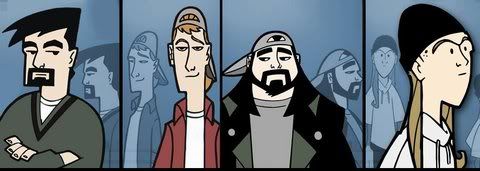
1. Clerks: The Animated Series (ABC): During Super Bowl XXXIV, ABC aired a teaser for the animated adaptation of Kevin Smith’s black and white ode to slackerdom, giving viewers a brief glimpse at Dante, Randal, Jay, and Silent Bob, then offering a vague assurance about when the series would premiere. (“Coming this spring. Summer. Whatever.”) The total lack of idea about what to expect from “Clerks: The Animated Series” left fans nervous, but the mere fact that the network was offering some promotion for the show during the Super Bowl surely implied that they were 100% behind the series. Right?

Not even fucking close. The show finally premiered on May 31, 2000, and it was canceled one episode later. You can blame many things for its abrupt demise, but near the top of the list would have to be the fact that ABC decided to kick off the show’s run with its fourth episode, then air the second episode. It wouldn’t have been such a big deal if the entire plot of the second episode hadn’t revolved around the guys getting locked in the freezer of the Quick-Stop and, while waiting for someone to rescue them, reminiscing about the things that had happened to them in the actual first episode; since no one had actually seen that episode yet, the entire joke fell flat.

“Clerks: The Animated Series” may not have thrilled fans of the original movie, given that it had to be tempered to broadcast network standards (Jay and Silent were now fireworks dealers), but if you check out the six episodes of the series that were produced and subsequently released onto DVD, you’ll see a show that loved poking fun at TV and movie cliches at every turn. Bonus: the show’s resident villain, evil billionaire Leonardo Leonardo, was voiced by Alec Baldwin, offering a performance in which you can hear many echoes of Jack Donaghy from “30 Rock.”

2. God, The Devil, and Bob (NBC): For most individuals, when you imagine what the face of God looks like, it’s hard to get George Burns out of your mind, but after watching a couple of episode of “God, the Devil, and Bob,” you’ll find that it’s pretty darned easy to imagine Him speaking with the voice of James Garner.

This series from the Carsey-Werner company kicks off with God (Garner) and the Devil (Alan Cumming) having a chat, with the former admitting that, although he isn’t necessarily excited about, he’s been having some serious thoughts about chucking everything that he’s created and just starting all over from scratch. God decides, however, that he’s going to give humanity one more chance…and, for the sake of propriety, he’s going to let the Devil pick one human being that will have to prove to God that the world is worth saving. Meet…Bob, voiced by French Stewart. He drinks beer, he enjoys his porn, and as often as not, his first question is, “What’s in it for me?” Still, there’s something about Bob that God finds endearing, and he ends up treating him as his go-to guy, occasionally sending him on various tasks, such as getting the TV networks to cut back on the amount of sex on television.

It was a great concept, and given our world and its morality, there was always going to be plenty of material, but after airing only four of the 13 episodes that had been produced, NBC canceled the show. No, the ratings weren’t exactly huge, but we’ve always suspected that it had less to do with that than it did to do with the fact that certain loudmouthed Christian groups were up in arms about it. Hey, I don’t want to start any blasphemous rumors, but when I die, I expect to have Him ask, “Say, why didn’t ‘God, the Devil, and Bob’ last longer? I thought that show was hysterical!”

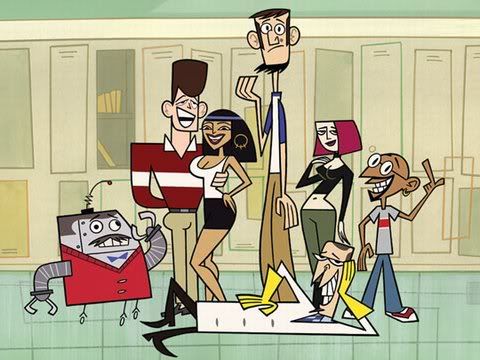
3. Clone High (MTV): If you ever meet Bill Lawrence and want to get on his good side, just remember these five words: “Dude, I loved ‘Clone High’!” Lawrence co-created the MTV series with Phil Lord and Christopher Miller, and the premise is a doozy: a government organization known as the Secret Board of Shadowy Figures is running a high school filled solely with the clones of historical figures, including Abraham Lincoln, Joan of Arc, Cleopatra, Mahatma Gandhi, and JFK. I don’t know about you, but as far as I’m concerned, concepts don’t come much more awesome than this, and the fact that these famous faces could be utilized to offer parodies of every teen drama plotline imaginable while filling the backgrounds with more historical jokes and references than you could shake a stick at made it doubly sweet.

Unfortunately, the decision to include Gandhi within its cast of characters didn’t go over well when the series made its way to the airwaves of India: nearly 150 Indian MPs and political activists pledged to fast all day in protest of the way the spiritual leader was portrayed in the series. Is that why the show never made it to a second season? Probably not entirely, but it certainly didn’t help any, either.

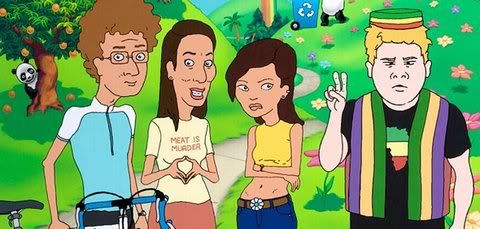
4. The Goode Family (ABC): We may be jumping the gun here, both in declaring the show dead (ABC kicked it to the curb, but Comedy Central is going to air the episodes, and if it does well, it’s not impossible that the network could order new episodes) and in declaring it to be a show that deserves to keep running, but given everything that Mike Judge accomplished with “King of the Hill” during the course of its lengthy run, it seems wrong to write off his first animated creation since the adventures of Hank Hill and his family and friends.

It’s easy enough to find humor in the foibles of a family of liberals trying to maintain a lifestyle of complete political and environmental correctness, though, so here’s hoping that “The Goode Family” finds an audience on Comedy Central, if only so that Judge and his co-creators, John Altschuler and David Krinsky, can have the chance to build on their initial vision in Season 2.

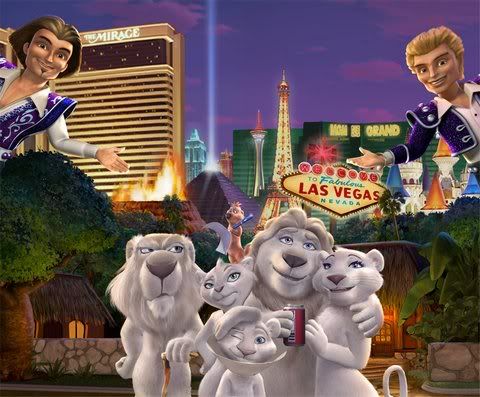
5. Father of the Pride (NBC): If you couldn’t hear the screaming and cursing that came from the offices of Dreamworks on October 3, 2003, then you just weren’t listening hard enough, because God knows it must’ve been loud as hell. That was the day that magician Roy Horn was mauled by a tiger, an event which put a serious damper on the excitement about Dreamworks’ first-ever prime-time animated series, “Father of the Pride,” about a family of white lions whose patriarch was part of Siegfried and Roy’s Las Vegas stage show.

One would think that, given the circumstances, someone would’ve said, “Maybe we should put the kibosh on this show. Roy’s in the hospital, and, c’mon, no one’s gonna be able to watch this without thinking about that!” Someone probably did say that, but there was a great deal of money already tied up in the show’s preproduction and they’d already started recording sessions with the actors. Add to that the fact that, even from his hospital bed, Roy demanded that the show go on, and there was no chance the plug would be yanked. So the show went on…and after 11 episodes, then the plug was yanked.

“Father of the Pride” was kind of a weird show. It wasn’t ashamed to play up the fact that it was a production by the same people who’d brought you “Shrek” (to the point of bringing Eddie Murphy on to reprise his role as Donkey), and yet it regularly went out of its way to have plotlines and jokes that were decidedly not kid-friendly, like having lions Larry and Kate – voiced by John Goodman and Cheryl Hines – go to a rave and get dosed with catnip, or having their son Hunter singing Tori Amos’ “Silent All These Years” in the bathtub, resulting in a dead silence from Larry and Kate which is only broken by Sarmoti (Kate’s father, voiced by Carl Reiner) asking, “Are we still pretending he’s not gay?” It’s hard to market a show that looks like it’s for kids but is actually for adults, and NBC pissed a lot of people off by pushing the “Shrek” connection, but with a ton of great guest voices behind the menagerie of animals that turned up in the various episodes and the mature sensibilities, “Father of the Pride” had the kind of elements that would’ve made it a hit on Comedy Central.

TV in the 2000s: 15 Shows Canceled After Appearing in Bullz-Eye’s TV Power Rankings*

*Probably Coincidentally

Back in 2005, Bullz-Eye kicked off a regularly-recurring feature that’s become a staple of our site: the TV Power Rankings, which gives us a chance to offer up our opinions once every six months on the best that television has to offer. Now that we’re looking back at the entire decade in our TV in the 2000s feature, however, it gave us an opportunity to look back at all of the shows that have appeared within the Rankings over the course of its history, and when we did, it was a little eyebrow-raising to see how many of our favorite programs bit the dust almost immediately after receiving accolades from us. We’re pretty sure their cancellations weren’t our fault…or, at least, not entirely. Anyway, take a look back through the list with us, won’t you? If nothing else, it shows that we’ve got good taste, even if the average viewer doesn’t always share our opinions.

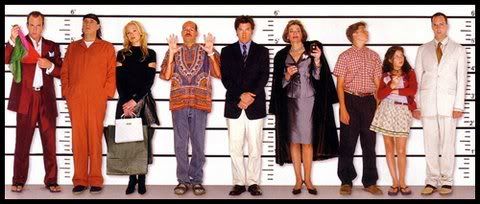
1. Arrested Development (Fox, 2003 – 2006) – “Even if this is indeed the end for one of Fox’s all time greatest shows, it is better to have loved and lost…oh, the hell with that, Fox is freaking nuts if they cancel this show.” So said David Medsker in February 2006. But did they listen to him? They did not. “We’re not ones to buy into the whole dumbing-down-of-society thing,” Medsker added, “but if this show gets canned while ‘According to Jim’ lives on, maybe there’s something to it after all.” Oh, yeah, there’s definitely something to it: “According to Jim” stayed on the air until June 2009.

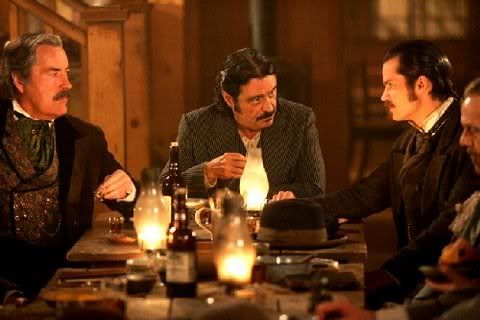
2. Deadwood (HBO, 2004 – 2006) – When it was announced that Season 3 would be the last for the semi-historical look at the wild west, there was really only one name that John Paulsen could call the folks at HBO. We probably shouldn’t use it here, but if you need a hint, it starts with a “C” and rhymes with “sock pluckers.” “Everything about the show – the language, the acting, the story, the sets and the costumes – is colorful,” Paulsen observed in February 2007, “and whether or not HBO wants to admit it, they’re going to miss ‘Deadwood’ once it’s gone for good.” They must’ve been in some serious denial, then: creator David Milch reportedly agreed to do a proper wrap-up of the series through a pair of “Deadwood” movies” for the network, but things never really got beyond the discussion stage.

3. Invasion (ABC, 2005 – 2006) – The fall of 2005 was a good time in prime time for sci-fi fans, with each of the big three networks offering up an entry from the genre, but by the spring of 2006, their cheers had turned to tears. NBC’s “Surface” was permanently submerged after 15 episodes, while CBS’s “Threshold” crossed the point of no return after only nine episodes had aired. Give ABC some credit, however, for at least sticking with their entry for the full 22. “’Invasion’ started slowly, but has steadily ramped up the creepiness,” said John Paulsen in February ’06, acknowledging that, although it gave its audience lots of questions, at least it was providing them with more answers than “Lost” was. Unfortunately, there was still plenty to be answered when the show was canceled, and things got even more depressing when Tyler Labine talked to Bullz-Eye about what might’ve been. “(Creator Shaun Cassidy) had written this bible for the show, and he had written this amazing five-season arc,” said Labine. “We were just floored. Our jaws were literally on the floor after he explained it to us. We were, like, ‘Wow, we’re on for a really great ride!’” What a shame for us all that the ride ended as quickly as it did.

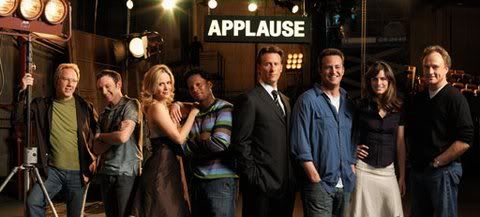
4. Studio 60 on the Sunset Strip (NBC, 2005 – 2006) – Well, you can’t say that we weren’t honest about offering up both the pros and the cons of Aaron Sorkin’s behind-the-scenes look into a late-night comedy series. “The show is pompous, unrealistic and ridiculously left-wing,” admitted Jason Zingale in February 2007, “but it also makes for some damn good television.” Unfortunately, with an awful lead-in – seriously, who thought that pairing the show with “Heroes” was a good idea? – “Studio 60” didn’t develop enough of a following to earn a second season.

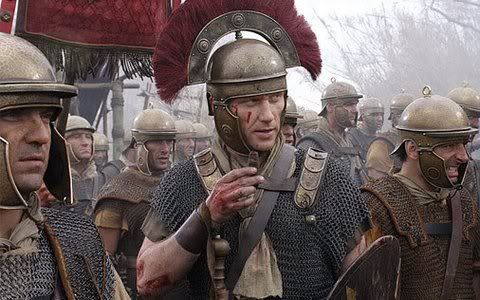
5. Rome (HBO, 2005 – 2007) – In its first season, “Rome” turned up at #18 in the Power Rankings, but by the time Season 2 aired, it had leapt to #6. Not that such success earned the show a third season (it was apparently ridiculously expensive to produce, which you can absolutely believe if you’ve ever seen it, but at least the news of its cancellation came in time for John Paulsen to register his annoyance within the February 2007 Rankings. “As it turns out, ‘Rome’ isn’t the heir to the throne of ‘The Sopranos,’” he wrote. “Instead, sadly, it’s a bastard stepchild, just like ‘Deadwood.’” Creator Bruno Heller was probably even more pissed than Paulsen, having mapped out his vision of the series all the way through its fifth season, but as recently as December 2008, Heller was still sounding optimistic about the chances for a “Rome” movie. “I would love to round that show off,” he told the Hollywood Reporter. Hey, we’re behind you 100%, Bruno.

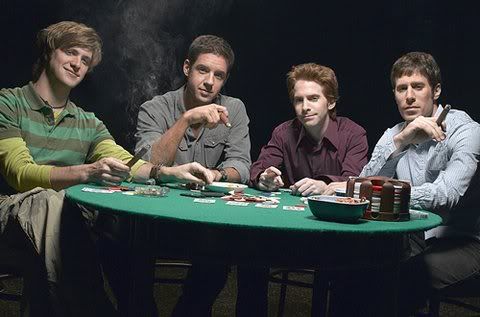
6. Four Kings (NBC, 2006) – If you don’t remember this sitcom, you’re forgiven, as it premiered in January 2006 and was gone by March. Still, it made enough of an impression to earn Honorable Mention status in the February 2006 rankings. “Four Kings” was created by David Kohan and Max Mutchnick, the duo behind “Will and Grace,” and featured Seth Green as one of its cast members, so you might think it surprising that it was off the air within seven episodes (and with a remaining six episodes still unaired). Looking back, however, the fact that the greatest praise Jason Zingale could heap upon the show in his write-up was that “it’s a worthy quick-fix until NBC finds a better alternative” should’ve given us a clue that it wasn’t long for this world.

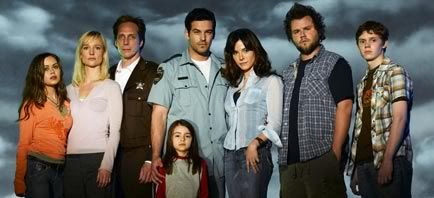
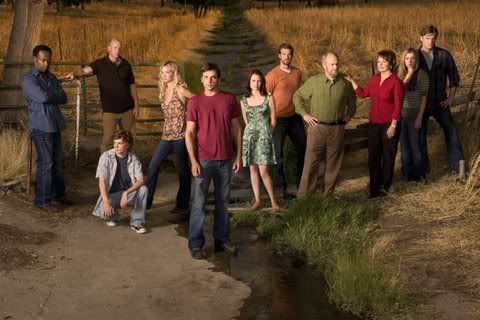
7. Jericho (CBS, 2006 – 2008) – It was the little show that could, our “Jericho.” It started with an awesomely dark premise – a nuclear bomb goes off in the U.S., and we view the repercussions through the eyes of a small town in Kansas – and, after figuring out its direction (the attempts to meld some “Little House on the Prairie” aspects to the show were soon phased out), the series found its footing, kicked some creative ass, and was promptly canceled. But what’s this…? The show’s diehard fanbase made enough noise (and sent enough nuts) to get the show a 7-episode second season which lived up to everyone’s expectations and then some. Too bad the same couldn’t be said for the ratings, but those who actually tuned in for Season 2 know how many twists, turns, and outright shocks it included. There’s still talk of a possible “Jericho” movie. We can only hope.

Continue reading »

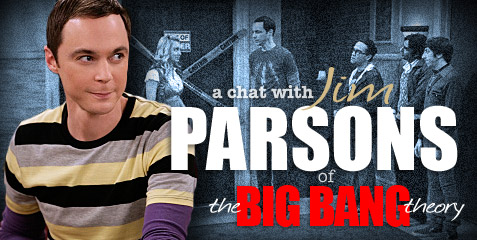
The Man Who Would Be Sheldon: A Chat with Jim Parsons (“The Big Bang Theory”)

We’re going to go on record right now and say that Jim Parsons got the shaft at this year’s Emmy Awards.

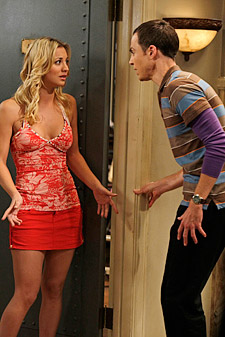
Not that Alec Baldwin isn’t great as Jack Donaghy on “30 Rock,” but in the end, he’s just another guy in a suit. As Dr. Sheldon Cooper, however, Parsons has taken a character that could’ve been just another comic book nerd and transformed him into a comedic force to be reckoned with, and he and his co-stars – Johnny Galecki, Kaley Cuoco, Simon Helberg and Kunal Nayyar – have made “The Big Bang Theory” one of the funniest shows on television. I chatted with Parsons back in 2008, then crossed paths with him again this summer during the Television Critics Association Awards and floated the idea of doing a phoner once Season Three of “The Big Bang Theory” had kicked off in earnest, which he assured me would be no problem whatsoever. Still, when the time came to set up the interview, I decided to refresh Parsons’ memory of the evening by sending him a picture from that night. Fortunately, it worked like a charm.

Here are a few pull quotes from the piece:

* On bringing guest stars to “The Big Bang Theory”: “It’s fun to inject new life into this show, anyway, but when you’re able to get someone who is so talented as an actor in general, it’s not only a coup for the show and the audience members, but for you as an actor, to get to work with them. It’s always a different dance when strong actors come in like that, because they bring their own thing, and you’re, like, ‘Wooooooo!’”

* “(Wil Wheaton) was so fun to have on the set, and he was such a good guy, just in general. He seemed to be completely okay with the fact that his entire name became a mantra of vengeful hate. That didn’t seem to bother him.”

* On the Leonard / Penny relationship: “I really like that they decided to play this kind of true to life. Two friends get together, and you’re, like, ‘Oh, that’s not going to work,’ but then six months into it, one Friday night, you suddenly go, ‘Oh, my God, I’m completely used to them being together! I’m still not sure that it’s going to last, but I’m not thinking about it anymore.’”

* “Looking at Sheldon’s sexuality is like trying to read into a Rothko painting. It’s just, like, ‘Do I see a line?’ ‘No.’ ‘No? Well, I see something…’”

* On the idea of Sheldon falling in love: “What a special person it would take to devote themselves to Sheldon, and to accept him for what he was. Not that he’s a leper or something, but he can be so trying to deal with, and if you were his intimate other, oh, my God, would you have to listen to more workings of his even deeper inner mind? Good criminey!”

Interested…? Check out the interview by clicking here…or, y’know, on that big-arse graphic above. Either one will do the trick.

« Older posts Newer posts »

© 2026 Premium Hollywood

Theme by Anders NorenUp ↑