Category: Movies (Page 207 of 498)

No surprise: “Alice in Wonderland” earns all the mad teaparty crumpets

Alice in Wonderland

There really isn’t that much to add to the news that, as reported by Box Office’s Mojo’s weekly chart, “Alice in Wonderland” suffered only a reasonably modest fall-off of 46.6% from its mega-boffo opening weekend, which meant that the latest from the Disney, Tim Burton, and Johnny Depp marketing triumvirate earned a stellar estimated $62 million this weekend. Anne Thompson and her recently added resident box office guru, Anthony D’Alesandro, report that this is a record for a non-summertime second weekend for a film. It’s certainly not that different from the expectations I discussed on Thursday.

As for the newer releases, it was something of a rout. I  like D’Alessandro’s elegant description:

Four distribs attempted to counterprogram against the Disney title this weekend based on the misguided notion that Alice was strictly family fare.  However, rather than nipping away at Alice’s audience, Alice sliced off theirs.

“This is the quintessential four quadrant movie, playing to adults at one time of day, families at matinees as well as couples,” gloated Disney distribution president Chuck Viane.

In other words, it didn’t matter what age or gender you were this weekend, most likely your first choice was “Alice.” It also performed the rare feat of scoring both the biggest gross and, with the aid of those inflated 3-D ticket prices, the best per-screen average of $16,631.

Still, people did see other movies. The marketing for “Green Zonefooled persuaded enough viewers that it was similar to the wildly successful “Bourne” pairings of star Matt Damon and director Paul Greengrass to earn an estimate of roughly $14.5 million. That might not have been so bad if “Green Zone” hadn’t cost an exorbitant reported $100 million. Conservatives, who have roundly bashed the film as anti-American, will no doubt be claiming victory over the terrorist-loving communists of Universal.

I didn’t quite have the guts to come right out and say it, but I sort of suspected that the raunchy-but-romantic comedy, “She’s Out of My League” was being overly downplayed in some of the prognostication last week and I was right, sort of. The film failed to break into double digits, but its estimated $9.6 million take was enough to put it in the #3 spot for the weekend anyway. Considering that’s just under half the film’s budget, newcomer star Jay Baruchel may not be the year’s break-out comedy star, but he will live to be the girl-friendly geek, a funnier David Schwimmer, if you will, for another day. Indeed, the film seemed to do best with younger women.

I did come right out and wonder why anyone would want to see “Our Family Wedding,” a film which THR‘s Jolly Carl DiOrio seemed to think would do significantly better than “League” — despite being in significantly fewer theaters and, if most critics are to be listened to at all, sucking. My antennae were apparently a bit better than usual and “Wedding,” did, in fact, come in below the other new releases, and the fourth week of “Shutter Island,” to hit the #6 spot with a lackluster $7.6 million estimate for Fox Searchlight. Hopefully, the budget was nice and low.  The good news is that that Rotten Tomatoes rating I linked to above has actually climbed dramatically since Thursday, from an embarrassing 4% to a merely bad 18%.

Doing a bit better, though still no doubt disappointing Summit Entertainment, was the romantic drama “Remember Me” from director Allen Coulter of “The Sopranos” and “Hollywoodland.” Just enough young girls remembered that Robert Pattinson was the “Twilight” heart-throb to make the weepy with the widely derided ending an estimated $8.3 million in the #4 spot. Considering the armies of teen-and-tween-aged girls in love with Pattinson, it’s a result that seems almost as pale as the dreamy young Brit’s vampire make-up.

SXSW 2010: Micmacs

Directors can be a pretty serious bunch, so it’s refreshing to see guys like Jean-Pierre Jeunet having so much fun making their movies that it’s evident just from watching it. The French filmmaker has been surprisingly absent from the world cinema scene since 2004’s “A Very Long Engagement,” but his return was definitely worth the wait. Jeunet’s latest film, “Micmacs,” may just be his best yet – a whimsical crime caper that boasts his trademark visual style, a classic Max Steiner score, and an ensemble cast filled with familiar faces. Though it likely won’t have the crossover appeal of “Amelie,” “Micmacs” is one of the most enjoyable moviegoing experiences of the year.

Dany Boon stars as Bazil, a Parisian video store employee whose father was killed in a landmine accident when he was kid. After he’s shot in the head during a freak accident of his own, Bazil awakens to learn that he’s not only been replaced at work and had his apartment given away, but that the bullet which nearly killed him is still dangerously lodged in his head. With nowhere to go, Bazil is adopted by a group of eccentric, trash-salvaging inventors who live under the local junkyard. When he realizes that the military contractors who manufactured the bullet and landmine are located within the city, however, Bazil teams up with his new friends to exact revenge on the men responsible for ruining his life.

micmacs

Though a lot of Juenet’s films have a fairy tale-like quality to them, “Micmacs” takes it one step further by surrounding its main protagonist with quirky companions not unlike the Seven Dwarfs. But instead of Dopey, Grumpy and Sleepy, there’s a contortionist (Julie Ferrier), a human cannonball (Dominique Pinon), a girl who can calculate anything in her head (Marie-Julie Baup), and a guy who only speaks in idioms (Omar Sy). Each character has their moment to shine, but Pinon is the clear standout in a role that falls somewhere between his circus performer from “Delicatessen” and his ill-tempered lover from “Amelie.” Dussollier and Marié also turn in great performances as the film’s villains, but it’s Dany Boon who’s the heart, soul and funny bone of the story.

It’s hard to believe he wasn’t Jeunet’s first choice, because Boon seems tailor-made for the role – a modern day Buster Keaton with the ability to entertain the audience with even the most basic pantomime. Once the film moves into the revenge portion of the story, however, the comedy veers more towards the slapstick, with each zany set piece leading to the next, even zanier set piece like a Rube Goldberg contraption designed by Danny Ocean. It’s all done so effortlessly, and with Boon and his co-stars so charming throughout, that you’d have to be in a pretty sour mood not to walk out of “Micmacs” with a giant grin on your face.

SXSW 2010: Tucker and Dale vs. Evil

Every so often, a movie comes along that sounds too good to be true. Whether it’s the talent involved, an interesting concept, or a particularly well-cut trailer, it’s easy to be duped into thinking a movie will be better than it really is. Thankfully, “Tucker and Dale vs. Evil” is not that film. A horror comedy in the spirit of “Shaun of the Dead,” “Tucker and Dale” isn’t a spoof of the genre it’s parodying (in this case, hillbilly slasher movies like “Wrong Turn”), but rather a razor-sharp homage fueled by a clever script and hilarious performances from its stars.

Alan Tudyk and Tyler Labine star as Tucker and Dale, two good ‘ol boys on their way to fix up their newly purchased vacation home in the woods when they cross paths with a group of college students who think they’re serial killers. So when the duo saves one of the students (Katrina Bowden) after she falls into the lake and hits her head on a rock, her friends think that she’s been abducted and being held captive in their cabin. Determined to fight back, the students take turns going after the supposed hunters, but every time they do, they only end up killing themselves instead. From their point of view, it certainly looks like Tucker and Dale are responsible for the bloody mayhem, but the two friends are nothing but unlucky – a fact that only becomes clearer when the group’s bloodthirsty leader (Jesse Moss) takes matters into his own hands

tucker_and_dale_vs_evil

“Tucker and Dale vs. Evil” is a movie built around a series of ridiculous coincidences (just like the films it playfully pokes fun at), and while it may seem a bit far-fetched at times, it’s all part of the experience. Writer/director Eli Craig is obviously a big fan of the genre, because he knows which strings to pull and how to pull them. He’s crafted some pretty memorable death scenes that, despite causing fits of laughter, don’t skimp on the bloody details either. There’s plenty of gooey viscera splattered throughout the film, but its strengths lie in Craig’s script – particularly the exchanges between its title characters as they ponder the reason why these students would be killing themselves.

For as funny as the script may be, however, there would be no “Tucker and Dale” without Alan Tudyk and Tyler Labine, who have such great onscreen chemistry that you wouldn’t mind them starring in every movie together. Labine ends up playing a much larger role than his co-star due to a romantic subplot between him and Katrina Bowden, but Tudyk arguably gets the better material, including one scene no doubt inspired by “Fargo.” If only the actors playing the college students were even remotely as good. Granted, most of them are nothing more than stupid bait, but Jesse Moss plays such a pivotal role that his over-the-top performance is distracting. It’s the only element that doesn’t work as well as the others, but even though “Tucker and Dale vs. Evil” is a mostly one-joke affair, it finds ways to keep you laughing even when it’s not at its best.

The Pacific war in the movies, pt. 3

There’s absolutely no denying the reality of racism in the war between Japan and the United States. While the Japanese military dictatorship was in many respects almost as virulently race obsessed as their Nazi allies, it’s easier for an American viewer to see the fact that the U.S. was guilty of  race hatred of its own, starting with the imprisonment of thousands of innocent American citizens on the west coast who happened to be of Japanese ancestry,  many of them parents and grandparents of friends of mine. Meanwhile, Italian-Americans and German-Americans were accepted as the loyal citizens of this nation that nearly all of them were.

And so it took decades for Western filmmakers to begin to treat the Japanese side of the war with any complexity.  As we continue with a series of film clips inspired by HBO’s “The Pacific,” which premieres Sunday night, we have a brief but haunting and beautifully composed scene from John Boorman’s 1968 two character war film, “Hell in the Pacific.” The film stars Lee Marvin and Toshiro Mifune as two stranded soldiers who, in a plot that may remind science fiction buffs of the story and 1985 film “Enemy Mine,” are forced to work together in order to survive despite their enemy status.

Also, of course, no Western filmmaker that I know of explored the Japanese side of World War II with more depth or compassion than Clint Eastwood did in his bold, masterful “Letters from Iwo Jima” from 2006. Apparently, it took an icon of American toughness to illustrate the pain of some of the deadliest, most implacable, and bravest enemies this country ever faced.

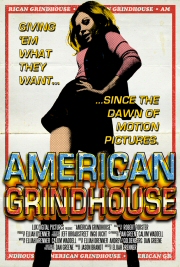
SXSW 2010: American Grindhouse

With grindhouse cinema making a bit of a comeback in recent years with movies like “Black Dynamite,” “Hell Ride,” and of course, “Grindhouse,” Elijah Drenner’s documentary about the history of exploitation film couldn’t have come at a better time. Narrated by Robert Forster (who’s appeared in his share of B-movies), “American Grindhouse” tracks this shameless and shocking breed of moviemaking from its birth in the early 1900s to its illusory transition into mainstream cinema today. Featuring interviews with directors like John Landis, Joe Dante and Jack Hill, and film historians like Eric Schaeffer and Eddie Muller, “American Grindhouse” may be a little vanilla in its presentation, but it’s a pretty fascinating story nonetheless.

In fact, while exploitation movies have been around almost as long as the movie camera itself, what’s most interesting about the genre is how much it’s evolved throughout the years. Drenner’s film studies this evolution, beginning with the implementation of the Hays Code by the MPAA, which forced filmmakers to brand their movies as “educational” in order to feature nudity or any other type of suggestive nature. This led to the “birth of baby” films of the 1930s, and eventually, branched out into the post-war burlesque movies of the 40s. For my money, though, exploitation cinema didn’t really take off until the arrival of nudie-cuties like Russ Meyer’s “The Immoral Mr. Tease” (which many consider to be the very first porno) and “women in danger” films like Herschell Gordon Lewis’s “Scum of the Earth.”

Along the way, Drenner also covers the gore films of the 60s and 70s (including a lengthy discussion about Wes Craven’s controversial “The Last House on the Left”), as well Blaxploitation cinema, “women in prison” films, Nazi exploitation movies, and the mainstream success of “Deep Throat.” The film’s most interesting segment, however, isn’t really about grindhouse cinema at all, but rather studio-funded movies like “Jaws” that offered the thrills of a B-movie with the production values of a Hollywood blockbuster. It’s exactly this change in the Hollywood system that essentially put an end to grindhouse, but as director John Landis is keen to point out, the very term “exploitation” is subjective, because as long as there’s an element you can exploit, it falls under the category of an exploitation film.

Landis may be the most recognizable name in “American Grindhouse,” but without his insightful and often humorous commentary, the movie wouldn’t be nearly as entertaining. He brings some really great ideas to the table that the other interview subjects fail to even consider – namely the concept that mainstream hits like “Passion of the Christ” and “American Gangster” are actually exploitation films in disguise. It certainly makes sense, and if there’s one thing you should take away from “American Grindhouse,” it’s that exploitation cinema isn’t dead. In fact, if Landis is to be believed, it never will be. That may not be what Drenner was trying to accomplish with this film, but it’s a message I’m sure he could get behind.

« Older posts Newer posts »

© 2026 Premium Hollywood

Theme by Anders NorenUp ↑