Category: Movie Dramas (Page 45 of 188)

Weekend box office: “The Expendables” kills with men; “Eat Pray Love” shines for women; the world defeats “Scott Pilgrim”

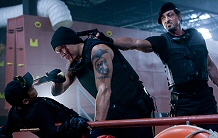
The ExpendablesI doubt he follows box office grosses, but like one of the books by right-leaning humorist/pundit P.J. O’Rourke, this weekend most certainly could have been entitled Age and Guile Beat Youth, Innocence, and a Bad Haircut. To be specific, Jason Statham is still two years shy of his 40th birthday, but he’s an infant compared to most of the cast of writer-director-star Sylvester Stallone‘s “The Expendables.”

The action flick, about mercenaries hired ostensibly to overthrow a repressive Latin American regime, relied on the very sound box office logic that if one or two super-macho action stars could lead to reasonably dependable ticket sales even when well past their physical peak, eight very grown-up action stars (counting two superstar cameos) was more or less a sure thing. More or less as predicted by everyone, the bloody R-rated actioner earned just over an estimated $35 million for Lions Gate. So says the mighty Box Office Mojo weekend chart.

Also, while Julia Roberts is substantially younger than Stallone, the early forties are not young in actress years. Her many female fans, and the fans of the popular memoir, “Eat Pray Love,” embraced that maturity to the tune of an estimated $23.7 million for Sony. The studio spent a perhaps excessive $60 million on the flick, though the film clearly needed a star like Roberts to open like this, so her reported $10 million salary was probably worth it for the studio.

Sony had a decent weekend overall, with last weekend’s #1 film, “The Other Guys” suffering an average drop of just under 50% and earning an estimated $18 million in third place. Warner’s very leggy “Inception” held firm with an estimated $11.37 million getting into fourth place in its fifth week.

Then we have “Scott Pilgrim vs. the World.” The Pilgrim reception is inducing nasty flashbacks of past would be “viral” successes with its estimated $10.525 million. The film may well do better over the long run as it’s already a huge cult success, if you think about it, and the international numbers could always be different. Being “big in Japan” has certainly saved a lot of bands, why not Mr. Pilgrim?

However, it cost a not-tiny $60 million (including various credits and rebates for the Toronto-based films, says Anthony D’Allesandro) and was pretty much the talk of the Internet film geek sites for most of the summer. It also reportedly has done very well with the people who’ve actually seen it, both anecdotally and, according to Anthony D’Allesandro, according to Cinemascore. It should have done a lot better.

2380_FP_STILLS_00095R.JPG_cmyk

Behold the power of the Internet…to make fans bored with a movie before it comes out, while still leaving non-fans out in the cold.  More about this in a post to come later in the week, after the “actuals” come out. I will say I thought “Scott Pilgrim” would beat “Kick-Ass” as it theoretically should appeal to a wider audience, except that the superhero jet-black comedy actually made about $19 million on its below-expectations opening. As the man said, no one knows anything.

Meanwhile in limited release, the second highest per-screen average went to a decent opening for the intriguing Aussie crime thriller “Animal Kingdom” and “Get Low.” The folksy melodrama — which didn’t make me or anyone else in the audience I saw it with laugh much but some insist on calling a comedy drama — continues to get reasonably high at the box office despite my poor review and my delayed write-up of the press conference with charming stars/acting legends Robert Duvall and Sissy Spacek, which I promise you’ll be seeing before much longer. I truly don’t see the appeal, but Oscar hopes are growing for this one. More on limited releases, as usual, at Indiewire.

Happy #65, Herr Wenders and Mr. Martin

I don’t know what astrologers will make of it, but 65 years ago today, a German infant in Dusseldorf and a relatively poor not-black child in Waco, were born.

One became one of the most influential and popular serious film makers of his time. Here’s a moment from probably my second favorite film of my least favorite movie decade, “Wings of Desire” starring Bruno Ganz as an angel who envies us mortals.

Today’s other birthday boy became a rather talented comedian, writer, and actor and a bit underrated at all of it.

A confession: I’ve never seen “The Jerk.” Another one for the Netflix queue.

The end-of-week movie news dump vs. the world

It’s been somewhat surprising, even given my own innate skepticism about practically everything, that for the last week or so there’s been very little compelling movie news — really very little that I could bring myself to even mention here. To be honest, I kind of liked that way. Much less time consuming and more fun to just throw trailers and stuff at you guys. The last 24 hours or so, however, have been a very different story.

* I often wonder where George Lucas went wrong in a number of departments. Today he’s King Midas in reverse with actors — who else could actually make Samuel L. Jackson boring? — but he directed the very well acted “American Graffitti.” His first two “Star Wars” movies were imperfect but great, great fun — and he had the great good sense to bring in the best writers available, and a very strong director, for the second one. He insisted on doing the three prequels himself, however, and in my opinion and lots of other people’s, showed how borderline unwatchable a space opera could be.

What went wrong? I don’t know but one thing that did happen to Lucas was the departure of producer Gary Kurtz, he of the Abe Lincoln beard who I honestly haven’t thought about in decades.

MV5BMTUyMTA1MzM2MF5BMl5BanBnXkFtZTYwMTE4OTE2._V1._SX420_SY254_

Continue reading »

A roundtable chat with Luke Wilson of “Middle Men”

MM-07766

It’s been nearly 15 years since producer James L. Brooks bankrolled a feature version of a short film made by some Texas youngsters, and that movie (“Bottle Rocket”) introduced the movie world to director Wes Anderson, Owen Wilson, and his brother, Luke. Since then, Dallas-born Luke Wilson’s movie-star handsome likeness has become a highly familiar to filmgoers, playing both leading men and supporting roles mostly in comedies like “Legally Blonde,” “Old School,” and Mike Judge’s criminally maltreated “Idiocracy,” as well as “Rushmore,” “The Royal Tenenbaums,” and a classic cameo in “Anchorman.” (He was the anchor who — spoiler alert — got his arm was sliced off with a sword by Tim Robbins.)

To this day, Wilson has a habit of turning up in odd and interesting places, like a series of well-known commercials for AT&T or in the uneven but entertaining “Middle Men,” in which Wilson very credibly stars as a Texas businessman who gets much more than he expected at the intersection of e-commerce and adult entertainment. He is also preparing to play the part of Laura Dern’s flaky ex-husband on “Enlightened,” a new TV series from cult writer-producer Mike White (“Chuck and Buck,” “School of Rock“) with episodes directed by Oscar-winner Jonathan Demme.

At the risk of creating an embarrassing but perhaps partially correct impression of a man-crush, in person Luke Wilson is a highly charismatic guy. Behind his highly colloquial speech — I’ve left out a lot of “likes” — is an intelligence that, without giving away much of anything, dispenses with a lot of the usual show business interview platitudes. Now in his late 30s, he also appeared thinner than his slightly chunky appearance on “Middle Man” or his recent AT&T commercials. That was because Wilson had deliberately gone over his normal weight by about 25 pounds for the role of a hard-driving businessman and family guy.

What was that like?

Continue reading »

TCA Press Tour, Summer 2010: Days 9 and 10

Although the TCA Press Tour actually ended on July 8th, there were so many things going on and so many different series and specials being covered that I simply didn’t have time to tackle them all while I was still out there. Plus, let’s be honest: once we get past the broadcast networks, do you really need full-fledged coverage on every single one of them?

Well, maybe you do…and if you do, then I’ll be glad to give it to you, since it’s never too late for a TCA member to delve back into the archives and produce the highlights of the tour’s various panels.

In the meantime, though, here’s a quick list of what was covered during the course of PBS’s two days of the tour, along with what the network itself has to say about the programs in question. If you want a straighter strain of dope on any of them, just say the word…

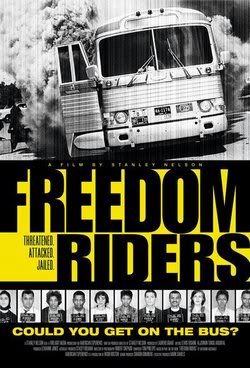
* American Experience: Freedom Riders:

Award-winning filmmaker Stanley Nelson returns to the Sundance Film Festival with his latest documentary “Freedom Riders,” the powerful, harrowing and ultimately inspirational story of six months in 1961 that changed America forever. From May until November 1961, more than 400 black and white Americans risked their lives—and many endured savage beatings and imprisonment—for simply traveling together on buses and trains as they journeyed through the Deep South. Deliberately violating Jim Crow laws, the Freedom Riders’ belief in non-violent activism was sorely tested as mob violence and bitter racism greeted them along the way.

“Freedom Riders” features testimony from a fascinating cast of central characters: the Riders themselves, state and federal government officials, and journalists who witnessed the rides firsthand. Despite two earlier Supreme Court decisions that mandated the desegregation of interstate travel facilities, black Americans in 1961 continued to endure hostility and racism while traveling through the South. The newly inaugurated Kennedy administration, embroiled in the Cold War and worried about the nuclear threat, did little to address domestic Civil Rights. Organized by the Congress of Racial Equality (CORE), the self-proclaimed “Freedom Riders” came from all strata of American society—black and white, young and old, male and female, Northern and Southern. They embarked on the Rides knowing the danger but firmly committed to the ideals of non-violent protest, aware that their actions could provoke a savage response but willing to put their lives on the line for the cause of justice.

null

Each time the Freedom Rides met violence and the campaign seemed doomed, new ways were found to sustain and even expand the movement. After Klansmen in Alabama set fire to the original Freedom Ride bus, student activists from Nashville organized a ride of their own. “We were past fear. If we were going to die, we were gonna die, but we can’t stop,” recalls Rider Joan Trumpauer-Mulholland. “If one person falls, others take their place.” Later, Mississippi officials locked up more than 300 Riders in the notorious Parchman State Penitentiary. Rather than weaken the Riders’ resolve, the move only strengthened their determination. None of the obstacles placed in their path would weaken their commitment. The Riders’ journey was front-page news and the world was watching. After nearly five months of fighting, the federal government capitulated. On September 22, the Interstate Commerce Commission issued its order to end the segregation in bus and rail stations that had been in place for generations.

“This was the first unambiguous victory in the long history of the Civil Rights Movement. It finally said, ‘We can do this.’ And it raised expectations across the board for greater victories in the future,” says Arsenault.

“The people that took a seat on these buses, that went to jail in Jackson, that went to Parchman, they were never the same. We had moments there to learn, to teach each other the way of nonviolence, the way of love, the way of peace. The Freedom Ride created an unbelievable sense: Yes, we will make it. Yes, we will survive. And that nothing, but nothing, was going to stop this movement,” recalls Congressman John Lewis, one of the original Riders.

Says Stanley Nelson, “The lesson of the Freedom Rides is that great change can come from a few small steps taken by courageous people. And that sometimes to do any great thing, it’s important that we step out alone.” (Winter / Spring 2011)

* American Masters: LENNONYC:

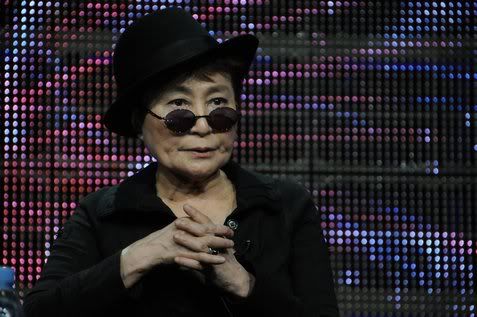
This fall, as the world remembers John Lennon on what would have been his 70th birthday, and the 30th anniversary of his death, American Masters airs “LENNONYC,” a new film that takes an intimate look at the time Lennon, Yoko Ono and their son, Sean, spent living in New York City during the 1970s. “New York became a part of who John and I were,” said Ms. Ono. “We couldn’t have existed the same way anywhere else. We had a very special relationship with the city, which is why I continue to make this my home, and I think this film captures what that time was like for us very movingly.”

Following the breakup of the Beatles, Lennon and Ono moved to New York City in 1971, where Lennon sought to escape the mayhem of the Beatles era and focus on his family and private life. At the same time, he created some of the most acclaimed songs and albums of his career, most of them written at his apartment at The Dakota on Manhattan’s Upper West Side, including “Mind Games,” “Whatever Gets You Thru the Night,” “I’m Losing You,” and “Woman.” He also remained highly active in the anti-war movement as well as numerous other progressive political causes. As much as New York made an impact on Lennon and Ono by offering them an oasis of personal and creative freedom, so too did they shape the city. At a time when New York faced record high crime, economic fallout and seemed to be on the verge of collapse, Lennon and Ono became a beloved fixture in neighborhood restaurants, at Central Park, at sports events and at political demonstrations.

Lennon and Ono also bonded with millions of their fellow New Yorkers in their experience as immigrants. The film traces their struggle to remain in the U.S. when the Nixon administration sought to deport them, supposedly based on a narcotics violation, but which Lennon insisted was in response to his anti-war activities. “LENNONYC” features never-before heard studio recordings from the Double Fantasy sessions and never-before-seen outtakes from Lennon in concert and home movies that have only recently been transferred to video. It also features exclusive interviews with Ms. Ono, who cooperated extensively with the production and offers an unprecedented level of access, as well as with artists who worked closely with Lennon during this period, including Elton John and photographer Bob Gruen (who took the iconic photograph of Lennon in front of the skyline wearing a “New York City” t-shirt). (Nov. 22, 2010)

Continue reading »

« Older posts Newer posts »

© 2026 Premium Hollywood

Theme by Anders NorenUp ↑