Category: Interviews (Page 19 of 69)

A Chat with Paterson Joseph (“Survivors”)

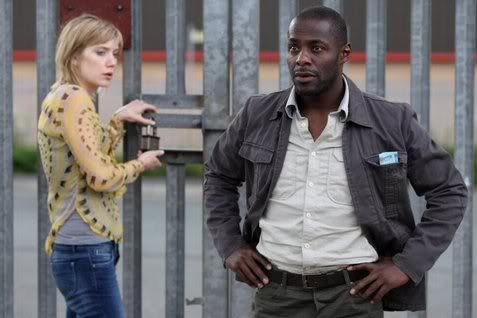
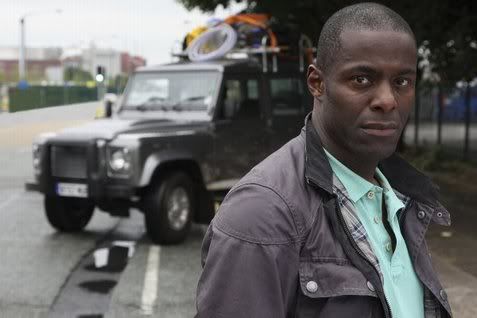
Paterson Joseph is the sort of actor whose face tends to be familiar more to the Anglophiles who frequent BBC America than to the average Stateside viewer, a fate owed to the fact that the majority of his projects – such as “Casualty,” “William and Mary,” “Peepshow,” and “Hyperdrive,” to name a few – have had highly limited screenings on our shores. They’ll soon see him, however, as one of the stars of BBC America’s latest import, “Survivors,” which premieres on Saturday, Feb. 13th. I was able to catch up with Joseph a few hours after he’d done the TCA panel for the series, but the start of our conversation was delayed momentarily by the fact that he popped into the bar just at the moment that I was saying good night to my daughter on the phone. Thankfully, however, he was quite tolerant of my family matters, and we soon settled in to talk about “Survivors,” though not until after I let him know why I recognized him.

Bullz-Eye: When I first started watching “Survivors,” I saw you and I kept thinking, “I know this guy. I know I know this guy.”

Paterson Joseph: Oh, really? (Laughs)

BE: And then I suddenly realized, “It’s the Marquis!”

PJ: Ah, yes: the Marquis De Carabas! (Smiles) I loved “Neverwhere.” Absolutely loved it. And I wish…see, if the “Doctor Who” we have now had happened that same year, before we did “Neverwhere,” then “Neverwhere” would’ve worked like a dream, because it would’ve had all the money that it needed. Unfortunately, at that point, the only proper sci-fi that we had was “Blake’s 7,” which had not gone down well at all…and I suspect you know exactly what I mean by your expression.

BE: I don’t know what you’re talking about. (Laughs)

PJ: (Laughs) And, so, sci-fi was persona non grata until “Doctor Who,” but then “Doctor Who” happened, and…well, you know all this, but now fantasy drama, sci-fi, has got lots of money. It’s a damned shame. But Neil Gaiman, I think, is still trying to get a movie done here. He’s working on it.

BE: I’m ready for it. I’m ready for “Neverwhere,” “American Gods,” and anything else of his that they want to adapt.

PJ: Yeah, he’s great, man. Great.

BE: So what was your familiarity with the original version of “Survivors”?

PJ: I probably saw the opening sequence when I was about 10…and then was told to go to bed. (Laughs) So I had never really seen it, but I did remember the opening sequence when I saw it on YouTube. It’s quite striking. And then I watched the first three episodes when I got this job, and…I might as well have done in some ways, because it’s so vastly different.

BE: Yeah, Adrian (Hodges) was just saying about how he made a point of changing a key moment in the first episode, just to keep people on their toes.

PJ: That’s right!

BE: So how developed was the character of Greg Preston when you first came aboard? Did he evolve at all once you got into the role?

PJ: He was always…I mean, I described it in my interview when I read it as…he seems a bit like a guy who’s basically walking on water. Everything seems fine, he’s walking away, everything’s very serene. But underneath is a sea of shit. That’s how I described it to them in the interview, and I think that’s right. I think Adrian always had that in mind, that there was a world of pain under Greg’s easygoing persona. Even in his sort of dismissive “I don’t need people” persona, there was a world of pain and desperation, and you see that in…well, for you guys, it’s in Episode 7. It all comes out. Literally. You see everything.

Continue reading »

A Chat with Ti West (“House of the Devil”)

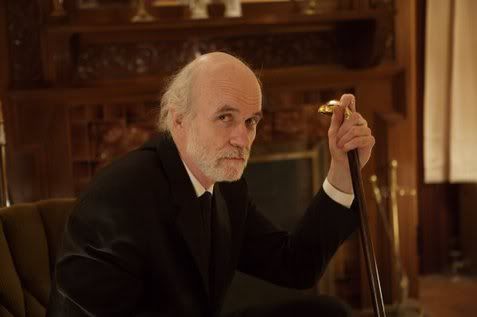
Writer / director Ti West has been in the business for a decade now, helming such memorable – if low-budget – films as 2005’s “The Roost” and 2007’s “Trigger Man,” but it wasn’t until this past year that he finally began to rack up some major critical acclaim, courtesy of a mighty darned cool horror flick called “House of the Devil.” The film made the festival rounds and picked up a lot of buzz, then did a stint on the VOD circuit, but now it’s finally hitting home video, and you can count on it developing a cult following in a rapid fashion. Bullz-Eye talked to Ti in connection with the DVD release of “House of the Devil,” and in addition to discussing how such familiar faces as Tom Noonan and Mary Woronov came into the picture, he also chatted about some of his earlier directorial efforts and acknowledged that he’d much rather Alan Smithee’s name appeared on “Cabin Fever 2” instead of his own.

Bullz-Eye: Big fan of the movie. I heard a lot of the buzz about it, but I only finally got to see it once it came out on DVD.

Ti West: Oh, good. I’m glad it delivered. A lot of times, people hear a lot of buzz, and then they say, “What the fuck…?” That’s the great thing about getting buzz for a movie: it’s like free promotion. And then the bad thing is that the message boards sometimes run wild on you. (Laughs)

BE: Well, in this case, I was more or less familiar with a lot of the films that it was stylistically emulating, so I was, like, “This is sweet.” So what gave you the idea to do this…I don’t know, would you call it an homage?

TW: I wouldn’t. People do. But I more just think of it as a period piece. I mean, it’s set in the early ‘80s, so I tried to make it look like it was the early ‘80s, the same way if, it was set in the ‘50s, maybe it would be, like, Technicolor-looking or something like that. I just think that, because that period is so en vogue to reference and it’s so hip and retro to make movies about it, the word “homage” gets thrown around a little bit more than it should.

BE: So what inspired you to do a period piece, then? (Laughs)

TW: Well, I mean, since the story was about Satanism, more or less, the early ‘80s was really the height of this sort of cultural phenomenon within the United States. Now it’s called “Satanic Panic.” I just remember that growing up very vividly. I don’t know why, but I guess growing up in the suburbs, I just remember that if you went down to the park by yourself, you’d get kidnapped in a van with no windows and they’d sacrifice you to the Devil. And I remember seeing, like, Geraldo and people talking about it on TV, and I just found it really fascinating, so it always stuck with me. So when it came time to make another horror movie, I just wanted to make something Satanic, because I also really like the sort of evocative imagery and all that sort of stuff, so the only time that made sense for me to set that movie was in the early ‘80s. Nowadays, nobody’s worried about the Devil because there’s so many other things to be worried about, whereas in the ‘80s, there was this weird, almost fantasy element to what people were afraid of.

BE: You’ve definitely got a couple of actors in the film who are, if not genre specific, certainly bring to mind a few other creepy movies, like Tom Noonan (“Manhunter”) and Mary Woronov (“Silent Night, Deadly Night”).

TW: Definitely, yeah. I’m huge fans of both of them, and I’d worked with Tom before, so it was a pleasure to do it again.

BE: Had you always considered him for the role of Mr. Ulman?

TW: Not necessarily. It was one of those things where I was so focused on “how the hell am I going to find a girl who’s going to be in every frame of this movie?” that I hadn’t really given a lot of serious thought to who we were going to cast in that part. And then he E-mailed me and had gotten hold of the script somehow…I still don’t know how he did that…but he’d somehow gotten hold of the script, and he liked it and said, “I think I’d be great for it.” And I was just, like, “Done!” It made it really easy. It wasn’t necessarily written with him in mind, but it wasn’t necessarily not, either, because I know him and I knew he’d be perfect for it.

Continue reading »

A Chat with Adrian Hodges (“Survivors,” “Primeval”)

Adrian Hodges has been beloved by fans of BBC America’s ever-growing sci-fi lineup ever since presenting them with “Primeval,” which he created along with Tim Haines, but they’ll soon have a new reason to give him a hug when they seem him on the street. Americans may not be familiar with the 1970s British TV series known as “Survivors,” but, hey, that’s okay: it just means that they’ll be able to dig into Hodges’ new take on the series – which premieres this Saturday night on BBC America – without any preconceptions. Plus, as you’ll soon read in my chat with Mr. Hodges, which took place a few hours after the TCA panel for “Survivors,” he’s taken great pains to make sure even those who are familiar with the original series will, by the end of the first episode of this new version, realize that he’s got plenty of surprises in store for them, too. Oh, and listen up, “Primeval” fans: you’d well to read beyond the bits about “Survivors,” as we chatted about the status of the third series of “Primeval” as well as the oft-discussed feature film based on the show. There’s also some stuff about other items on Hodges’ C.V., and…well, you’d just better go ahead and read it for yourself, hadn’t you?
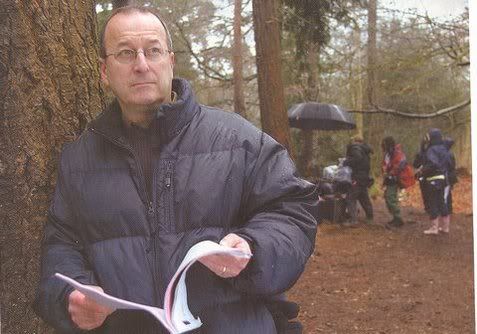
Adrian Hodges: Wow, look at your recorder. I used to do a bit of journalism when I first started out, but my tape recorder was… (Holds his hands several inches apart, then laughs) That’s technology for you!

Bullz-Eye: Hey, mine’s shrunk by two or three times in size just in the past few years! (Laughs) Well, first off, I just want to say that I’m a big “Primeval” fan.

AH: Thank you! Cool!

BE: I was not familiar with the original 1970s version of “Survivors,” but I take it that you were at least somewhat of a fan of it.

AH: Yeah, I was, in that kind of general way we are when we’re kids and we watch TV. I was maybe 15 or 16, something like that, and I remember very clearly the impact of the first episode. If I’m honest, I’m hazy about some of the other, later episodes, but I do remember the extraordinary shock of the imagery of a husband dying, of things that were stand-out images in my head, and you carry that through the years. It was something I remembered very well, so it was really kind of great to be asked to have another look at it, you know?

BE: So they pitched it to you, then?

AH: They did. What happened was that I’d done “Primeval,” as you know, and I was very actively looking for a genre show that I could do in a slightly…well, in Britain, it’s in a later timeslot. Something that was a bit more…I don’t want to say more adult, because I think that “Primeval” is adult, but not a family show in the same way. However you define “family.” (Laughs) So “Survivors” was perfect. BBC had had this great success with reviving “Doctor Who,” so they were looking at some of their old shows and saying, “Well, that one wouldn’t work, but maybe this one would.” And “Survivors” was one they thought might work again, so they basically came to me and said, “What do you think?” And I thought it was great, not so much because of the set-up, not just because of the post-apocalyptic thing, which is fascinating, but it’s kind of not the point. The point is what happens afterwards, and that’s the fun of it for me as a writer, ‘cause you don’t often get a chance to write about people in the most extreme situation. So that’s why I wanted to do it.

BE: What was the profile of the original show? Was it semi-high? I ask because I’m a kind of an Anglophile, so I was surprised that I hadn’t heard of it.

AH: I don’t think it was, really. In terms of being a success at the time, it was, but it wasn’t, like, a thing like with “Doctor Who,” where you carry that memory with you, and so that when it was revived, there was this huge desire to like it. It was one of those shows where…people didn’t want to not like “Doctor Who.” They wanted to like it. It was a nice thing to happen, and it doesn’t often happen. There aren’t many shows that people are so fond of that they can go with that attitude to them. Usually, as you know, when you remake or re-imagine a show, you get the opposite reaction, which is that people don’t really want you to do it, because they liked it the first time. And, now, there’s been such an acceleration of remaking of formats. It’s a very dangerous area. I thought “Survivors” was a good one because it was a success at the time, which proved that it was a strong idea, but it wasn’t so well known that it would be something that everybody would be saying, “Oh, but you didn’t do that scene, you didn’t do it like this, you didn’t do that.” The truth is, it was the best part of 40 years ago, and it’s not a classic. It’s a very good show. The first episode of the original is a model of brilliant series set-up writing, and, indeed, much of the rest of it. But it is fundamentally a show which was well-liked but probably not as well-remembered as some. Not everything can be a classic, you know. That’s the way it is. I couldn’t believe that “Edge of Darkness” was being remade. It’s amazing, after all these years, to suddenly see it. So stuff comes around.

BE: So did you revisit that first episode of “Survivors” before you made this new version, or did you just kind of go from memory and dive into the new version?

AH: I watched the whole of the first series before I started writing, and I don’t usually do that with things where there’s existing material. I mean, in a completely different genre, I’ve just done a new version of a film called “The Go Between.” I’ve adapted the L.P. Hartley novel, and I didn’t look at the film of that, because I deliberately didn’t want to be influenced by it. I’ve only looked at it relatively recently, and it’s interesting to see what they did and what I did, and that’s fine. But with “Survivors,” I thought that it was…well, because I was basing some of my material on that original material, it seemed respectful and sensible to look at the way they’d done it, and also to remind myself what they’d done well and maybe what they hadn’t done quite so well, just to see how it would go. I always knew I was going to move away from that version quite quickly, but I wanted to make sure that whatever was good…I mean, I’m not crazy: if it’s good, I’m going to do it again. (Laughs)

BE: How did you go about selecting your cast? Was it a case of finding folks you’d worked with in the past, or was it more of a standard audition process?

AH: There’s a little bit of that. I mean, because of the way television works, as you know, there’s a certain pressure to use a certain profile of actor in certain roles. We knew we needed a leading lady that meant something to the British audience, and that’s, in truth, not that big a pool of people. It’s tough to find exactly the right person, particularly a woman who’s grown up, a woman with children who’s believable as an ordinary woman. So Julie (Graham) was actually pretty straightforward, because she was one of only one or two who really fit the bill…and, luckily, she wanted to do it! So at that point, we closed that. That was done. The other guys…it’s an interest process. Paterson (Joseph), funnily enough, was a very early choice, and then we went ‘round the houses looking at other people and then came all the way back to Paterson. And that sometimes happens, ‘cause it’s a bit like when you get something right first time, and you think, “Have I really got it right?” And you go and try prove it sixteen other different ways, but you still come back to the right answer, so that was Paterson. The others…it’s just a question of trying to find the right faces for the roles, the right talent and the right look, and that’s hopefully what we did.

(SPOILER ALERT: If you haven’t watched the first episode of “Survivors” yet, then you’ll want to head off for a bit and pop back ‘round after you’ve had a chance to see it.)

Continue reading »
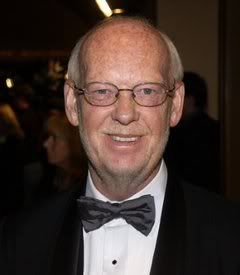
A Chat with Mick Jackson, director of “Temple Grandin”

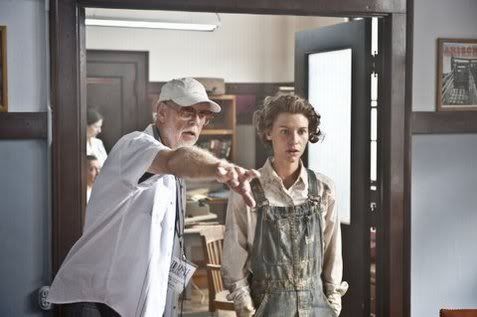
Sunday night brings the premiere of HBO’s wonderful new film, “Temple Grandin,” and if you’ve been reading Premium Hollywood lately, then you’ve already seen my interview with its subject, Dr. Temple Grandin. After the panel for the film at the TCA tour, I also caught up director Mick Jackson for a few minutes, which was just enough time to ask him about working with Grandin, to find out why he made one of his casting choices, and for him to offer me a bit of sage directorial advice.

Bullz-Eye: I talked to Temple a little earlier, and she said that she really enjoyed the process of working with you on the film.

Mick Jackson: Oh, she’s wonderful. Part of the story that we tell in the movie is that she has this tremendous eye for detail and uses that to put it together into a pattern and see the whole picture, but, in fact, when you’re dealing with us as movie makers, it’s the same thing. She had the eye for the details that were right and the details that were wrong, but she also had – unusually for someone whose life you’re telling through film – a sense of what it’s like to make a movie, to put it together into a whole picture. We reconstructed what we thought her apartment as a student would be like at Arizona University, based on what she told us and where she lives now, and she visited the set and I said, “That’s supposed to be your rooms.” And she said, “Hmmm. Well, it isn’t. But it could’ve been. It could easily have been.” (Laughs) It really takes a great ability to be able to step outside your own life to be able to say that. And she understood that, when telling the story of someone’s life, you don’t tell every bit of it. Otherwise, the movie would last as long as the person’s life. So she understood that we would collapse things and create composite characters and all that stuff.

It was great. I mean, I watched the movie with her the first time she saw it, and she was in tears. And I said, “Why?” She said, “He was only Mr. Carlock,” referring to her teacher. And the screenwriter and I had decided to call him Dr. Carlock, to convey an eminence that would kind of enhance the impression he made on her. But she thought that giving him his doctorate was a way of her giving back thanks to him for everything he’d done for her. That was lovely. The other thing is that after that screening…she saw the movie once and she was very enthusiastic, and I was driving later in my car and the phone rang, and it was Temple, still enthusiastic… (Laughs) …wildly raving about the movie. And I realized that what we’d shown in the movie, which is her being able to run things in her head, was true. She was quoting me shots and edits and things from the movie that she’d seen once. So she’d obviously downloaded the movie into her head, like a DVD, and she was running it backwards and forwards! “I love that shot where she opens the door and…” (Laughs) So it was literally true…and that was very gratifying.

BE: So how familiar where you with Temple before the script for the movie landed on your desk?

MJ: Not at all. My wife had heard her on NPR, but the name meant nothing to me. So I read this thing and just got dragged into it. I thought, “This is just the most amazing story!” You can’t tell the story of every person who has autism, because it’s such a great range. Not everyone’s a visual thinker or has comfort from a squeeze machine, but…it’s like movies about the Iraq war: you don’t tell the whole war story, but you take something, like “The Messenger” or “The Hurt Locker,” you tell a specific story about one person and, in effect, you’re telling the whole story. So telling the story about Temple is like telling the whole story of autism. If you understand Temple, then you understand what autistics go through, or what being the parent of an autistic child is like.

I hope the main thing that people take away from Temple’s story, which is uniquely true for Temple but is in fact true for everybody who is a parent or a relative of an autistic child, is that you’ve got to put all that energy in there for some of it to come back. You can’t just lean back and say, “This child maybe should be looked after by doctors or go into an institution,” like they suggested with Temple. All that energy, all that pushing of Temple by her mother, her aunt, her science teacher out into the real world did it. It helped her emerge. The title of one of her books is “Emergence,” and that’s just what she did. There was this amazing mind in there that was just trapped and came out. So I think that’s the lesson we ought to take away from it: never let up your energy for a moment, and never let up that sense of constantly pushing them forward. Not really like a stage mother, but just not shielding them from life and just trusting them to find a way of dealing with life. It’s a learning experience. Everything was a learning experience for her.

BE: My wife works with autistic students, and I told her that Temple had said much the same thing, about how her mother pointedly made sure to push her toward activities in the summer and to the activities in high school. And my wife said that that’s exactly what she does every day with the student she’s working with right now.

MJ: And I’m sure she sees that the more energy she puts into it, the more she sees the change. Not immediately, because it’s over a long period of time, but…it’s the one lifeline that they have to the real world, people pushing them into it.

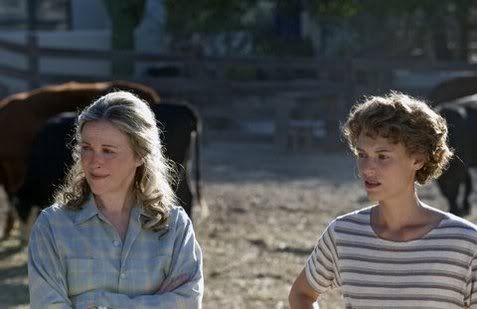
BE: I had one question about the casting for the film. How did Catherine O’Hara come to play Temple’s aunt?

MJ: It’s my experience in casting character actors, as it were, that if you cast someone who has a great comedic career, they know a lot more about the human condition sometimes than straight dramatic actors. And I so much wanted the aunt to kind of be a way into the movie for the audience, a sympathetic, warm figure. You meet Temple with all of her kind of raw orneriness and awkwardly unsocial manic behavior, but you have this reassuring figure there in the aunt, who says, “Yes, it’s all right, dear. Come this way, Temple.” And I thought Catherine just brought all of that warmth that you get from knowing about human foibles from being a comic actress to the role. I thought she was wonderful.

BE: Of all things, my memories of “Home Alone” worked in her favor here, because that’s the movie that first made me think of her as a motherly type.

MJ: (Laughs) Yes!

BE: I know you’ve got to keep moving, but of the other projects you’ve worked on over the years, do you have one that you think didn’t get the love it deserved?

MJ: They all get a certain amount of love, which I’m grateful for. “The Memory keeper’s Daughter,” which was the thing I did before this, for Lifetime…I think it’s probably a little shorter than I would’ve had it, the movie. If I’d been allowed to expand it a little more, I think it would’ve been a more moving story, but that was quite fun to work on. I sound as if I specialize in disease-of-the-week movies: I’ve done Lou Gehrig’s Disease (“Tuesdays with Morrie”), I’ve done Down Syndrome, and now autism! (Laughs) But every one is a movie, and it’s a good movie if it happens to be about the people.

BE: Well, it’s not about a disease, but for what it’s worth, I’m very partial to “Volcano.”

MJ: That was fun, but take some advice from me: if you’re ever directing a movie, don’t get into a race with another movie on the same subject (“Dante’s Peak”). Nobody ever says, “Oh, I saw the second volcano movie!” (Laughs)

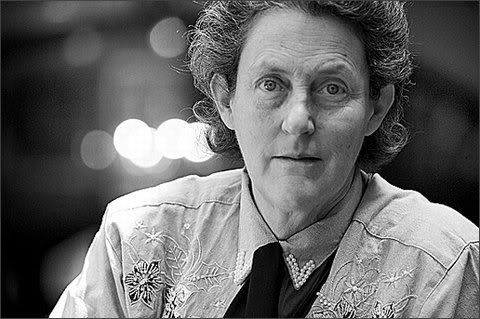
TCA Tour: A Chat with Temple Grandin

Temple Grandin is a Doctor of Animal Science at Colorado State University, a consultant to the livestock industry in animal behavior, and a best-selling author. She’s also autistic, a fact which you may have already known if you happen to have a connection to someone with autism, be it first-hand or indirectly. For instance, I came to know about her, as you’ll soon read, through my wife, who works with autistic students and is the proud owner of a copy of one of Grandin’s books, The Way I See It: A Personal Look at Autism and Asperger’s.

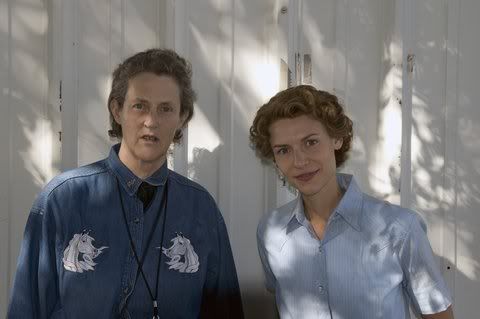
When an advance screener of the new HBO movie based on her life – entitled, appropriately enough, “Temple Grandin” – landed on our doorstep in advance of the TCA press tour, you can imagine that we popped it into the player post-haste, and I’ll tell you right now, I was blown away: Claire Danes gives a phenomenal performance as Grandin, but director Mick Jackson ties for MVP with his visual presentation of how Grandin’s mind works. I immediately went about trying to set up interviews in connection with the tour, and although Danes was unavailable, when HBO asked if I’d like to chat with Grandin herself, you’d better believe that I didn’t hesitate for a moment before saying, “You bet!”

Bullz-Eye: I just wanted to start off by telling you that my wife works with autistic children.

Temple Grandin: Oh, okay.

BE: She hadn’t actually trained in the field, but she ended up stepping into a job as a substitute teacher in a special education classroom, and she had such aptitude that the teacher gave her a gift: a copy of your book. She basically said, “Not everyone has the heart and the temperament to work with children who need a little extra effort, but I really think you do, and I think you’d get a lot out of reading this.”

TG: Which book was it?

BE: “The Way I See it.”

TG: All right.

BE: So as soon as she found out that I was going to be speaking with you, she immediately passed it on to me and said, “You’ll be wanting to read this.” (Laughs) But we also watched the movie together, and I thought it was fantastic. How did that first come about? Did someone read your book, then come to you and pitch the idea of making it into a movie?

TG: Well, that’s actually been going on for a good long time. Emily Gerson Saines started working on this about nine years ago and went to, like, two different directors and writers. Then, finally, it came together with the right people.

BE: Did you get final say about who would play you in the film?

TG: Well, that was just decided. Claire Danes did an absolutely brilliant job. Absolutely brilliant. I met with her for about six hours, and I gave her the oldest VHS tapes I could find of me, where I’d be more autistic-acting. Like, in old programs from the late ‘80s, where I was on a TV show, and some lectures from the early ‘90s. We dubbed those over onto DVDs, and she had those to practice with. I didn’t have any video older than that. Or movies. We didn’t do movies as a family, so I didn’t have that.

BE: I thought the visual aspects of the film, which try to give the viewer an understanding of how your mind works, were outstanding. I guess that was Mick’s idea…?

TG: I thought that was absolutely brilliant, the way Mick showed all of that. Wonderful. Like, the scene where it shows all of the shoes coming up…? That’s exactly how I think. Mick was absolutely brilliant with that.

Continue reading »

« Older posts Newer posts »

© 2026 Premium Hollywood

Theme by Anders NorenUp ↑