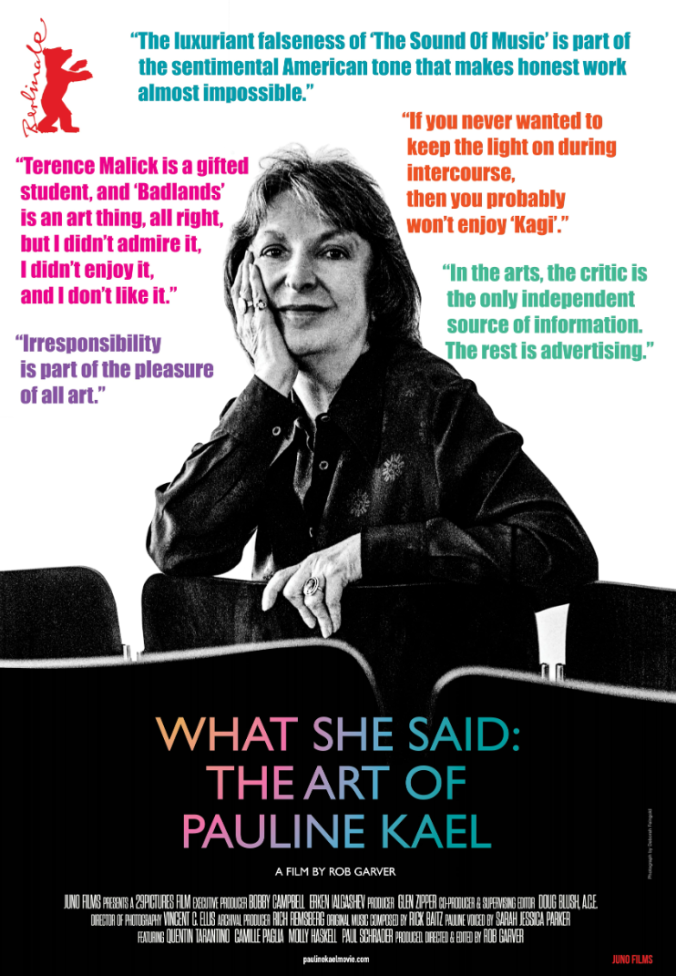
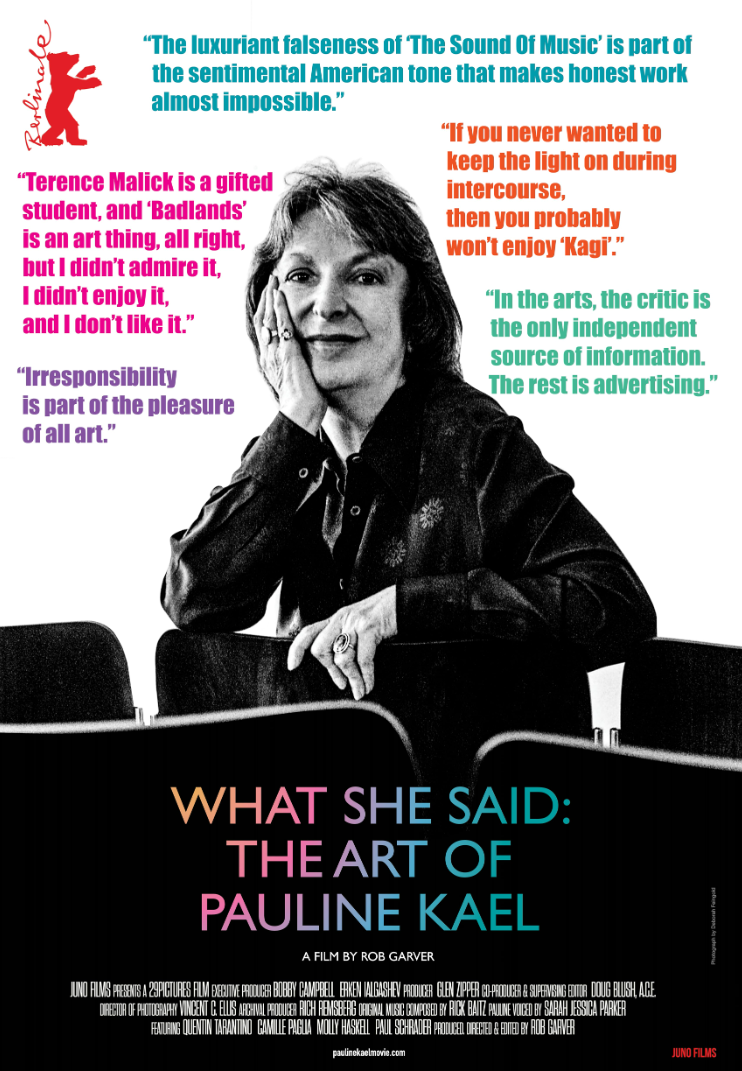
 Pauline Kael is one of the most provocative and consequential film critics of the 20th century. I’d heard so much about her over the years and wanted to learn more, so I was quite happy when the documentary about her life — “What She Said: The Art of Pauline Kael” — appeared on Amazon Prime.
In many ways, her life story was very different from what I expected. She faced significant personal challenges, including raising her daughter alone as a single mother while navigating a male-dominated industry. She was polarizing, fiercely opinionated, and enormously talented, which led to a remarkable career highlighted by her tenure at The New Yorker from 1968 to 1991, where she penned more than 400 reviews and essays.
Her writing style was distinctive: passionate, personal, and often provocative, blending sharp analysis with visceral emotional responses to films. She championed the “New Hollywood” era of the 1960s and 1970s, praising directors like Martin Scorsese, Francis Ford Coppola, and Brian De Palma, while often taking aim at more established figures such as Stanley Kubrick. Right away, it was easy to like her as I learned more about her through this film. She was fearless, and in many ways I shared her taste in movies — especially the ones she admired.
Yet she could also be quite vicious in her criticism. While I respected that she never shied away from tearing into popular films, at times she seemed unable to appreciate genuinely great movies that simply didn’t align with her personal tastes.
Her review of “The Sound of Music” in McCall’s magazine was so scathing that it reportedly led to her firing. “The sugar-coated lie that people seem to want to eat … and this is the attitude that makes a critic feel that maybe it’s all hopeless. Why not just send the director, Robert Wise, a wire: ‘You win, I give up’?” Really? The film may not be for everyone, but as a musical, it’s undeniably brilliant.
Continue reading »