Page 2 of 1232

First Watch: “Mulholland Drive” (2001)

Mulholland Drive movie posterMany film critics and commentators consider “Mulholland Drive” to be a masterpiece. Some have called it one of the greatest films of the 21st century. Roger Ebert loved it, and that’s notable as he’s not always a big fan of David Lynch’s films. He opens his review with the following: “David Lynch has been working toward ‘Mulholland Drive’ all of his career, and now that he’s arrived there I forgive him ‘Wild at Heart’ and even ‘Lost Highway.’ At last his experiment doesn’t shatter the test tubes. The movie is a surrealist dreamscape in the form of a Hollywood film noir, and the less sense it makes, the more we can’t stop watching it.”

With that context, it’s a bit of a crime that I had not yet seen the film. I’m old enough to remember watching “Twin Peaks” on television, so I’ve had ample opportunity over the years. The recent passing of Lynch gace me the motivation to go back and check out his films, so I was pleased to see that “Mulholland Drive” was streaming on Tubi.

As Ebert points out, the film doesn’t present a logical narrative. Most people watching it for the first time will be confused, and you just have to let go and follow along with the dream. But Lynch plays a clever trick on the audience, as the film opens with scenes that seem completely real . . . it’s only later that we realize this portion of the film was more of a dreamlike fantasy for one of the characters.

The film begins with a mysterious woman (Laura Harring) surviving a car crash on Mulholland Drive and suffering amnesia. She adopts the name “Rita” from a Rita Hayworth poster and hides in an apartment, where she meets Betty Elms (Naomi Watts), an optimistic aspiring actress newly arrived in Los Angeles. Betty helps Rita uncover her identity, leading them into a web of intrigue involving Hollywood auditions, shadowy figures, and bizarre subplots (like a bungled hit job or a terrifying encounter behind a diner).
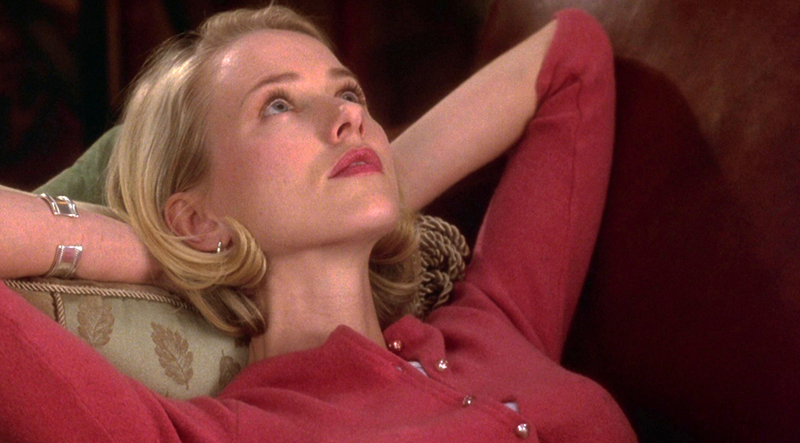
Naomi Watts in Mulholland Drive as Betty in pink sweater

About two-thirds in, the narrative abruptly shifts: characters’ identities flip, and we follow Diane Selwyn (Watts again) and Camilla Rhodes (Harring again) in a grimier, more fragmented reality involving jealousy, betrayal, and despair.

If you knew this going in, the film would make a bit more sense, but it also would soften the experience, which is meant to disorient and confuse the audience. I’m eager to watch the film again and experience how it lands a second time through.

Watts and Harring are stunning in the film. They’re both beautiful of course, but they both contribute to layers of sensuality and eroticism that permeate the film. And they brilliantly portray their dreamlike and then reality-based characters. This manifests in many ways, not least of which is the contrast in their two love scenes.

Watts has described the film as a life-changing moment. “That’s why I will never forget what David Lynch did for me. When he cast me in Mulholland Drive, I was literally at the lowest place, and yet he managed to pull away all those masks.” – IMDb She was simply brilliant here, with the contrast between the wide-eyed Betty and the broken and bitter Diane Selwyn.

Harring was a revelation. She had that haunting beauty needed for the role, but also managed to pull off two characters as well. She credits Lynch for her performance. “Lynch told me to ‘walk like a broken doll’… ‘There’s a cloud following you wherever you go, like a dark black cloud that’s very scary.’”
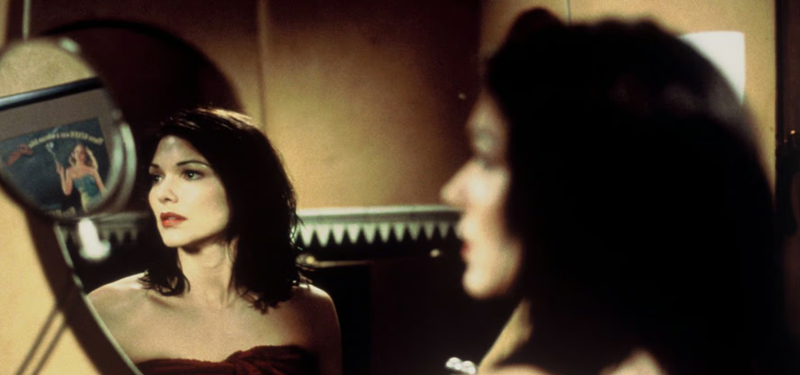
Laura Harring as Rita in Mulholland Drive

For his part, Lynch has always been famously reticent about explaining the full meaning of the film, preferring to let viewers interpret it personally. He has described it as “a love story in the city of dreams” and emphasized its emotional and intuitive origins. Lynch explained: “I always try to tune into those first ideas and let them talk to me, and follow them wherever they lead . . . I guess the initial spark for the film was the name, Mulholland Drive; the signpost in the night, partially illuminated for a couple of moments by the headlights of a car.”

In the end, the film is a brilliant depiction of Hollywood as a city of dreams that can crush the spirit of many who dream of stardom. Now on the more films by David Lynch . . .
R.I.P. Brigitte Bardot

Brigitte Bardot has passed away at the age of 91.

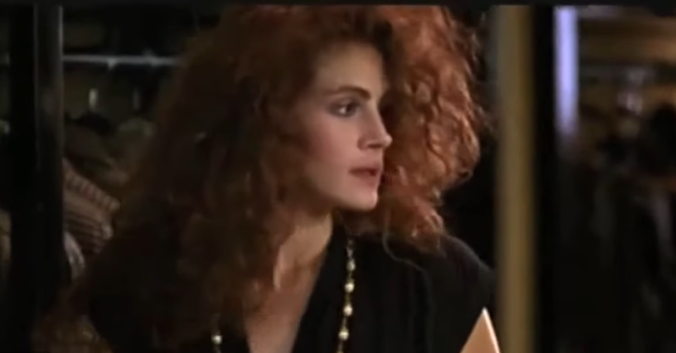
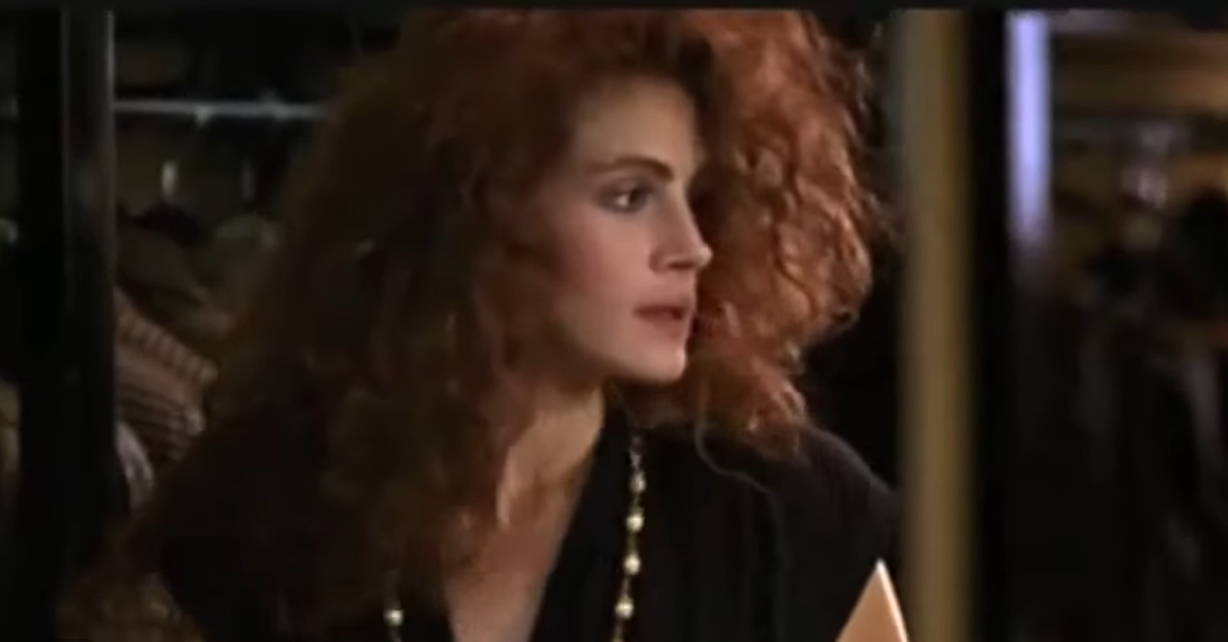
She was a stunning beauty who left her mark on film history along with pop culture and fashion in the 20th century. Later in life she became more controversial with some of her political comments, but most of us will remember her as one of the most iconic sex symbols of the post-war era. The video above presents a nice overview of her career.

Brigitte Bardot screenshotJust one look at her and you can see that she had the beauty and charisma to thrive in any era. Yet she emerged at a time when everything about her seemed new. She was different from the more polished stars of that era, and her casual vibe and sex appeal made her a sensation.

With her amazing figure, she also helped to popularize the bikini. The world was a much different place in the early 1950s, and Bardot burst onto the scene and embraced the new fashion trend, and soon after the bikini became mainstream.

Even today, so many women try to replicate Bardot’s look, with her tossed blonde hair and pouty lips along with the promounced eyeliner. In many ways that look is timeless, even without the eyeliner.

Battle for Warner Bros. Discovery heats up between Netflix and Paramount

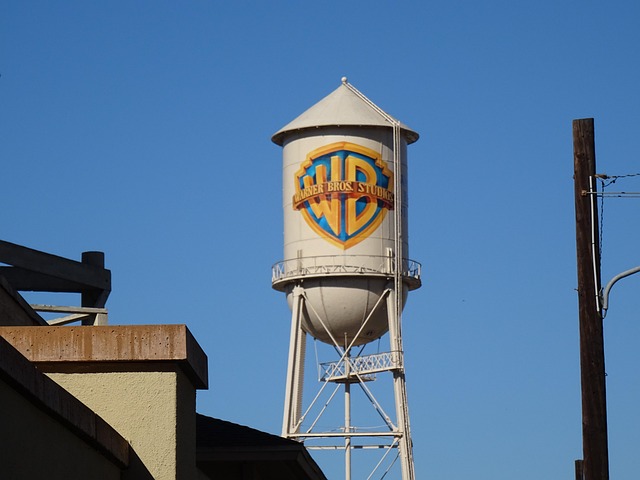
Warner Bros logo on water tower

On December 17, 2025, the Warner Bros. Discovery (WBD) board of directors unanimously rejected a $108.4 billion hostile takeover bid from Paramount Skydance (a combined entity led by David Ellison). Instead of accepting this all-cash offer of $30 per share, the board reaffirmed its commitment to a competing merger agreement with Netflix, valued at approximately $82.7 billion (or $27.75 per share).

Continue reading »

Staff Pick: “What She Said: The Art of Pauline Kael”

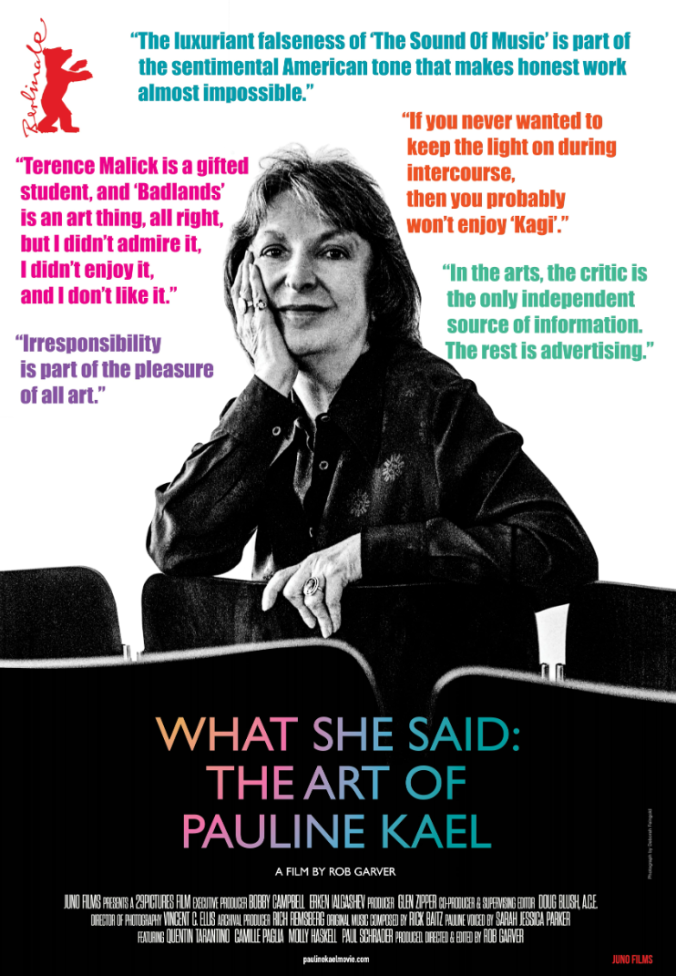
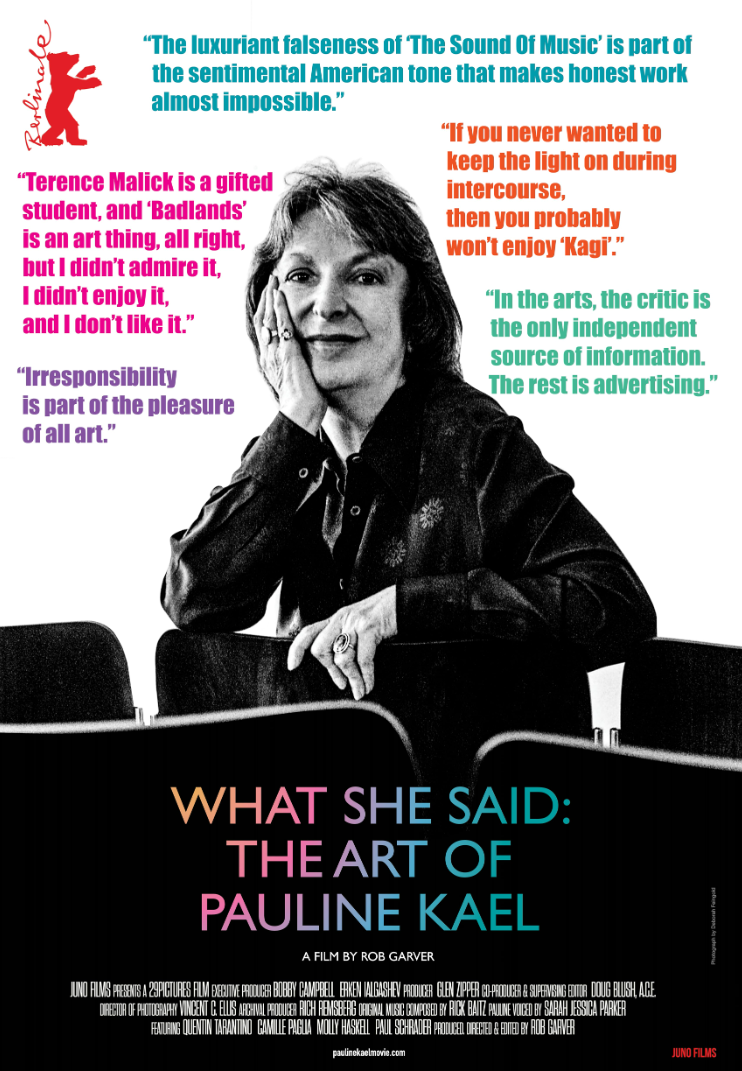
Staff Pick - What She Said: The Art of Pauline KaelPauline Kael is one of the most provocative and consequential film critics of the 20th century. I’d heard so much about her over the years and wanted to learn more, so I was quite happy when the documentary about her life — “What She Said: The Art of Pauline Kael” — appeared on Amazon Prime.

In many ways, her life story was very different from what I expected. She faced significant personal challenges, including raising her daughter alone as a single mother while navigating a male-dominated industry. She was polarizing, fiercely opinionated, and enormously talented, which led to a remarkable career highlighted by her tenure at The New Yorker from 1968 to 1991, where she penned more than 400 reviews and essays.

Her writing style was distinctive: passionate, personal, and often provocative, blending sharp analysis with visceral emotional responses to films. She championed the “New Hollywood” era of the 1960s and 1970s, praising directors like Martin Scorsese, Francis Ford Coppola, and Brian De Palma, while often taking aim at more established figures such as Stanley Kubrick. Right away, it was easy to like her as I learned more about her through this film. She was fearless, and in many ways I shared her taste in movies — especially the ones she admired.

Yet she could also be quite vicious in her criticism. While I respected that she never shied away from tearing into popular films, at times she seemed unable to appreciate genuinely great movies that simply didn’t align with her personal tastes.

Her review of “The Sound of Music” in McCall’s magazine was so scathing that it reportedly led to her firing. “The sugar-coated lie that people seem to want to eat … and this is the attitude that makes a critic feel that maybe it’s all hopeless. Why not just send the director, Robert Wise, a wire: ‘You win, I give up’?” Really? The film may not be for everyone, but as a musical, it’s undeniably brilliant.

Continue reading »

“Mad Men” is now streaming on HBO Max

Jon Hamm in Mad Men smoking a cigarette

One of the best part of the new streaming reality is binge-watching older television shows, particlularly some of the classics from the “peak TV” era of the 2000s and 2010s. Of course, that required a number of subscriptions, and few people bothered to get the AMC+ subscription. That left “Mad Men,” one of the all-time great television dramas, inaccessible to many fans who might love the show.

Now that is changing as of December 1, 2025, as “Mad Men” is now streaming on HBO Max. This arrival is part of a licensing agreement between Warner Bros. Discovery (the parent company of HBO Max) and Lionsgate (the studio that produces and owns the rights to “Mad Men”).

To make this specific run on HBO Max even more attractive, Lionsgate created a 4K remaster of the series. This was the key selling point: HBO Max can market it not just as “having the show,” but as having the best looking version of the show ever released. The have been some glitches with the 4K remaster, but overall this is a coup for HBO Max.

“Mad Men” had a huge cultural impact after it’s 2007 premiere, and it will be fascinating to see how the show impacts a whole new generation who can now more easily discover the show. We covered the show extensively here, including our “Mad Men” blog that started with the third season. The show was beloved by critcs and audiences as well.

If you haven’t seen “Mad Men” you should give it a try while the rest of us plan our rewatch binge.

« Older posts Newer posts »

© 2026 Premium Hollywood

Theme by Anders NorenUp ↑