
 As I settled in to watch “B-Girl,” a film described on the back of its DVD box as originating “from the dancers of ‘Fame,’ ‘How She Move,’ ‘Step Up,’ ‘Step Up 2,’ & ‘Step Up 3D,'” I was reminded of a nine-word phrase of total disclosure which Roger Ebert once used to open a review: “I am not the person to review this movie.” Granted, he was speaking of “Scooby Doo” at the time, but his lack of familiarity with the mythos of that famed mystery-solving mutt have nothing on my deficiency of dance-movie knowledge. Still, I grew up in the ’80s, when breakdancing was in its original heyday, so I figured, okay, the least I can do is give this movie a chance. Sadly, “B-Girl” can’t hold a candle to “Breakin’ 2: Electric Boogaloo.” (Really, though, how many films can?)
“B-Girl” offers an all-too-familiar underdog story: Angel (Jules Urich, “You Got Served,” “Step Up 2”) dances her ass off while cruising the streets of NYC, but when a tragedy occurs in Angel’s life and results in both a shoulder injury and a decision by her mother to move to the other side of the country, she realizes that her only solace in California will come from getting back into shape and onto the dance floor again. The film is an expanded version of a short film bearing the same title, which was released in 2004 and also starred Urich, but that was five years ago; even in a world where we’ve been accepting twentysomethings playing teenagers since the original “Beverly Hills 90210,” no one in their right mind is going to look at Urich and say, “Okay, I’ll buy that she’s young enough to still be under her mother’s thumb.” It must also be said that neither the dialogue nor the acting is all that. This, of course, only leaves the dancing as a reason to see “B-Girl.” Is it enough? Well, this is where I’m going to more or less fall back on the aforementioned Ebert-ism, but for what it’s worth, I was impressed. For you B-Girls and B-Boys amongst our readership, though, you’ll probably have to see it for yourself.
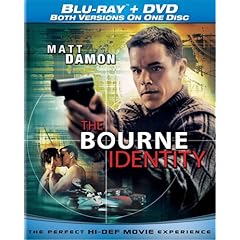 One of the problems that people have with the adoption of a new format (most recently, Blu-ray) is that the format in question isn’t universal, sometimes even within a single household. For example, a family might have a Blu-ray player in the living room, but still have DVD players elsewhere in the house (or in the minivan). Universal Studios Home Entertainment has addressed this problem by releasing dual-format discs that have a Blu-ray version of the movie on one side and a DVD version on the other, allowing consumers to use the disc anywhere they can play Blu-ray or DVD. Consumers that haven’t yet adopted the Blu-ray format can buy these discs knowing that their collection will be ready when they eventually do. It’s an ingenious idea for those in the process of switching over to Blu-ray.



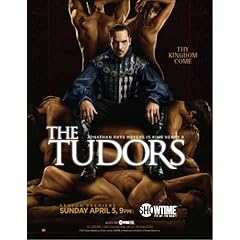 “The Tudors” is a Golden Globe-nominated, Irish-produced historical fiction series that focuses on the reign of King Henry the VIII. It has been a part of Showtime’s stable of high-quality dramas for three seasons now, and has been renewed for a fourth (and final) season that will debut in April of 2010. The series is carried by Jonathan Rhys Meyers, who is a tour de force as the spoiled king, but the rotating supporting cast — including Sam Neil as Cardinal Thomas Wolsey, Jeremy Northam as Sir Thomas More, Natalie Dormer as Anne Boleyn, and James Frain as Thomas Cromwell — has made this more of an ensemble drama.
