Category: News (Page 1 of 401)

Battle for Warner Bros. Discovery heats up between Netflix and Paramount

Warner Bros logo on water tower

On December 17, 2025, the Warner Bros. Discovery (WBD) board of directors unanimously rejected a $108.4 billion hostile takeover bid from Paramount Skydance (a combined entity led by David Ellison). Instead of accepting this all-cash offer of $30 per share, the board reaffirmed its commitment to a competing merger agreement with Netflix, valued at approximately $82.7 billion (or $27.75 per share).

Continue reading »

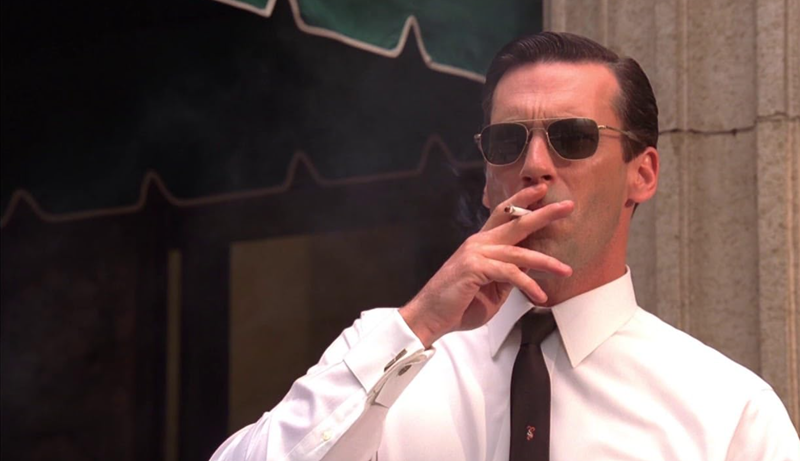
“Mad Men” is now streaming on HBO Max

Jon Hamm in Mad Men smoking a cigarette

One of the best part of the new streaming reality is binge-watching older television shows, particlularly some of the classics from the “peak TV” era of the 2000s and 2010s. Of course, that required a number of subscriptions, and few people bothered to get the AMC+ subscription. That left “Mad Men,” one of the all-time great television dramas, inaccessible to many fans who might love the show.

Now that is changing as of December 1, 2025, as “Mad Men” is now streaming on HBO Max. This arrival is part of a licensing agreement between Warner Bros. Discovery (the parent company of HBO Max) and Lionsgate (the studio that produces and owns the rights to “Mad Men”).

To make this specific run on HBO Max even more attractive, Lionsgate created a 4K remaster of the series. This was the key selling point: HBO Max can market it not just as “having the show,” but as having the best looking version of the show ever released. The have been some glitches with the 4K remaster, but overall this is a coup for HBO Max.

“Mad Men” had a huge cultural impact after it’s 2007 premiere, and it will be fascinating to see how the show impacts a whole new generation who can now more easily discover the show. We covered the show extensively here, including our “Mad Men” blog that started with the third season. The show was beloved by critcs and audiences as well.

If you haven’t seen “Mad Men” you should give it a try while the rest of us plan our rewatch binge.

Pirates of the Caribbean 5–> It’s On

A pirate’s life indeed.

With screenwriter Jeff Nathanson of “Catch Me if You Can” fame on board, Disney is officially proud to announce it’s intention to release a 5th installment to the Pirates of the Caribbean franchise. Yes, that’s correct, they are now up to 5.

Johnny Depp will return to play the now infamous fictional pirate, Jack Sparrow, but other A-lister reprisals such as Kiera Knightley and Orlando Bloom are yet unknown.

The movie is set to release to theatre’s on July 10 2015.

Interview with Please Give Writer-Director Nicole Holofcener

After studying film at Columbia University, writer-director Nicole Holofcener made her first feature, Walking and Talking, in 1996, and she has been going strong ever since, directing feature films such as Lovely & Amazing, Friends with Money and Please Give, as well as working in television, for acclaimed series such as Sex and the City, Six Feet Under, Bored to Death and Parks and Recreation. I had a chance to speak briefly with Holofcener on the occasion of Columbia’s panel on women filmmakers.

Ezra Stead: There is a striking realism and intimacy to your films, going back to the first one, Walking and Talking, and I know a lot of material is taken from your own life or that of your friends. Is your apparent muse, Catherine Keener, generally playing the Nicole Holofcener alter-ego, or is your own personality spread out more among all your characters?

Nicole Holofcener: I guess I could say she has been my muse, but in a couple of movies she has not played the “me” character. She certainly does play me well, and all the characters, I suppose, are a part of me, and even if that character she’s playing is based on someone else, there’s still pieces of me. She has been a muse, definitely.

ES: I read somewhere, in another interview with you, where you said your friends say, “Don’t say that around Nicole, it’ll be in a movie.”

NH: I know, just one friend in particular; she’s very nervous [laughs]. If somebody has shame, I suppose they don’t want to be revealed. Most people’s shame is not very interesting or theatrical, so don’t worry I’m not gonna write about it. Whatever you’re doing that you’re embarrassed about, I don’t care [laughs].

ES: So in general, your films are fairly autobiographical, or was Walking and Talking more that way?

NH: No, they all are. I mean, none of them are real, none of them come from things that really happened; I suppose there are moments that really happened and lines that really happened, but most of it is made up but, I would say, based on me and my experiences, and my friends.

ES: What future projects are you working on now, if you can tell us?

NH: I’d love to tell you. I’m so glad I have that, thank god, it’s so hard when there isn’t one. Yeah, I’m in pre-pre-production for a movie that I wrote that Fox Searchlight has been making, and I start shooting in August, I think. I hope.

ES: Untitled, so far?

NH: It is. Not fun. I’m not good at titling things. The only title I really like, that seems correct, is Friends with Money, and that’s what I wrote when I first started writing it, you know, this is gonna be about “friends with money,” it was easy. This one has Julia Louis-Dreyfus in it, and James Gandolfini, so I’m happy to publicize my next movie.

ES: I also read that you were involved at one point in directing the Seth Rogen / Joseph Gordon-Levitt film 50/50. Is that you’re still interested in pursuing – directing features written by other people?

NH: I’m still gonna direct 50/50 [laughs]. It’s something I am very interested in, and I’m sad that I didn’t get to direct it, but it was family stuff, and that’s okay, it turned out well. I liked the movie.

ES: But you are interested in directing someone else’s script?

NH: Yes, if I fall in love with it. I really want to, have to, fall in love with it. Yes, please send me things. Send me good things [laughs].

ES: You’ve directed a lot of TV as well. What are some of the differences in TV vs. feature film directing?

NH: There’s not much difference. The television shows that I’ve worked on have all been single camera. It feels like I’m working on a little film. It differs from show to show. A show like Enlightened, I feel like I’m working on a movie; a show like Parks and Recreation, I’m at a party. I mean, it’s different. I guess, to some extent, working on a television show is easier because it’s not my problem, in the end – I didn’t write it, I didn’t create it – and for the same reason, it makes me more anxious because I have someone else that I wanna please, besides myself, and I really only work on shows that I respect and am proud to have my name on, so I really do wanna please the writer, and the creator. Other than that, they’re pretty similar.

ES: So you think that, when and if you end up directing someone else’s script, it’ll be similar to that?

NH: I hope so, yeah. I hope that I have that relationship where I turn to the writer and say, “You happy with that? Is that how you saw it?” That’s a real collaboration.

Columbia University Film Fest Presents Panel on Women Filmmakers

Last night, the Film Society of Lincoln Center in Manhattan presented a panel entitled “What Glass Ceiling: The Remarkable Success of Columbia’s Women Filmmakers,” as part of the Columbia University Film Festival‘s 25th anniversary this week. Introduced by Columbia’s Film Department Chair Ira Deutchman, the panel was moderated by film director and Columbia Film faculty member Bette Gordon, and featured acclaimed filmmakers Shari Springer Berman, Cherien Dabis, Lisa Cholodenko and Nicole Holofcener.

Gordon began the panel by proudly proclaiming the fact that Columbia has “produced more women directors than any other film school today,” but lamented that in spite of this, “the film world is predominantly white and male.” She then turned things over to the four filmmakers to discuss the challenges they faced in getting their own first features made. Berman joked that “only half my answers are valid [because] I actually work with a partner who’s male,” her husband and co-director Robert Pulcini, whom she met while they were both attending Columbia. Dabis spoke about the extra difficulties of finding financing for her first feature, Amreeka, which “was not just about women, it was about Middle Eastern women.” Cholodenko’s advice for aspiring first-time filmmakers was to “have your intention in place, articulate it and stick to it,” while Holofcener told an unhappy tale of how she and her first agent parted ways. “After a while,” she said, “he sent me a Xerox bill, and I knew that was the end of my agent.”

When asked about how they went from their initial success to their second features, Dabis, who is currently in this particular process, said, “It’s never going to be easy, and when you accept that, it is what it is, and you just sort of keep going.” Cholodenko echoed this sentiment by adding, “If you have the stomach for that, then you’ll make it, and if it turns you off, then you should maybe find another profession.” The conversation then turned to the work of creating believable characters and situations with which an audience can relate. Cholodenko offered this secondhand advice: “Someone said to me once, ‘Just write it until it breaks your own heart.’” Holofcener responded the question of how much description she uses in her scripts, as opposed to dialogue, by saying, “I hate reading scripts that tell me about the character in the description of the character,” as opposed to dramatizing it through action.

As the discussion moved on to casting and working with actors, Holofcener spoke about her close working relationship with Catherine Keener, who has appeared in all of her features. “Just looking at me,” Holofcener said, “helps her access what I need from her … It’s a very intuitive connection. If she’s crying in a scene, I’m crying.” Berman spoke about the importance of casting the right actor for any given part: “I really believe that if you cast the wrong person, there’s little you can do to save the film.” Holofcener added to this by addressing the pressure felt from studios to cast a star: “One time, I did buckle and … offered this actor the part, and I had this sinking feeling … and she passed,” she said with a sigh of relief.

The panel wrapped up by addressing the topic of its title: the idea of “women filmmakers,” a moniker that Cholodenko said she doesn’t feel is “particularly modern.” “If it has to be modified, it’s like a handicap,” she expounded, while Dabis said that “because it is that much more difficult … I’m proud to be doing it.” “The statistics [of women in the industry vs. men] are horrible,” Cholodenko continued, “but I don’t think it’s going to go backwards, to where there’s this invisible other gender with no representation.” As to why Columbia seems to be a breeding ground for female filmmakers, Cholodenko said, “The energy there is really … what’s the word?” “Feminine?” Holofcener offered. “No, it’s not,” Cholodenko responded, “it’s androgynous. You go there and you don’t feel like it’s a boy’s club.” With a new semester of Columbia’s Film program beginning in the fall, we’re sure to see many distinguished filmmakers, both male and female, ascending from its ranks in the coming years. The panel can be viewed in its entirety here.

« Older posts

© 2026 Premium Hollywood

Theme by Anders NorenUp ↑