Category: Movie Comedies (Page 152 of 195)

Musical redemption or Escape from 1978

Albert Walker over at Den of Geek has a fun article of “Top 10 worst musical moments.” I can’t argue with the abject metaphysical badness of any of Mr. Walker’s choices, but I’m a guy who prefers to emphasize the positive. Below are a couple of great performers who essentially disgraced themselves in Walker’s selections, redeeming themselves musically on film.

****

First, though decades later I’m still healing from the scars inflicted by the legendarily god-awful 1978 juke-box film musical, “Sergeant Pepper’s Lonely Heart Club Band,” I had forgotten how bad Steve Martin’s performance of Paul McCartney’s black-humored romp, “Maxwell’s Silver Hammer” really was. On his only musical, director Michael Schultz clearly had not clue what do do with Martin. His performance is painful to watch and entirely unfunny.

Now contrast this with Martin’s performance in 1986’s “Little Shop of Horrors,” which Albert Walker and I agree is about a million times better. Director Frank Oz also only made one musical, but it wasn’t a problem. I’m sure Martin was probably eager to redeem himself after the atrocity eight years prior, and Oz matched his spot-on interpretation of the song with a pretty huge degree of wit and imagination. I speak, of course, of the “Dentist” song.

Also, there’s no getting over the embarrassment of future James Bond Timothy Dalton crooning the Captain & Tenille to early screen comedy superstar Mae West from another film from 1978, “Sextette.” A definite contender for most brazenly ill-advised movie of all time, the musical comedy featured an 80-somethng West playing sexpot one last time to costars like Dalton, Dom DeLuise, and Ringo Starr.

Now, even at the height of her fame 35 years previously, by today’s standards the generously proportioned Mae West might strike most people as an odd choice for a sexpot, and many of her jokes have become cliches over the decade. (“Is that a gun in your pocket or are you just happy to see me?”, etc.) Even at the time, I’m sure male filmgoers would lean pretty strongly towards such thirties sirens as Jean Harlow, Joan Crawford, or Bette Davis whose sexiness seems more usual to us today. Mae West, however, was unique in that she played a woman aggressively and openly obsessed with sex at a time when only males were allowed that role, and people were barely allowed to even allude to it in public. It seems clear that men found the idea intriguing and West also was blessed with a great deal of wit and confidence and…something.

Just watch her sing “I Wonder Where My Easy Rider’s Gone” in 1933, and know that she’s not really singing about horse racing. And, yes, that really is a young Cary Grant romancing her.
Blu Tuesday: Friday the 13th, Dr. Strangelove and Morning Light

Those who saved up a little extra pocket change from the lack of Blu-rays released over the last few weeks will probably want to grab a hammer and break open the piggy bank, because there are a slew of must-own titles hitting stores today. Even better is the variety, from new horror films and old classics to cult television shows and HBO mini-series, this week features one of the best HD line-ups that you’re likely to see all year.

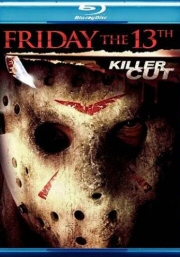
“Friday the 13th” (Warner Bros.)

The new adventures of Jason Voorhees may just be the latest in a long line of mindless sequels (in fact, one might even argue it’s little more than a compilation of greatest hits from the first three films), but it does serve as an excellent reboot of sorts that horror fans should appreciate. While Jason’s ninja-like stealth is a bit ridiculous, it’s but a minor obstacle in an otherwise entertaining slasher flick. The kills are just as inventive as they were 30 years ago (there’s even a Blu-ray exclusive featurette that takes an in-depth look at the seven most memorable ones), and at the end of the day, that’s all anyone really cares about. Whether or not it truly revitalizes the franchise is a whole another matter, but at least Warner Bros. is willing to stand behind their product. The Blu-ray release is one of the studio’s best yet, and includes an extended (but still R-rated) cut of the film, as well as a making-of featurette, deleted scenes and a picture-in-picture video track.

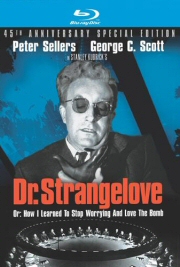
“Dr. Strangelove” (Sony Pictures)

Stanley Kubrick’s 1964 Cold War satire isn’t exactly the kind of film that benefits from high definition, but it still looks remarkably good for its age. Though I’ve never really been a fan of black-and-white cinema, “Dr. Strangelove” is one of the few exceptions. It’s probably because the movie would seem absolutely ludicrous in color. Not only are many of the characters (like George C. Scott’s General Turgidson and Peter Seller’s Strangelove) already so outlandish that they’re practically cartoons, but the monochrome effect lends a certain seriousness to the film that only makes the events that follow even funnier. The “Inside Dr. Strangelove” retrospective included on the disc – which covers everything from Kubrick’s original idea of making a serious political thriller to an 11th hour legal coup designed to delay the release of the similarly-themed “Fail-Safe” – should be of particular interest to fans of the film, while the addition of never-before-seen pages from the screenplay sheds new light on the infamously deleted cream pie fight ending.

Continue reading »

The lost art of opening credits: “Mad Monster Party”

I love traditional opening credit sequences, something that has literally been slowly going out of style since at least the early sixties and “West Side Story. ” Aside from occasionally providing a bit of final cushion for latecomers, just as I like to know the author of a book I’m reading before I read it, I’d like to know who’s made the movie I’m watching before I see it, not after. Mainly, I just love the way they give us a minute to kind of enter the world of the film in some sort of interesting way.

That’s all well and good, you say, but why lead off with the opening of an obscurity from my childhood like this?

Because I can?

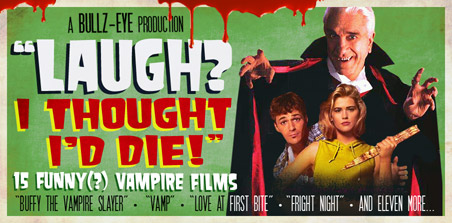
“Laugh? I Thought I’d Die!” 15 Funny (?) Vampire Films

Vampires are often painted as dark, sinister characters with a penchant for gothic fashion and a taste for blood that can never be fully quenched. Granted, their nature doesn’t necessarily lend itself to being a laugh riot, but once in a while, we’re gifted with bloodsuckers who can see the funny side of their affliction…or if they can’t, then at least the viewers can. (For instance, “True Blood” sure as hell isn’t a comedy, but if you caught the Season 2 premiere, you saw a truly hilarious scene where a new vampire took a blood taste test to determine which type she prefers.) Bullz-Eye decided to take a trip back through the mists of time to reinvestigate some of the more comedic explorations into the curse of vampirism, skipping over a couple of ostensible classics – neither “The Lost Boys” nor “From Dusk ‘Til Dawn” are here – in favor of some interesting obscurities that may not have crossed your radar.

Here’s a taste:

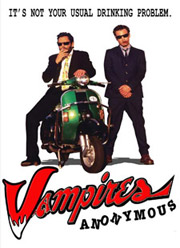
“Vampires Anonymous” (2003) – A few years ago, Bullz-Eye chatted with Michael Madsen about how many of his films end up going to DVD, and he explained the situation thusly: “People will promise you the fucking world, they’ll promise you anything to get you in the movie…and then, seven times out of ten, it’s not that way.” Although Madsen only has a small role in “Vampires Anonymous,” we like to think that he’s at least relatively pleased with this small obscurity from his resume. Vic Weller (Paul Popowich) is a vampire who’s found himself unable to curb his urges, so he calls up the organization known as Vampires Anonymous, which quickly finds him a new location in a small North Carolina town, where he can feel free to gorge himself on sheep until he gets into the habit of staying clean of human blood. Predictably, he falls in love with a local girl (Carolyn Lawrence) and has to keep his murderous nature in check around her, even though he has feelings for her. A bearded Madsen plays Geno, Vic’s sponsor in VampAnon, who’s never more than a phone call away, even though he’s usually pretty grumpy with his charge. (“I was not aware that I was wearing my Mr. Know-It-All hat today.”) It’s not a consistently hilarious flick, and the recurring gag about redneck “sheep shaggers” may make you feel queasy, but Madsen’s always good for a laugh, and the VampAnon meetings and 12-step title cards are funny enough to make you imagine the possibilities of a sitcom based around the organization.

Surely this one bite hasn’t fully sated your appetite for vampiric comedy, so why not head over to Bullz-Eye and check out the full piece by clicking either here or on the image below?

Oh, and just as a bonus, here’s a trailer for one of the films that didn’t make the cut. Believe us, with Dean Cameron – best known as Chainsaw in “Summer School” – playing the titular character and a supporting cast which includes Toni Basil, Bo Diddley, and Thomas Dolby, we really, really wanted to include it, but we just couldn’t get our hands on a copy in time to do so…and after watching this trailer, we just can’t imagine we could do the film justice without seeing every last second of it.

Good News, Bad News

* Some of the best, or at least most interesting, news I’ve heard in a while regarding the film business is the announcement, as reported by Indiewire‘s Eugene Hernandez, of the formation of DF Indie Studios. Presumably named for the project’s two chief executives, Mary Dickinson and Charlene Fisher, the group’s press release says the company plans to release 10-12 “multi-genre” films annually with a budget of $10 million or less. The group’s slogan is “Indie Style – Studio Dependability,” which I think a lot of filmmakers might describe as something like heaven on earth, relatively speaking. Among the big names who’ve become publicly involved with the project are indie mainstay producer Ted Hope, whose associated with most of Ang Lee’s films, among many others, and “Michael Clayton” Oscar winner Tilda Swinton (also “The Chronicles of Narnia,” and numerous indie productions you’ve never heard of).

Personally, I think most mainstream films are way too costly, and I’d like to see a variation of this idea applied to all kinds of films, not just traditional indie subject matter. So, I like the idea that they say they’ll be doing “multi-genre” films that will be, of course, “commercially viable.” (They still need investors.) Personally, I’m hoping that they take a fairly loose approach and include a bit of the old wild and wooly Roger Corman ethos alongside more refined productions. If they’re a success, maybe the big studios might want to copy them. They copy everything successful.

* This simply stinks.  Whoever’s responsible for releasing the material (which I haven’t seen and absolutely won’t be linking to) should be ashamed. As for those who’ve raised moral/health objections, I ask: Would we critize straight show business types and call for the sexual responsibility police like this? All around very not cool.

I’m perhaps a little extra mad about this because back in 2003 I interviewed Dustin Lance Black for this way-geeky piece. (It’s got a very long set-up, explaining my personal connection to the very good documentary Dustin had just finished at the time, the actual interviews starts here.) The guy couldn’t have been nicer or more unassuming, we had a great talk, and I’ve been rooting for his success ever since. (He even mentioned to me, post interview that he was starting work on a script about Harvey Milk, to which I said sagely, “good idea.” Now, I ask: Where’s my profit participation?!) He does not deserve this.

On the other hand, when was the last time anyone was interested in a writer’s sex life?

« Older posts Newer posts »

© 2026 Premium Hollywood

Theme by Anders NorenUp ↑