Everyone’s talking about Charlie Sheen and his hilarious lifestyle. Richard Roeper has a fun take on the entire situation and Charlie’s future career prospects as you can see below. Meanwhile, one of his Goddesses, Rachel Oberlin, appears to have left the Sober Valley Lodge.
Category: External Movies (Page 10 of 336)


Having never heard of Jacques Mesrine prior to watching the first film in director Jean-Francois Richet’s two-part epic on the real-life French gangster, it seemed a little presumptuous that his story was so fascinating that it warranted being stretched across two movies. As “Killer Instinct” demonstrates, Mesrine certainly led the kind of storied criminal career that makes for an entertaining gangster tale, but the film is so disjointed that you’ll wish Richet would have just cherry-picked the best moments to create a more focused biopic. After opening with a cool and cleverly edited introduction that teases Mesrine’s eventual demise, the film tracks back to the beginning of the story to show how he got there, including his time as a soldier stationed in Algeria, his early years as a petty thief under the guidance of a ruthless crime boss (Gerard Depardieu), and his incredible prison break from a maximum-security penitentiary in Canada.
It’s a lot of information to cram into two hours – especially when you consider he has three different romantic relationships that all played a role in shaping the man he would become, even if one of them seems to blossom out of thin air. And then there’s the fact that this is only half of the story, with the second part, titled “Public Enemy No. 1,” scheduled for release next month. “Killer Instinct” is definitely captivating enough that you’ll want to see what happens next, but it also feels like a cheap trick to get you to pay twice for what ultimately should have been one movie. It’s not quite good enough to rank among the best gangster films, but thanks to Vincent Cassel’s career-best performance as the title character, it’s one that fans of the genre will want to add to their Netflix queues immediately.
If you’re entering an Oscars pool, you probably want to watch this video and get Richard Roeper’s picks, as his track record is pretty good. He picks the 24 main categories.
The Social Network | Toy Story 3 | Inception | Black Swan | Winter’s Bone | The King’s Speech | Richard Roeper | Awards Watch | Richard Roeper’s Movie Reviews | Movie Trailer | Review
Eric Hynes has a good article in Slate celebrating the quiet performances that make loud, Oscar-winning ones possible. Meanwhile, Bullz-Eye covers Academy Award upsets they’d like to see along with 10 movies the Oscar nominees don’t want you to see.

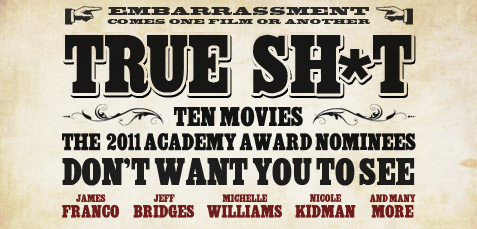
Everyone has taken that soul-sucking job in order to pay the bills. And while we proles may tease them for living the glamorous life, actors probably take that job more often than anyone, since they never know when the next job is going to come. (Case in point: Michael Madsen told us that he categorizes the movies he’s made as “good,” “bad,” and “unwatchable.”) Putting this theory to the test, we scoured the filmographies of this year’s nominees in the acting categories, looking for movie titles that screamed ‘bad idea.,’ and we were not disappointed with what we found. Jesse Eisenberg, for example, did a TV movie called “Lightning: Fire from the Sky,” which will be the main feature at our next Bad Movie night. Here are ten other films that this year’s candidates would probably prefer remained unseen.
Colin Firth (Best Actor, “The King’s Speech”)
Movie: Femme Fatale (1991)
IMDb rating: 4.6
The plot: An English artist-turned park ranger falls for and marries a stranger, only for her to disappear days later. As he learns more about his wife, he gets deeper and deeper into the Los Angeles underworld looking for clues that will lead him to her.
Firth’s character: Joe Prince, the aforementioned artist/ranger.
How bad is it?: You may not see the ending coming, but that is about the only thing this movie has going for it. Armed with one of the most awkward love scenes we’ve seen in ages, this movie does not gel on any level, using mental illness as a means of providing psychological depth, not to mention Acting!, with that last word ideally spoken like Jon Lovitz. Firth is actually passable here, given the material, and Danny Trejo pops up as a tattoo artist. But you can bet that when someone assembles a clip show of Firth’s finest moments, this movie will not make the cut.
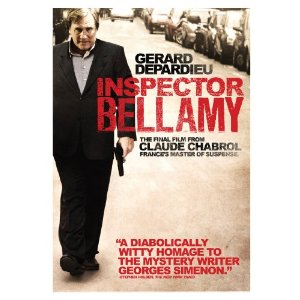


He was a leading director of the French New Wave, but that doesn’t tell you much about the hugely prolific Claude Chabrol. He was frequently compared to Alfred Hitchcock but that tells you even less. I’m not even close to an expert on his work, but I can safely describe Chabrol as a crafty writer-director who specialized in films that shared plot elements with the mystery and suspense genres while deliberately not partaking of their usual pleasures. It’s fitting, therefore, that the late director’s final film has a murder mystery plot and pays tribute to Georges Simenon’s beloved Inspector Maigret but never feels like a murder mystery, which is both the best and worst thing about it.
In his first ever film with Chabrol, the omnipresent, 60-something Gerard Depardieu stars as Bellamy, a famed detective who attempts some time off only to be accosted by an intrusive stranger (Jacques Gamblin). The man asks for his help exonerating him from the killing of a homeless person. The problem: he admits that he really did intend to murder the vagrant as part of an insurance scam. Bellamy welcomes the distraction. He is much less sanguine about another interloper, his obnoxious and troubled younger half-brother (Clovis Cornillac) who intrudes upon his quality time with his beloved and sexy wife (Marie Bunel). Like I said earlier, don’t come to a Chabrol film expecting a conventional thriller. If a wry but serious look at life and death is up your alley, however, “Inspector Bellamy” is worth investigating.
FOLLOW US!


CATEGORIES
© 2023 Premium Hollywood
Theme by Anders Noren — Up ↑