Category: External Movie DVDs (Page 3 of 74)

It’s your pre-Father’s Day Blu-Ray/DVD Round-Up

The DVDs and Blu-Rays have been piling up. So, it’s time to go through a bunch of them, with a bit of extra attention paid to movies that might appeal to dads, though I suppose moms might like some of these as well.

* Playwright George Kaufmann famously defined satire as “what closes on Saturday night” and these days you might as well define political thrillers as “what doesn’t get greenlit unless a bunch of big stars really want to do it, and then bombs.”  “The Manchurian Candidate” is both political thriller and a satire and it didn’t fail at the box office, though it was kept out of circulation for nearly twenty years after its initial release for reasons that remain somewhat mysterious to this day.

I’m hardly alone in feeling this is probably the best political thriller ever made and possibly the second best political satire after “Dr. Strangelove.” Long after the end of the Cold War which spawned it, it’s continues to resonate with our political culture and it’s title still gives peoples the willies. Just ask John McCain.

Directed by John Frankenheimer and based on a novel by the mordantly comic suspense novelist Richard Condon of “Prizzi’s Honor” and “Winter Kills,”, you might know that it’s the story of what happens when a Soviet/Red Chinese brainwashing unit gets its hands on a group of captured soldiers, including Raymond Shaw (Laurence Harvey, who makes aloof bitterness very cool), the highly estranged step-son of a Joe McCarthy-like senator. Frank Sinatra does maybe his best acting work as a traumatized fellow soldier who realizes something might be up because of some very strange and very bad dreams he’s having — and the fact that he keeps calling the unpleasant Shaw “the kindest, bravest, warmest, most wonderful human being I’ve ever known in my life.”

It’s a brave blend of politics, off-the-wall black comedy (what was called “sick humor” back then), suspense, and borderline Jacobean classical tragedy. Frankenheimer had a knack for making political material work dramatically, and also for drawing out strong performances. Janet Leigh (“Psycho“) was perfect as the female love interest, who was written so oddly by Richard Condon and screenwriter/playwright George Axelrod that many have theorized she’s actually an operative of some sort — an idea capitalized on in Jonathan Demmes’ disappointingly morose 2004 remake. The greatest casting coup here, however, is Angela Lansbury’s absolutely chilling turn as Raymond Shaw’s hated extremist Washington-hostess mother. She wasn’t the only less-than-pleasant character Lansbury ever played, but there’s something about what happens when actors who make a career largely playing nice people play extremely not-nice people that can be electrifying.

I also can’t resist mentioning the fight scene between Sinatra and Henry Silva as a North Korean spy, which Frankenheimer was often proud to mention was the first use of martial arts fighting styles in an American film. Seeing it again, it’s not only more brutally effective than I remembered as Sinatra and Silva all but destroy Laurence Harvey’s Washington apartment, but — especially in the initial moments when Sinatra instinctively begins fighting the Silva character without even knowing who he is — it’s pretty obvious to me now that it had to be one of the main inspirations for the terrific first fight scene in “Kill Bill, Volume I,” in which Uma Thurman and Vivica A. Fox lay waste to a Pasadena living room.

The Blu-Ray is, by the way, not a deluxe restoration, but it includes all of the excellent features that earlier DVDs have included and the print has been kept in excellent enough shape that a new restoration isn’t really necessary. It looks great. Super highly recommended, though pricey.

Continue reading »

Easter with Tevye

I grew up in the kind of Jewish home where Santa Claus came on December 25 and a certain pagan rodent arrived on a seemingly random Sunday in the Spring, often accompanied by matzoh brie for breakfast if it was Passover.  Over the years, my inevitably confused interest in my Hebraic roots increased, and I quickly understood that the three holiest texts in Jewish scripture were the Torah, the Talmud, and Broadway’s Fiddler on the Roof.

With a book by Joseph Stein, music and lyrics by Jerry Bock and Sheldon Harnick and drawn from stories by pseudonymous Yiddish author Sholem Aleichem, often called “the Jewish Mark Twain,” no Jewish wedding or bar/bat mitvah was complete without half the score. A particular must for even a lot of the non-Jewish weddings I’ve attended remains “Sunrise, Sunset.” The song, a succinct expression of the bittersweet feelings involved with watching beloved children turn into adults, remains the most effective technology for extracting tears from parents known prior to the release of “Toy Story 3.”

The tale of a goodnatured, deeply religious milkman trying to marry off his three daughters in the face of pogroms and the onslaught of history in early 20th century Tsarist Russia did roughly what “The Godfather” did for Italian-Americans (ethnic controversy notwithstanding) and “Roots” did for African-Americans, create a sense of history during a time when present day changes often seemed overwhelming. If you hadn’t seen “Fiddler,” as my mother’s friends inevitably called it, on the stage, you were suspect. If you missed the movie, you might as well get baptized.

All of which is just a longwinded way of saying that, when we the 40th Anniversary Blu-Ray edition of director Norman Jewison’s 1971 film of “Fiddler on the Roof,” genetics pretty much forced me to raise my hand for it, though it hasn’t been a favorite since the day I got my cinephile magic decoder ring. The slightly grainy and slightly gauzy film — director of photography Oswald Morris shot it entirely through a woman’s stocking and won one of the film’s three Oscars — looks as good as you can probably hope for on Blu-Ray, naturally, and John William’s solid but occasionally too-pretty adaptation of Jerry Bock’s score sounds nice, too, but the movie remains problematic for this viewer.

It’s not so different from a lot of other awkward stage-to-film musical translations of its time. Chiefly, Canadian director Jewison tries to adopt a realist approach to try to sell the highly theatrical material in the unforgiving medium of film, which might have been next to impossible regardless. Though Jewison retained much of the choreography by the legendary Jerome Robbins (“West Side Story”), setting it in real or real-looking locations is a doomed strategy. The best strictly musical scenes, like the famous “bottle dance” wedding sequence and the rousing “L’Chaim,” were shot on a London soundstage.

A solid cast led by Israeli actor Topol as Tevye, the milkman, and featuring Yiddish theater legend Molly Picon and future “Starsky and Hutch” star Michael Glaser (he’d add “Paul” to his name later) among many others, helps. Chaim Topol, who played the part on stage in London and Tel Aviv, is a better choice than the brash and notoriously difficult to control original Broadway Tevye, Zero Mostel, would have been. Among other issues, Woody Allen in “Annie Hall” was not the first movie Jew to break the forth wall and address the camera directly. No one would accuse Topol of underacting, but if it had been Mostel talking and singing at us about the importance of “Tradition,” the audience would have been forced into a defensive crouch.

Of course, there’s much more to than issues like cinematic style and acting to the ongoing appeal of “Fiddler on the Roof.” It remains popular not only in the U.S. but is still performed even in Japan, where the story of the breakdown of ancient traditions has had an oddly logical resonance. No amount of quibbling is going to kill the film version of “Fiddler,” nor should it.

Oh, and happy Easter if that’s your thing. Have a chocolate bunny for me.

Wild Rovers

This nearly forgotten 1971 western drama from the late Blake Edwards was reportedly butchered by MGM, but eventually restored to road-show length by the director and is now available via the Warner Archives. “Wild Rovers” stars craggy William Holden and fresh-faced Ryan O’Neal as a pair of cross-generational buddies who have come to recognize why mommas shouldn’t let their babies grow up to be cowboys. Their not-smart solution: become wealthy bank robbers. The likelihood of tragedy grows even greater when their rancher boss (Karl Malden) sends out his loutish sons (Tom Skerritt and Joe Don Baker) in hot pursuit of the men who looted his payroll.

Edwards was a master of sorts, but on his first western as a director he tries much too hard to both pay homage to and outdo the competition. We have Howard Hawks-like dialogue scenes that go on forever, epic vistas shot in John Ford’s Monument Valley, and a few lifts from Sam Peckinpah. Blood squibs go off and characters writhe in slow motion a la “The Wild Bunch”; a lyrical montage about breaking a wild horse goes on and on like an outtake from “Major Dundee” or “The Ballad of Cable Hogue.” Considering the presence of “Wild Bunch” star William Holden and Edwards’ tendency to gentle wit, it’s impossible not to make the doubtless often repeated quip describing “Rovers” as “The Mild Bunch.” The problem, however, is not too much copying or excess affability, but Edwards’ undisciplined screenplay. It leaves an outstanding cast, and one of Jerry Goldsmith’s best scores, twisting in the wind like a horse thief on the end of a rope.

Click to buy “Wild Rovers”

Mesrine: Killer Instinct

Having never heard of Jacques Mesrine prior to watching the first film in director Jean-Francois Richet’s two-part epic on the real-life French gangster, it seemed a little presumptuous that his story was so fascinating that it warranted being stretched across two movies. As “Killer Instinct” demonstrates, Mesrine certainly led the kind of storied criminal career that makes for an entertaining gangster tale, but the film is so disjointed that you’ll wish Richet would have just cherry-picked the best moments to create a more focused biopic. After opening with a cool and cleverly edited introduction that teases Mesrine’s eventual demise, the film tracks back to the beginning of the story to show how he got there, including his time as a soldier stationed in Algeria, his early years as a petty thief under the guidance of a ruthless crime boss (Gerard Depardieu), and his incredible prison break from a maximum-security penitentiary in Canada.

It’s a lot of information to cram into two hours – especially when you consider he has three different romantic relationships that all played a role in shaping the man he would become, even if one of them seems to blossom out of thin air. And then there’s the fact that this is only half of the story, with the second part, titled “Public Enemy No. 1,” scheduled for release next month. “Killer Instinct” is definitely captivating enough that you’ll want to see what happens next, but it also feels like a cheap trick to get you to pay twice for what ultimately should have been one movie. It’s not quite good enough to rank among the best gangster films, but thanks to Vincent Cassel’s career-best performance as the title character, it’s one that fans of the genre will want to add to their Netflix queues immediately.

Click to buy “Mesrine: First Instinct”

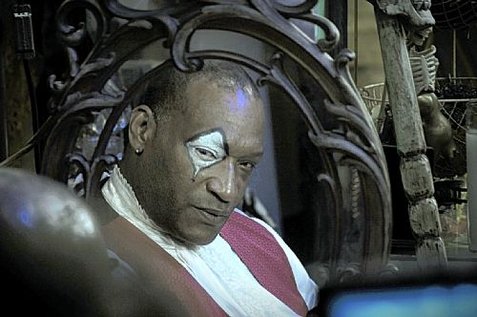
A Chat with Tony Todd (“Hatchet II”)

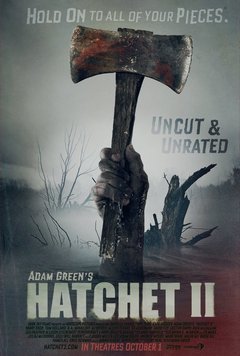
Tony Todd is often unjustly considered to be just a horror actor, but one only needs to take a look at his filmography to see that he’s working in countless genres. Indeed, his television work alone has found him bouncing from sci-fi (“Star Trek: Deep Space Nine”) to comedy (“Chuck”) to action (“24”). Mind you, we’re probably not doing a whole lot to change that whole he-only-does-horror-movies perception by talking to him about his work as Reverend Zombie in the “Hatchet” franchise – “Hatchet 2,” by the way, is now available on DVD – but we did at least make a point of trying to ask him about as many different roles as possible. We did not, however, say the name of his most famous film five times in front of a mirror. (We’re not crazy).

Bullz-Eye: How are you?

Tony Todd: Good, good. Just going through the day.

BE: I can imagine. I’m sure they keep you busy. A tight schedule.

TT: It’s really weird when they give you someone for 15 minutes, then the next person, “You’ve got 15 minutes…” It’s like speed interviewing. (Laughs) But I guess it’s a necessary part of it. Where are you calling from?

BE: Norfolk, Virginia.

TT: Norfolk, okay. I just did a movie down in Petersburg, Virginia.

BE: Not too far away from here.

TT: It was great. Some of my best work I think I’ve done in a horror film.

BE: Which movie was that?

TT: It was called “Unbroken.” There’s a company down there called Stormcatcher Films.

BE: Right, exactly. Very cool! So…”Hatchet II.” You got to play Reverend Zombie again.

TT: Yeah, and doing the first one, I knew going in that this was going to happen. So I’m glad that Adam Green is not only a man of his word but has a vision that keeps me employed. (Laughs)

BE: Plus, we got to see a little bit more of him this go around.

TT: Yeah. Well, he had told me the back story when we did the first one, so I was able to play that scene in the first one knowing the full knowledge. And then we got to go down to New Orleans, which is one of my favorite cities.

BE: Even better. So what was it like to get the chance to step back into the Reverend’s shoes? I mean, he’s certainly an interesting character.

TT: Yeah, I tried to find his reality, which is that he’s a small time con man from New Jersey. His real name is Clive Washington. And just like when we go from high school to college, you get the opportunity to reinvent yourself, and he’s a reinvented person that, unfortunately, is believing his own hype. He can’t shed it.

BE: How did you and Adam first meet up?

TT: I met Adam on a convention circuit, actually. He comes from the fan world. He’s very enthusiastic; loves film, particularly horror. I think we chatted a few times, and then he made me an offer to play Reverend Zombie. I turned it down. And then he and (John Carl) Buechler kind of lobbied and convinced me that it was a project worth taking.

Continue reading »

« Older posts Newer posts »

© 2023 Premium Hollywood

Theme by Anders NorenUp ↑