Tag: SXSW blog 2010 (Page 3 of 4)

SXSW 2010: Micmacs

Directors can be a pretty serious bunch, so it’s refreshing to see guys like Jean-Pierre Jeunet having so much fun making their movies that it’s evident just from watching it. The French filmmaker has been surprisingly absent from the world cinema scene since 2004’s “A Very Long Engagement,” but his return was definitely worth the wait. Jeunet’s latest film, “Micmacs,” may just be his best yet – a whimsical crime caper that boasts his trademark visual style, a classic Max Steiner score, and an ensemble cast filled with familiar faces. Though it likely won’t have the crossover appeal of “Amelie,” “Micmacs” is one of the most enjoyable moviegoing experiences of the year.

Dany Boon stars as Bazil, a Parisian video store employee whose father was killed in a landmine accident when he was kid. After he’s shot in the head during a freak accident of his own, Bazil awakens to learn that he’s not only been replaced at work and had his apartment given away, but that the bullet which nearly killed him is still dangerously lodged in his head. With nowhere to go, Bazil is adopted by a group of eccentric, trash-salvaging inventors who live under the local junkyard. When he realizes that the military contractors who manufactured the bullet and landmine are located within the city, however, Bazil teams up with his new friends to exact revenge on the men responsible for ruining his life.

micmacs

Though a lot of Juenet’s films have a fairy tale-like quality to them, “Micmacs” takes it one step further by surrounding its main protagonist with quirky companions not unlike the Seven Dwarfs. But instead of Dopey, Grumpy and Sleepy, there’s a contortionist (Julie Ferrier), a human cannonball (Dominique Pinon), a girl who can calculate anything in her head (Marie-Julie Baup), and a guy who only speaks in idioms (Omar Sy). Each character has their moment to shine, but Pinon is the clear standout in a role that falls somewhere between his circus performer from “Delicatessen” and his ill-tempered lover from “Amelie.” Dussollier and Marié also turn in great performances as the film’s villains, but it’s Dany Boon who’s the heart, soul and funny bone of the story.

It’s hard to believe he wasn’t Jeunet’s first choice, because Boon seems tailor-made for the role – a modern day Buster Keaton with the ability to entertain the audience with even the most basic pantomime. Once the film moves into the revenge portion of the story, however, the comedy veers more towards the slapstick, with each zany set piece leading to the next, even zanier set piece like a Rube Goldberg contraption designed by Danny Ocean. It’s all done so effortlessly, and with Boon and his co-stars so charming throughout, that you’d have to be in a pretty sour mood not to walk out of “Micmacs” with a giant grin on your face.

SXSW 2010: Tucker and Dale vs. Evil

Every so often, a movie comes along that sounds too good to be true. Whether it’s the talent involved, an interesting concept, or a particularly well-cut trailer, it’s easy to be duped into thinking a movie will be better than it really is. Thankfully, “Tucker and Dale vs. Evil” is not that film. A horror comedy in the spirit of “Shaun of the Dead,” “Tucker and Dale” isn’t a spoof of the genre it’s parodying (in this case, hillbilly slasher movies like “Wrong Turn”), but rather a razor-sharp homage fueled by a clever script and hilarious performances from its stars.

Alan Tudyk and Tyler Labine star as Tucker and Dale, two good ‘ol boys on their way to fix up their newly purchased vacation home in the woods when they cross paths with a group of college students who think they’re serial killers. So when the duo saves one of the students (Katrina Bowden) after she falls into the lake and hits her head on a rock, her friends think that she’s been abducted and being held captive in their cabin. Determined to fight back, the students take turns going after the supposed hunters, but every time they do, they only end up killing themselves instead. From their point of view, it certainly looks like Tucker and Dale are responsible for the bloody mayhem, but the two friends are nothing but unlucky – a fact that only becomes clearer when the group’s bloodthirsty leader (Jesse Moss) takes matters into his own hands

tucker_and_dale_vs_evil

“Tucker and Dale vs. Evil” is a movie built around a series of ridiculous coincidences (just like the films it playfully pokes fun at), and while it may seem a bit far-fetched at times, it’s all part of the experience. Writer/director Eli Craig is obviously a big fan of the genre, because he knows which strings to pull and how to pull them. He’s crafted some pretty memorable death scenes that, despite causing fits of laughter, don’t skimp on the bloody details either. There’s plenty of gooey viscera splattered throughout the film, but its strengths lie in Craig’s script – particularly the exchanges between its title characters as they ponder the reason why these students would be killing themselves.

For as funny as the script may be, however, there would be no “Tucker and Dale” without Alan Tudyk and Tyler Labine, who have such great onscreen chemistry that you wouldn’t mind them starring in every movie together. Labine ends up playing a much larger role than his co-star due to a romantic subplot between him and Katrina Bowden, but Tudyk arguably gets the better material, including one scene no doubt inspired by “Fargo.” If only the actors playing the college students were even remotely as good. Granted, most of them are nothing more than stupid bait, but Jesse Moss plays such a pivotal role that his over-the-top performance is distracting. It’s the only element that doesn’t work as well as the others, but even though “Tucker and Dale vs. Evil” is a mostly one-joke affair, it finds ways to keep you laughing even when it’s not at its best.

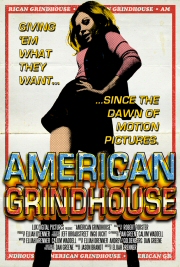
SXSW 2010: American Grindhouse

With grindhouse cinema making a bit of a comeback in recent years with movies like “Black Dynamite,” “Hell Ride,” and of course, “Grindhouse,” Elijah Drenner’s documentary about the history of exploitation film couldn’t have come at a better time. Narrated by Robert Forster (who’s appeared in his share of B-movies), “American Grindhouse” tracks this shameless and shocking breed of moviemaking from its birth in the early 1900s to its illusory transition into mainstream cinema today. Featuring interviews with directors like John Landis, Joe Dante and Jack Hill, and film historians like Eric Schaeffer and Eddie Muller, “American Grindhouse” may be a little vanilla in its presentation, but it’s a pretty fascinating story nonetheless.

In fact, while exploitation movies have been around almost as long as the movie camera itself, what’s most interesting about the genre is how much it’s evolved throughout the years. Drenner’s film studies this evolution, beginning with the implementation of the Hays Code by the MPAA, which forced filmmakers to brand their movies as “educational” in order to feature nudity or any other type of suggestive nature. This led to the “birth of baby” films of the 1930s, and eventually, branched out into the post-war burlesque movies of the 40s. For my money, though, exploitation cinema didn’t really take off until the arrival of nudie-cuties like Russ Meyer’s “The Immoral Mr. Tease” (which many consider to be the very first porno) and “women in danger” films like Herschell Gordon Lewis’s “Scum of the Earth.”

Along the way, Drenner also covers the gore films of the 60s and 70s (including a lengthy discussion about Wes Craven’s controversial “The Last House on the Left”), as well Blaxploitation cinema, “women in prison” films, Nazi exploitation movies, and the mainstream success of “Deep Throat.” The film’s most interesting segment, however, isn’t really about grindhouse cinema at all, but rather studio-funded movies like “Jaws” that offered the thrills of a B-movie with the production values of a Hollywood blockbuster. It’s exactly this change in the Hollywood system that essentially put an end to grindhouse, but as director John Landis is keen to point out, the very term “exploitation” is subjective, because as long as there’s an element you can exploit, it falls under the category of an exploitation film.

Landis may be the most recognizable name in “American Grindhouse,” but without his insightful and often humorous commentary, the movie wouldn’t be nearly as entertaining. He brings some really great ideas to the table that the other interview subjects fail to even consider – namely the concept that mainstream hits like “Passion of the Christ” and “American Gangster” are actually exploitation films in disguise. It certainly makes sense, and if there’s one thing you should take away from “American Grindhouse,” it’s that exploitation cinema isn’t dead. In fact, if Landis is to be believed, it never will be. That may not be what Drenner was trying to accomplish with this film, but it’s a message I’m sure he could get behind.

SXSW 2010: Kick-Ass

Matthew Vaughn hasn’t had the greatest luck with comic book movies – first, he walked away from “X-Men: The Last Stand” mere weeks before filming began, and more recently, he was replaced by Kenneth Branagh as director of Marvel’s big screen adaptation of “Thor” – so it’s nice to finally see him find a little success in the genre. Of course, “Kick-Ass” has had its share of problems as well, most notably in the lack of studio interest when the project was first being shopped around. And considering just how much graphic violence and language courses through Mark Millar and John Romita Jr.’s eight-issue miniseries, you can sort of understand why. Thankfully, that didn’t deter Vaughn from just securing the financing himself, because in doing so, he was provided the freedom needed to create the kind of balls-to-the-wall comic book movie that its bold source material deserved.

For teenage geek Dave Lizewski (Aaron Johnson), comic books aren’t just an escape from the social hierarchy of high school, but a lesson in morals as well. When he wonders why no one has tried to do the superhero thing in real life, he throws on an old wet suit and heads into the city to fight crime. It doesn’t go quite as well as he imagined, but his random act of bravery is recorded and uploaded to YouTube where he becomes an overnight sensation as the masked crusader, Kick-Ass, spawning an entire subculture of costumed heroes in the process. Meanwhile, father-daughter duo Damon and Mindy Macready (Nicolas Cage and Chloe Moretz) really are living the secret lives of superheroes, and when they catch wind of Kick-Ass’ clumsy heroics, they decide to team up with the kid to take down the local crime boss, Frank D’Amico (Mark Strong).

kick_ass

There’s more to the story that would be considered a spoiler to first-time readers of the comic – namely, the reveal that Kick-Ass’ new superhero pal, Red Mist (Christopher Mintz-Plasse), is actually Frank’s son, Chris, in disguise – but it’s announced so early on in the film version that you’re not surprised when he turns out to be working for the bad guys. In fact, there are plenty of differences between the book and the movie, but with the exception of Dave’s relationship with high school crush Katie Deauxma (Lyndsy Fonesca) – which follows the same general path until it veers off into a decidedly more Hollywood-friendly direction – it’s mostly just additional material meant to flesh out characters that didn’t have as much of a presence in the comic book.

And even when the movie isn’t using the comic as a blueprint, it still feels like it belongs in “Kick-Ass.” Director Matthew Vaughn clearly understands the world that Millar and Romita Jr. have created, and that familiarity resonates throughout, from the high-energy action scenes to the colorful performances from its cast. Aaron Johnson is a real find as the title character – a Peter Parker type who can play both dorky and cool – but it’s his pint-sized co-star who walks away with the film. Chloe Moretz has already proven that she’s mature beyond her years (see: “500 Days of Summer”), but she easily trumps that performance with an instantly iconic role that places her in the middle of some of the coolest, most wildly violent fight sequences since “Kill Bill.” Even Nicolas Cage is at the top of his game as his character’s alter ego, Big Daddy – a vigilante so conceptually similar to Batman that Cage speaks with an Adam West-like cadence.

That’s exactly the kind of detail that might drive some fans crazy, but it complements Vaughn’s vision nicely, because his “Kick-Ass” is more of a satire of the superhero genre than a straight-up action flick. And when you have an 11-year-old girl running around town chopping up gangsters, how could you not acknowledge the absurdity of the situation? Millar’s book had its moments, but Vaughn mines the material for even more laughs, especially in the relationships between Aaron and his friends (Clark Duke and Evan Peters), Kick-Ass and Red Mist, and Big Daddy and Hit-Girl. The end result is an entertaining blend of action and comedy that, despite falling short of its ridiculously high expectations, delivers everything that was awesome about the comic and more.

SXSW 2010: BARRY MUNDAY

Patrick Wilson hasn’t had the greatest of luck when it comes to movies and his manhood. He was castrated by a diabolical Ellen Page in “Hard Candy” and had trouble getting it up in Zack Snyder’s big screen adaptation of “Watchmen.” His third go-around with this particularly emasculating complication is Chris D’Arienzo’s “BARRY MUNDAY,” a movie that manages to be both funny and touching when it doesn’t seem capable of either. Though the film is obviously targeted towards a certain audience (namely, the kind of adult males who frequent this site), the fact that it plays like “Knocked Up” for grown-ups pretty much guarantees it will cast a larger net upon release.

Wilson plays the title character, a thirtysomething slacker with one thing on his mind: women. But when an embarrassing incident involving an underage girl, her father, and a trumpet results in him losing both of his testicles, Barry’s confidence plummets. To make matters worse, he returns from the hospital to discover that Ginger Farley (Judy Greer), a woman he doesn’t even remember having sex with, is carrying his illegitimate child. Faced with the prospect of his family name dying with him, Barry decides to embrace the pregnancy and his duties as the father – a decision that leads to the realization that it may have taken losing his manhood for him to finally become a man.

barry_munday

Based on the Frank Turner Hollon novel, “Life is a Strange Place,” D’Arienzo’s film is an indie-sized production with a Hollywood-sized cast. Though the first-time director doesn’t bring much visually to the project, the screenplay (which he also wrote) is loaded with big laughs and even bigger heart. It may come off as a little weird that Barry Munday is able to transform from a wannabe ladies man into a responsible father so quickly, but when you take into account the fact that he’ll never be able to reproduce again, it actually makes a lot of sense. Most men think about the future of their legacy at some point in their lives, and though Barry can come across like an immature jerk at times, his journey to parenthood is engaging enough that you still root for him.

Still, it would be a pretty hard sell without someone like Patrick Wilson in the lead role, as the success of the film hinges on his performance. Wilson has been delivering solid work for years, but he’s still a relative unknown to most moviegoers. “BARRY MUNDAY” isn’t going to change that, but it’s a great venue for his talent, especially considering the role is so different from previous work. Judy Greer is also great as the homely mother-to-be, and Chloe Sevigny and Malcolm McDowell (as Ginger’s younger sister and father, respectively) bring life to otherwise paper-thin characters, but this is Wilson’s show. And when you’re playing the title character of a movie that proudly presents his name in all caps, that’s the way it should be.

« Older posts Newer posts »

© 2026 Premium Hollywood

Theme by Anders NorenUp ↑