Category: TV (Page 133 of 595)

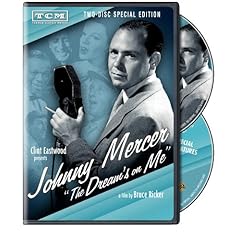
Johnny Mercer: The Dream’s on Me

Though he was a rich man, an underrated singer in his own right, and the co-founder of Capitol Records, Johnny Mercer is, 34 years after his death, nowhere near as famous as the author of such brain-burrowing mid-century lyrics as “One for My Baby (and One More for the Road)”, “Ac-Cent-Tchu-Ate the Positive,” “That Ol’ Black Magic,” “Satin Doll,” “Laura,” and “Moon River” really should be. Lyricists rarely get the respect composers do. Moreover, Mercer worked primarily in Hollywood, which in his day meant more money but less prestige than writing songs for Broadway. That’s show business.

“Johnny Mercer: The Dream’s on Me” suffers slightly from the ill-fitting inclusion of some new material featuring super jazz fan and executive producer Clint Eastwood chatting with film composer John Williams and others, but overall, this TCM documentary written by Ken Barnes and directed by Bruce Ricker is a massively engaging documentary look at Mercer’s often surprising career. The 90-minute film efficiently covers his personal riches-to-(not quite)-rags-to-greater-riches story and tumultuous personal life, including a lifelong affair with Judy Garland, but wisely focuses on the music and takes full advantage of some priceless archival footage. Performances and interviews featuring Bing Crosby, Fred Astaire, Louis Prima and Keely Smith, Julie Andrews, Blake Edwards, Ray Charles, a young Barbara Streisand, a middle-aged Bono, and new performances by Jamie Cullum, Dr. John and others (seen in their entirety on the DVD bonus disc), beautifully illustrate Mercer’s gifts and chart his extraordinary influence. An obvious labor of love, “The Dream’s On Me” is not exactly great filmmaking but it’s got great taste and is a must for fans of great popular music.

Click to buy “Johnny Mercer: The Dream’s on Me”

The Biggest Loser: larger than ever

Every season on NBC’s “The Biggest Loser” seems to out-do the season before. The hit reality show returned for its ninth season last night, and as you might suspect, the contestants were larger than last season. So much so, that trainers Bob Harper and Jillian Michaels agreed that they were intimidated by the fact that they had to whip this bunch into shape, literally.

The theme this season is families, and this time as each pair of contestants were notified that they were selected to be on the show, they also had to have their initial weigh in in public, in front of their families, friends, and entire towns. Yikes.

Continue reading »

10 “New” TV Series Which In No Way Matched The Shows That Inspired Them

Since we offered up a “New”-themed movie list to kick off the new year, it seemed like a reasonable idea to put together a TV-related list as well, but when we looked back and saw the number of series which featured the word “new” in their title, we noticed a recurring theme: many of the “new” series didn’t come anywhere close to living up to the standards set by the shows which inspired them. These are but ten examples, but rest assured that there are many more which could’ve made the cut.

10. The New Leave It To Beaver (1985): You may recall that this show was entitled “Still the Beaver” when it premiered as a Disney Channel original series, but when it transitioned over to TBS for its second season, that’s when the “New” title kicked in. It’s possible that it doesn’t really belong here, since it’s been ages since I last saw it (the rights to the series are sitting in limbo at the moment, which means that we won’t be seeing it in syndication anytime soon, let alone on DVD), but my recollection is that, although the TV movie that inspired the show was pretty great, the show itself often wasn’t. Still, while “The New Leave It To Beaver” may not come anywhere close to matching the perfection of the original series, it deserves a certain amount of credit for being the most successful series revival / sequel of all time, bringing back virtually every single surviving member of the cast: Tony Dow (Wally Cleaver), Barbara Billingsley (June Cleaver), Ken Osmond (Eddie Haskell), Frank Bank (Lumpy Rutherford), and, of course, Jerry Mathers as the Beaver.

9. The New WKRP in Cincinnati (1991): Given the success of the original “WKRP” in syndication, it’s no wonder that someone had the idea of bringing the show back, but while the new version did manage to corral a few of the old cast members – Gordon Jump (Mr. Carlson), Frank Bonner (Herb Tarlek), and Richard Sanders (Les Nessman) all came back – the folks who opted out of the series were replaced by tepid new characters who couldn’t hold a candle to those whose shoes they were filling. Given how disappointing “The New WKRP” was, it really should be higher on this list, but I’m keeping in this slot because the show did manage to convince Loni Anderson (Jennifer Marlowe), Tim Reid (Venus Flytrap), and Howard Hessman (Dr. Johnny Fever) to make guest appearances at various points.

8. The New Avengers (1976): Fans tend to be split about the merits of the return of John Steed with two new partners, Mike Gambit (Gareth Hunt) and Purdey (Joanna Lumley), but you can hardly blame them, given how iconic a figure Emma Peel was. It’s said that the reason Steed had a pair of partners this go-round was that producers weren’t entirely confident that 54-year-old Patrick Macnee could hack the work regiment anymore, but he managed to pull it off pretty well, all things considered. Nowadays, it’s no wonder that the original series is the one which stands the test of time best: “The Avengers” had a look which helped define a decade, whereas “The New Avengers” has a look which is defined by its decade. Mind you, it doesn’t exactly help that you can’t look at Purdey without thinking, “Hey, it’s Patsy from ‘Absolutely Fabulous’!”

Continue reading »

Family Guy: Something Something Something Dark Side

When FOX decided to give “Blue Harvest” – the first of the “Family Guy”-themed “Star Wars” specials – its own DVD release separate from the season sets, fans were a little annoyed. The studio must have made a killing in sales, though, because it’s gone one step further in screwing over its loyal audience by releasing the follow-up, “Something Something Something Dark Side,” direct to DVD. The betrayal wouldn’t burn so much if the 54-minute special lived up to the quality of its predecessor, but despite the reputation of the film it’s spoofing, this is one sequel that falls well short of that. There are a few good jokes about AT-ATs, the shitty accuracy of Stormtroopers, and the looming fate of Luke’s right hand, but a majority of the jokes fall flat. It feels more like a straight retelling of “The Empire Strikes Back” with “Family Guy” characters than a parody, and though guys like Mort Goldstein (as Lando Calrissian), Carter Pewterschmidt (as Emperor Palpatine) and the Giant Chicken (as Boba Fett) finally have a role to play in the story, it’s more out of necessity than because it’s funny. The addition of a snarky pop-up trivia track helps increase the special’s replay value, but it doesn’t change the fact that “Something Something Something Dark Side” is a bit of an unexpected disappointed for fans of “Star Wars” and “Family Guy” alike.

Click to buy “Family Guy: Something Something Something Dark Side”

Networks in trouble, examining cable format

Fox vs. Time Warner

– Image from the ad Fox has been airing during its programming.

As cable channels continue to attract more advertisers, the networks are losing money left and right. In response, they are seeking higher fees from cable providers. The most recent and publicized situation concerns Fox and Time Warner. Rather than pay Fox’s asking price, Time Warner is threatening to drop the network entirely.

Even worse, their audiences are dwindling and their affiliates are even demanding more money. These problems are causing many network executives to consider switching to a cable format. The change would be monumental.

That will play out in living rooms across the country. The changes could mean higher cable or satellite TV bills, as the networks and local stations squeeze more fees from pay-TV providers such as Comcast and DirecTV for the right to show broadcast TV channels in their lineups. The networks might even ditch free broadcast signals in the next few years. Instead, they could operate as cable channels — a move that could spell the end of free TV as Americans have known it since the 1940s.

The traditional broadcast model works like this: CBS, NBC, ABC and Fox distribute shows through a network of local stations. The networks own a few stations in big markets, but most are “affiliates,” owned by separate companies.

Traditionally the networks paid affiliates to broadcast their shows, though those fees have dwindled to near nothing as local stations have seen their audience shrink. What hasn’t changed is where the money mainly comes from: advertising.

Cable channels make most of their money by charging pay-TV providers a monthly fee per subscriber for their programing. On average, the pay-TV providers pay about 26 cents for each channel they carry, according to research firm SNL Kagan. A channel as highly rated as ESPN can get close to $4, while some, such as MTV2, go for just a few pennies.

Having two revenue streams — advertising and fees from pay-TV providers — has insulated cable channels from the recession. In contrast, over-the-air stations have been forced to cut staff, and at least two broadcast groups sought bankruptcy protection this year.

So rather than wait for the Internet to become a bigger source of income, the networks and local stations are mimicking what cable channels do: They’re charging pay-TV companies a monthly fee per subscriber to carry their programming.

The American Cable Association says its members — mainly small cable TV providers — have seen their costs for carrying local TV stations more than triple over the past three years. The group’s head, Matt Polka, says those fees have gone “straight to consumers’ pocketbooks” in the form of higher cable bills.

All this means for viewers is a higher cable bill. CBS, NBC, ABC, and FOX have always supplied their programming for free. The reason they’ve stayed afloat is because of ad sales, which are decreasing. If they do wind up severing ties with their affiliates and jumping to cable, consumers will have to pay for them like they would any other channel.

« Older posts Newer posts »

© 2026 Premium Hollywood

Theme by Anders NorenUp ↑