Category: Movie Dramas (Page 153 of 188)

A really hurried movie moment….

I’m halfway between my family’s ancestral home and one and only screening of the much buzzed-about “Big Fan” at the Los Angeles Film Festival with roughly zero time to spare, having ducked into a Coffee Bean and Tea Leaf off the 101 somewhere in the wilds of Encino.

Anyhow, for reasons known only to me and best left mysterious, even though the movie starring the very talented comedian and actor Patton Oswald is about a football fan, here are a couple of baseball related clips. It’s been that kind of a day.

So, sometimes there is crying in baseball.

More substantive posts coming soon.

Nobel Son

Writer/director Randall Miller must be a great guy to work with. That’s the only possible explanation for how he managed to snag such an amazing cast for “Nobel Son,” a headache-inducing thriller every bit deserving of its direct-to-DVD sentence. Though Miller isn’t exactly new to the business (he directed his share of bad comedies in the 90s), it’s still quite a feat to go from the land of made-for-TV movies to working with the likes of Alan Rickman in back-to-back projects. Their 2008 film, “Bottle Shock,” was one of the best reviewed entries at Sundance last year, but just because “Nobel Son” is about an award doesn’t mean it’s on the same level.

Rickman plays Dr. Eli Michaelson, a narcissitic college chemistry professor who is delighted to discover that he’s won the Nobel Prize. While away in Stockholm to accept his award, his disappointment of a son, Barkley (Bryan Greenberg), is kidnapped and ransomed for $2 million. The kidnapper (Sean Hatosy) claims that Eli stole the award-winning idea from his own father, and he’ll do whatever it takes to make him pay. Of course, it’s what happens after the initial kidnapping that really matters, but to say any more would be to spoil the film’s only redeeming quality: the web of twists that begins to unravel around the midway point. Unfortunately, the movie is so damn irritating during the first hour – from the shaky camera movements and blazing fast edits to the Paul Oakenfold techno club soundtrack – that it never has the chance to win back the audience. Miller should stick to more low-key projects like “Bottle Shock,” because his embarrassment of a Guy Ritchie impersonation just isn’t going to cut it.

Click to buy “Nobel Son”

Blu Tuesday: Friday the 13th, Dr. Strangelove and Morning Light

Those who saved up a little extra pocket change from the lack of Blu-rays released over the last few weeks will probably want to grab a hammer and break open the piggy bank, because there are a slew of must-own titles hitting stores today. Even better is the variety, from new horror films and old classics to cult television shows and HBO mini-series, this week features one of the best HD line-ups that you’re likely to see all year.

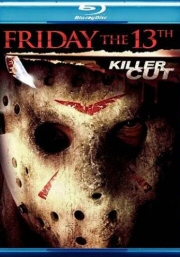
“Friday the 13th” (Warner Bros.)

The new adventures of Jason Voorhees may just be the latest in a long line of mindless sequels (in fact, one might even argue it’s little more than a compilation of greatest hits from the first three films), but it does serve as an excellent reboot of sorts that horror fans should appreciate. While Jason’s ninja-like stealth is a bit ridiculous, it’s but a minor obstacle in an otherwise entertaining slasher flick. The kills are just as inventive as they were 30 years ago (there’s even a Blu-ray exclusive featurette that takes an in-depth look at the seven most memorable ones), and at the end of the day, that’s all anyone really cares about. Whether or not it truly revitalizes the franchise is a whole another matter, but at least Warner Bros. is willing to stand behind their product. The Blu-ray release is one of the studio’s best yet, and includes an extended (but still R-rated) cut of the film, as well as a making-of featurette, deleted scenes and a picture-in-picture video track.

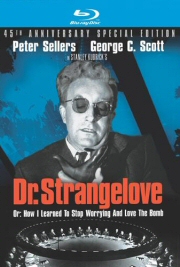
“Dr. Strangelove” (Sony Pictures)

Stanley Kubrick’s 1964 Cold War satire isn’t exactly the kind of film that benefits from high definition, but it still looks remarkably good for its age. Though I’ve never really been a fan of black-and-white cinema, “Dr. Strangelove” is one of the few exceptions. It’s probably because the movie would seem absolutely ludicrous in color. Not only are many of the characters (like George C. Scott’s General Turgidson and Peter Seller’s Strangelove) already so outlandish that they’re practically cartoons, but the monochrome effect lends a certain seriousness to the film that only makes the events that follow even funnier. The “Inside Dr. Strangelove” retrospective included on the disc – which covers everything from Kubrick’s original idea of making a serious political thriller to an 11th hour legal coup designed to delay the release of the similarly-themed “Fail-Safe” – should be of particular interest to fans of the film, while the addition of never-before-seen pages from the screenplay sheds new light on the infamously deleted cream pie fight ending.

Continue reading »

Good News, Bad News

* Some of the best, or at least most interesting, news I’ve heard in a while regarding the film business is the announcement, as reported by Indiewire‘s Eugene Hernandez, of the formation of DF Indie Studios. Presumably named for the project’s two chief executives, Mary Dickinson and Charlene Fisher, the group’s press release says the company plans to release 10-12 “multi-genre” films annually with a budget of $10 million or less. The group’s slogan is “Indie Style – Studio Dependability,” which I think a lot of filmmakers might describe as something like heaven on earth, relatively speaking. Among the big names who’ve become publicly involved with the project are indie mainstay producer Ted Hope, whose associated with most of Ang Lee’s films, among many others, and “Michael Clayton” Oscar winner Tilda Swinton (also “The Chronicles of Narnia,” and numerous indie productions you’ve never heard of).

Personally, I think most mainstream films are way too costly, and I’d like to see a variation of this idea applied to all kinds of films, not just traditional indie subject matter. So, I like the idea that they say they’ll be doing “multi-genre” films that will be, of course, “commercially viable.” (They still need investors.) Personally, I’m hoping that they take a fairly loose approach and include a bit of the old wild and wooly Roger Corman ethos alongside more refined productions. If they’re a success, maybe the big studios might want to copy them. They copy everything successful.

* This simply stinks.  Whoever’s responsible for releasing the material (which I haven’t seen and absolutely won’t be linking to) should be ashamed. As for those who’ve raised moral/health objections, I ask: Would we critize straight show business types and call for the sexual responsibility police like this? All around very not cool.

I’m perhaps a little extra mad about this because back in 2003 I interviewed Dustin Lance Black for this way-geeky piece. (It’s got a very long set-up, explaining my personal connection to the very good documentary Dustin had just finished at the time, the actual interviews starts here.) The guy couldn’t have been nicer or more unassuming, we had a great talk, and I’ve been rooting for his success ever since. (He even mentioned to me, post interview that he was starting work on a script about Harvey Milk, to which I said sagely, “good idea.” Now, I ask: Where’s my profit participation?!) He does not deserve this.

On the other hand, when was the last time anyone was interested in a writer’s sex life?

Break out the Bloody Marys, “The Hangover” Lingers at #1

As I was too chicken to more than implicitly predict last time, “The Hangover” held on to its #1 spot with a cool $33.4 million. Variety reminds us that this is only a 26% drop, very rare in today’s opening-weekend-centric turn-’em-and-burn-’em movie world. The star-free ensemble farce is clearly benefiting from excellent word of mouth so that folks who might ordinarily avoid an R-rated comedy about a Vegas bachelor party gone off the rails are being attracted. Good work.

Also Pixar/Disney did fabulously with its unbeatable, yet rare, principle that if you work really hard and imaginatively to provide quality family entertainment with a heart and soul as well as a bit of show-biz razzle-dazzle, people will actually show — you should pardon the express — “Up.” The CGI 3-D animation-fest with a cranky elderly protagonist that no sane executive would ever have greenlit were it not for Pixar’s unprecedented track record, earned $30.5 million and dropped a low 31%.

Denzel Washington, Meanwhile, in star-driven product land, “The Taking of Pelham 123” met the rather modest expectations for a lavish, all-star, action-remake and hit $25 million, while the Eddie Murphy family flick, “Imagine That,” netted a sad $5.7 million for the #6 spot on its opening weekend at over 3000 screens.

Now, I want to add that, while trashing movies I haven’t personally seen is against my religion (for all I know, I’ll end up sorta liking Tony Scott’s “Pelham” — stranger things have happened, I’m the guy who liked “Domino”), even more against my religion is trashing the concept of remakes, though on the whole they tend to be less good than earlier successful versions.  True, it doesn’t exactly scream “originality” to take on a property that’s been previously successful, but no one says, “Oh God, not another remake of ‘Romeo and Juliet.'” There is absolutely nothing wrong with restaging an old concept, as long as you have something of your own to say with that property and are not simply going with something that looks likes a safe bet in a business where safe bets don’t exist. Lack of “originality” is not the problem; abject creative cowardice is.

Movie remakes go back to Hollywood’s youth. Probably my single favorite little-known Hollywood factoid is that the 1941 “The Maltese Falcon” starring Humphrey Bogart and directed by John Huston was actually the third adaptation of Dashiell Hammett’s great detective novel made over a period of about ten years. I also happen to think that Philip Kaufman’s 1978 version of “Invasion of the Body Snatchers” is arguably even better than the rather great original version directed by Don Siegel in 1956. And, moving to TV land for just a second, is there any human being on the planet who thinks the recently concluded “Battlestar Gallactica” (don’t tell me how it ends!) isn’t a million times better than the unbelievably awful original? As Roger Ebert likes to say, movies are not what they are about but how they are about it. If you have something fresh to say by revisiting an old story, by all means say it, just make sure you’re not kidding yourself.

Anyhow, returning to this weekend’s b.o., what I think harmed both “Pelham” and “Imagine That” was that, as far as was visible from either the marketing or the response to it, these were movies that offered not one thing fresh or exciting or in any way of a great deal of interest other than the services of its stars. That’s good for something — big stars are the closest thing on the planet to a certain level of guarantee of public interest and sometimes that’s all you really need. But if you really want to hit it big, you’ve got to gamble a little bit that the audience is more interested in being genuinely entertained than lulled by the presence of name entertainment brands.

On the other hand, “Terminator Salvation,” which nobody seems to like too much, is actually doing very well abroad and the very honestly entertaining “Drag Me to Hell” isn’t exactly burning up the U.S. box office. So, who knows?

« Older posts Newer posts »

© 2026 Premium Hollywood

Theme by Anders NorenUp ↑