Category: External TV (Page 93 of 419)

24 8.7: Just because you’re paranoid don’t mean they’re not after you

I was tempted to go with one of two songs for tonight’s episode. The runner-up to the Nirvana lyric above was Garbage’s “Stupid Girl,” in reference to the subplot where Starbuck lets her hilljack ex-con lover and his troglodyte friend loose in an evidence warehouse…but it didn’t seem emphatic enough. No, for that to be the lead, I needed a song with a title along the lines of “You Are the Dumbest Motherfuckers in the History of Dumb Motherfuckers,” and a quick check of my iTunes library reveals nothing that has both ‘dumb’ and ‘motherfucker’ in it. I am clearly listening to the wrong bands.

Slumdog President is fast becoming my second-favorite character on the show this season (though he’s admittedly a distant, distant second to Renee Walker). He was smoove like Wilt Chamberlain – take that any way you like – when the peace accord was about to be signed, but Jason Schwartzman’s betrayal has evidently shaken him to the core…or has it? That’s the beauty, if you want to call it that, of this show; we only know what we’ve seen, so we have no way of determining Slumdog’s next move, since we don’t know really know him at all. On the surface, the sudden paranoia and ruthlessness is in stark contrast to his affability in the first two hours. But who knows, maybe the reason he’s so shaken is because he thought he and Jason Schwartzman were on the same page, only to discover that little brother was much more hardcore than he ever knew.

Speaking of Jason Schwartzman and hardcore, he has now been screwing those two hookers for three hours. Good on ya, mate.

If you take a step back, you have to wonder how Vladimir Guerrero didn’t see that he had been set up for failure six years ago when Jackie first entered his life. She’s suddenly back, and she has this “German” partner who speaks perfect English, and would you look at that, he wants to buy uranium rods, something totally out of Vladimir’s league. Could you make some calls, for old time’s sake? Even funnier that he thought that any of these Russian godfathers would actually tell him over a cell phone, “Why yes, I do have some enriched uranium rods. Why do you ask?” I’m no small-time gangster, but if I were, I would not be making awkward phone calls late at night to guys who could erase my entire family tree in 24 hours. Just sayin’, it would be bad for business.

24_Sc608-609_8012

“What’s my sign? ‘Out of order.'”

Ah, but Crazy Jackie has Vladimir’s number, and when that happens, you can throw all logic out the window. (Trust me on this, I speak from experience.) And if you didn’t already know that the producers of “24” are expecting their audience to suspend a certain amount of disbelief, you sure as hell did after tonight’s episode, where Jackie, having just filleted Vladimir with a bread knife (knew that was making a callback), accidentally stabs Jack in the stomach during her fit of rage. Jack falls to the ground, but still has his wits and faculties enough to throw the bread knife at Vladimir’s suspicious right-hand man…and stab him perfectly in the neck, killing him instantly. Gales of laughter came from the “24” blog headquarters when that happened. “Thank you, Senor MacGyver. You saved our village.” “Don’t thank me. Thank the moon’s gravitational pull.” Both are equally as likely to actually happen.

Oh, and apparently Jackie’s stabbing of Jack was just a flesh wound. Whew. (*slaps forehead*)

Finally, let’s get to Starbuck and her dumb, dumb, super-fucking dumbass plan to send Kevin on his way by giving him access to an warehouse filled with evidence lockers. Oh noes! Kevin’s even dumber buddy – don’t be surprised if they reveal that he’s illiterate – is going to mess everything up by poking around in the cell to look for more bling, and when we revisit them, he’s trashed the place like a toddler in a toy store…and the supposedly street-smart Kevin allowed it to happen. In the name of “South Park” character Jimmy, “C-C-C’mon, fellas.” For those of you who have been reading these rants since the season premiere, you know that I’ve been begging Starbuck to come clean for weeks now. She had everything in her favor then. Now, not so much, especially since Shoeless Joe beat down a cop with a baseball bat. Ugh, Dumb, mother, fuckers.

If there was a positive note to tonight’s episode, it was that Wolfhausen’s minions brought Jack through sewer tunnels as a means of evading government surveillance. That was a nice callback to when Jack called the Russians a dirty people in the previous hour. I guess they showed him.

All right, let’s get to the tune. I think it’s incredible what Dave Grohl has done in the wake of Kurt Cobain’s death, but damn, man, what I would give for one more Nirvana album.

Friday night movie news dump

Because I will it to be so…

* It’s getting mighty meta here. Via Anne Thompson, will show biz blogger/reporter Nikki Finke be in any position to sue HBO over their series about a presumably fictional entertainment blogger/reporter with a “no-holds-barred” attitude? asks THR, esq. She’s apparently already threatened to sue the Gawker. And here’s a quote for you:

So we were delighted when she acknowledged, fully aware that she would be quoted, that in our last off the record conversation she threatened to sue your blogger personally and Gawker corporately for “unfair business practices” related to our coverage of her. When we explained that the lawsuit threat was the reason we refused to speak off the record, she said, “How do you know I won’t? I’d love to own your house and your kids.”

Nikki Finke owning another blogger’s kids? Now there’s a Dickensian tale for you.

And that’s just the beginning of tonight’s useless blogging.

* Another superhero reboot. This time, it’s “Daredevil.” While writer David Scarpa’s resume doesn’t inspire great confidence, it shouldn’t be too hard to top the last attempt.

photo_22_hires

* The Weinstein Company has picked up “The Tillman Story,” which is likely to be one of the year’s hotter documentaries.

* Sony has entered the bidding for the “The Terminator” franchise. Joss Whedon’s attempt at snapping up the franchise looking less likely every day. <Sigh>

* Speaking of Mr. Whedon, from time to time someone among his fans suggests some kind of fan donation and/or investment set-up to fund those ongoing “Buffy” or “Firefly” related projects they so crave. The idea is routinely shoot down as unrealistic. Kevin Smith works on a somewhat smaller canvas, but it’s interesting to see him apparently taking the idea seriously.

* James Cameron will presumably be betting against himself in Oscar pools.

* Many reasons to be slightly bummed that I decided not to take the SXSW plunge this year.

* One more Deadline|Hollywood item for the week from Mike “the sane one” Fleming. It’s about the movie moguls taking chances on less well-known directors (as if they aren’t always taking chances regardless, even if they’re trying not to), but all I can get my head around tonight is the idea of remaking “Damn Yankees” with Jake Gyllenhaal and Jim Carrey. I’m not Carrey’s biggest fan, but that could actually work. As for the part of the lovable Satanic temptress, Lola, I’m sure there are many great possibilities, but there’s one actress whose proven she’s got the stuff for Fosse-esque choreography.

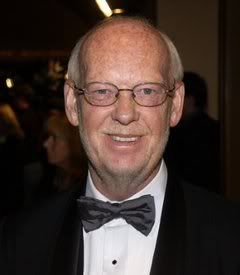
A Chat with Mick Jackson, director of “Temple Grandin”

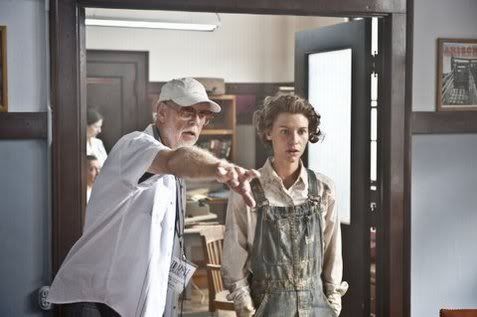
Sunday night brings the premiere of HBO’s wonderful new film, “Temple Grandin,” and if you’ve been reading Premium Hollywood lately, then you’ve already seen my interview with its subject, Dr. Temple Grandin. After the panel for the film at the TCA tour, I also caught up director Mick Jackson for a few minutes, which was just enough time to ask him about working with Grandin, to find out why he made one of his casting choices, and for him to offer me a bit of sage directorial advice.

Bullz-Eye: I talked to Temple a little earlier, and she said that she really enjoyed the process of working with you on the film.

Mick Jackson: Oh, she’s wonderful. Part of the story that we tell in the movie is that she has this tremendous eye for detail and uses that to put it together into a pattern and see the whole picture, but, in fact, when you’re dealing with us as movie makers, it’s the same thing. She had the eye for the details that were right and the details that were wrong, but she also had – unusually for someone whose life you’re telling through film – a sense of what it’s like to make a movie, to put it together into a whole picture. We reconstructed what we thought her apartment as a student would be like at Arizona University, based on what she told us and where she lives now, and she visited the set and I said, “That’s supposed to be your rooms.” And she said, “Hmmm. Well, it isn’t. But it could’ve been. It could easily have been.” (Laughs) It really takes a great ability to be able to step outside your own life to be able to say that. And she understood that, when telling the story of someone’s life, you don’t tell every bit of it. Otherwise, the movie would last as long as the person’s life. So she understood that we would collapse things and create composite characters and all that stuff.

It was great. I mean, I watched the movie with her the first time she saw it, and she was in tears. And I said, “Why?” She said, “He was only Mr. Carlock,” referring to her teacher. And the screenwriter and I had decided to call him Dr. Carlock, to convey an eminence that would kind of enhance the impression he made on her. But she thought that giving him his doctorate was a way of her giving back thanks to him for everything he’d done for her. That was lovely. The other thing is that after that screening…she saw the movie once and she was very enthusiastic, and I was driving later in my car and the phone rang, and it was Temple, still enthusiastic… (Laughs) …wildly raving about the movie. And I realized that what we’d shown in the movie, which is her being able to run things in her head, was true. She was quoting me shots and edits and things from the movie that she’d seen once. So she’d obviously downloaded the movie into her head, like a DVD, and she was running it backwards and forwards! “I love that shot where she opens the door and…” (Laughs) So it was literally true…and that was very gratifying.

BE: So how familiar where you with Temple before the script for the movie landed on your desk?

MJ: Not at all. My wife had heard her on NPR, but the name meant nothing to me. So I read this thing and just got dragged into it. I thought, “This is just the most amazing story!” You can’t tell the story of every person who has autism, because it’s such a great range. Not everyone’s a visual thinker or has comfort from a squeeze machine, but…it’s like movies about the Iraq war: you don’t tell the whole war story, but you take something, like “The Messenger” or “The Hurt Locker,” you tell a specific story about one person and, in effect, you’re telling the whole story. So telling the story about Temple is like telling the whole story of autism. If you understand Temple, then you understand what autistics go through, or what being the parent of an autistic child is like.

I hope the main thing that people take away from Temple’s story, which is uniquely true for Temple but is in fact true for everybody who is a parent or a relative of an autistic child, is that you’ve got to put all that energy in there for some of it to come back. You can’t just lean back and say, “This child maybe should be looked after by doctors or go into an institution,” like they suggested with Temple. All that energy, all that pushing of Temple by her mother, her aunt, her science teacher out into the real world did it. It helped her emerge. The title of one of her books is “Emergence,” and that’s just what she did. There was this amazing mind in there that was just trapped and came out. So I think that’s the lesson we ought to take away from it: never let up your energy for a moment, and never let up that sense of constantly pushing them forward. Not really like a stage mother, but just not shielding them from life and just trusting them to find a way of dealing with life. It’s a learning experience. Everything was a learning experience for her.

BE: My wife works with autistic students, and I told her that Temple had said much the same thing, about how her mother pointedly made sure to push her toward activities in the summer and to the activities in high school. And my wife said that that’s exactly what she does every day with the student she’s working with right now.

MJ: And I’m sure she sees that the more energy she puts into it, the more she sees the change. Not immediately, because it’s over a long period of time, but…it’s the one lifeline that they have to the real world, people pushing them into it.

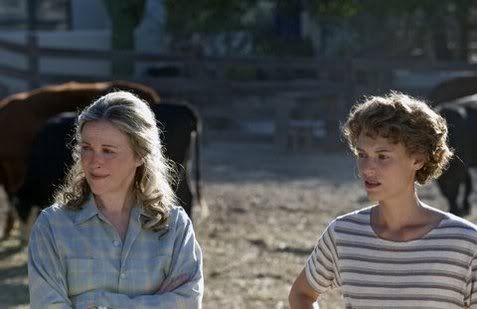
BE: I had one question about the casting for the film. How did Catherine O’Hara come to play Temple’s aunt?

MJ: It’s my experience in casting character actors, as it were, that if you cast someone who has a great comedic career, they know a lot more about the human condition sometimes than straight dramatic actors. And I so much wanted the aunt to kind of be a way into the movie for the audience, a sympathetic, warm figure. You meet Temple with all of her kind of raw orneriness and awkwardly unsocial manic behavior, but you have this reassuring figure there in the aunt, who says, “Yes, it’s all right, dear. Come this way, Temple.” And I thought Catherine just brought all of that warmth that you get from knowing about human foibles from being a comic actress to the role. I thought she was wonderful.

BE: Of all things, my memories of “Home Alone” worked in her favor here, because that’s the movie that first made me think of her as a motherly type.

MJ: (Laughs) Yes!

BE: I know you’ve got to keep moving, but of the other projects you’ve worked on over the years, do you have one that you think didn’t get the love it deserved?

MJ: They all get a certain amount of love, which I’m grateful for. “The Memory keeper’s Daughter,” which was the thing I did before this, for Lifetime…I think it’s probably a little shorter than I would’ve had it, the movie. If I’d been allowed to expand it a little more, I think it would’ve been a more moving story, but that was quite fun to work on. I sound as if I specialize in disease-of-the-week movies: I’ve done Lou Gehrig’s Disease (“Tuesdays with Morrie”), I’ve done Down Syndrome, and now autism! (Laughs) But every one is a movie, and it’s a good movie if it happens to be about the people.

BE: Well, it’s not about a disease, but for what it’s worth, I’m very partial to “Volcano.”

MJ: That was fun, but take some advice from me: if you’re ever directing a movie, don’t get into a race with another movie on the same subject (“Dante’s Peak”). Nobody ever says, “Oh, I saw the second volcano movie!” (Laughs)

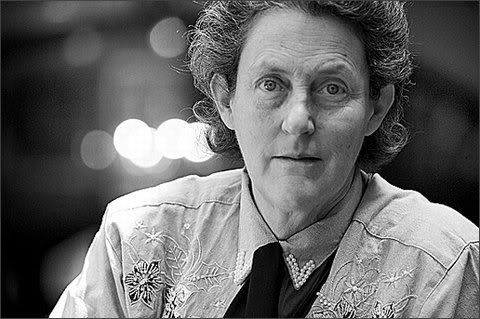
TCA Tour: A Chat with Temple Grandin

Temple Grandin is a Doctor of Animal Science at Colorado State University, a consultant to the livestock industry in animal behavior, and a best-selling author. She’s also autistic, a fact which you may have already known if you happen to have a connection to someone with autism, be it first-hand or indirectly. For instance, I came to know about her, as you’ll soon read, through my wife, who works with autistic students and is the proud owner of a copy of one of Grandin’s books, The Way I See It: A Personal Look at Autism and Asperger’s.

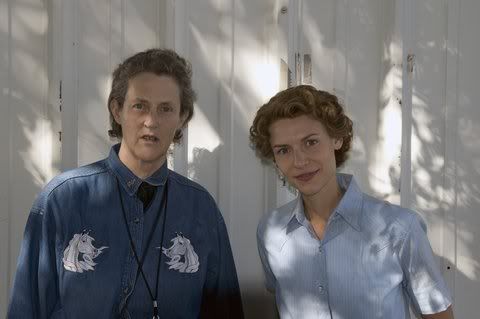
When an advance screener of the new HBO movie based on her life – entitled, appropriately enough, “Temple Grandin” – landed on our doorstep in advance of the TCA press tour, you can imagine that we popped it into the player post-haste, and I’ll tell you right now, I was blown away: Claire Danes gives a phenomenal performance as Grandin, but director Mick Jackson ties for MVP with his visual presentation of how Grandin’s mind works. I immediately went about trying to set up interviews in connection with the tour, and although Danes was unavailable, when HBO asked if I’d like to chat with Grandin herself, you’d better believe that I didn’t hesitate for a moment before saying, “You bet!”

Bullz-Eye: I just wanted to start off by telling you that my wife works with autistic children.

Temple Grandin: Oh, okay.

BE: She hadn’t actually trained in the field, but she ended up stepping into a job as a substitute teacher in a special education classroom, and she had such aptitude that the teacher gave her a gift: a copy of your book. She basically said, “Not everyone has the heart and the temperament to work with children who need a little extra effort, but I really think you do, and I think you’d get a lot out of reading this.”

TG: Which book was it?

BE: “The Way I See it.”

TG: All right.

BE: So as soon as she found out that I was going to be speaking with you, she immediately passed it on to me and said, “You’ll be wanting to read this.” (Laughs) But we also watched the movie together, and I thought it was fantastic. How did that first come about? Did someone read your book, then come to you and pitch the idea of making it into a movie?

TG: Well, that’s actually been going on for a good long time. Emily Gerson Saines started working on this about nine years ago and went to, like, two different directors and writers. Then, finally, it came together with the right people.

BE: Did you get final say about who would play you in the film?

TG: Well, that was just decided. Claire Danes did an absolutely brilliant job. Absolutely brilliant. I met with her for about six hours, and I gave her the oldest VHS tapes I could find of me, where I’d be more autistic-acting. Like, in old programs from the late ‘80s, where I was on a TV show, and some lectures from the early ‘90s. We dubbed those over onto DVDs, and she had those to practice with. I didn’t have any video older than that. Or movies. We didn’t do movies as a family, so I didn’t have that.

BE: I thought the visual aspects of the film, which try to give the viewer an understanding of how your mind works, were outstanding. I guess that was Mick’s idea…?

TG: I thought that was absolutely brilliant, the way Mick showed all of that. Wonderful. Like, the scene where it shows all of the shoes coming up…? That’s exactly how I think. Mick was absolutely brilliant with that.

Continue reading »

American Idol: was that necessary?

Last night’s episode of “American Idol” was kind of a waste of our time. They do the early auditions in seven cities and then throw in an eighth episode for fluff before Hollywood week begins. Anyway, what they did last night was show some more of the really good and really bad auditions that they did not show over the course of this past month. And while it really was not necessary, they aired it, so we’re gonna write about it.

They began by recapping Larry Platt’s “Pants on the Ground” phenomenon, with Ryan Seacrest tooting the show’s horn as usual and how they made the whole thing into a phenonmenon. Then it was on to the rest of the auditions, and here were some of the highligts and lowlights…..

Continue reading »

« Older posts Newer posts »

© 2026 Premium Hollywood

Theme by Anders NorenUp ↑