Category: External Movies (Page 281 of 336)

My Most Memorable Interviews of 2008

I recently went back and counted up how many interviews I’ve done for Bullz-Eye since I first came aboard the site, and I was astounded to find that – counting both one-on-one conversations as well as teleconferences – the number tops 200. Wow. Anyone who thinks that I don’t work hard for my money, I say to you that the figures speak for themselves. Looking back at the list of folks with whom I’ve chatted during the course of the past year, I find myself thinking the same thing I think every day of every year: it might’ve sucked to do all of that unpaid freelance writing for all those years, but it was totally fucking worth it. And with that bold statement, allow me to present a list of the interviews from 2008 that still remain fresh in my mind…for a variety of reasons.

* Best-received interview of the year:

Tom Smothers. I’m used to hearing from my friends when I do an interview that they enjoy, but I heard from several complete strangers that really loved the conversation Tom and I had about everything from the censorship of “The Smothers Brothers Comedy Hour” to the night John Lennon and Harry Nilsson were thrown out of the Brothers’ show at the Troubadour.
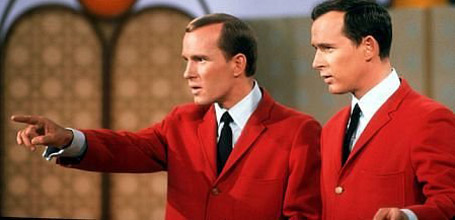
“Harry comes in with John Lennon. Well, he told John Lennon, ‘Tom likes hecklers. It helps him. It gets him through his show.’ And every time there was a silence, they were hollering out things like, ‘God fucks pigs!’ I mean, it was really filthy! Blows were thrown, and it just got wild. The next day, I got flowers and all kinds of apologies from Lennon and from Harry Nilsson.”

* Most politically-incorrect interview of the year:

Tony Clifton, the former alter ego of Andy Kaufman that’s now being performed by Bob Zmuda. To say that Clifton works a little blue is the understatement of the century, but it’s more than just dirty jokes; his whole act is one where he unabashedly says things that he knows will piss people off…and if you don’t know it’s an act, then it’s really gonna piss you off.

“Some people say that, with the repertoire I’ve got and with the rapport between the band and me, a few people have quoted it as being like Buddy Rich. I call ‘em like I see ‘em, just like Buddy. But Buddy was coked up most of the time, and I don’t do that. I prefer the Jack Daniel’s. I’m fucked up most of the time during the show. I have fun with the band. I call ‘em niggers. And I got a few Japs in there, I call ‘em Nips. I got everything mixed up in that band, like I say. I call ‘em the way I see ‘em. Listen, lemme tell ya this: you know why I get away with it? ‘Cause I got black people in my family. Yeah. And I’ve got the rope to prove it. Look, the blackies are good. They’re good for the sports and for the music. See, the Jews are good at making the money…or at taking the money from you.”

Continue reading »

The New Centurions

This entry in Sony’s amusingly vague new “Martini Movies” imprint stars George C. Scott (“Patton”) at the height of his early seventies fame as Kilvinski, a humane cop nearing retirement who bonds with his new partner, a would-be lawyer rookie partner (Stacy Keach) going through some big changes of his own. Adapted from a bestselling novel by ex-policeman Joseph Wambaugh, “The New Centurions” often foreshadows later cop dramas, particularly eighties TV groundbreaker “Hill Street Blues” — right down to earthy pre-patrol briefings and actor James B. Sikking sporting what appears to be the very same pipe he parlayed to semi-fame as the affected, egomaniacal Lt. Howard Hunter. Still, while familiar faces from lighter fare show up (Isabel Sanford of “The Jeffersons,” Erik “CHiPs” Estrada, and the eventually dickless William Atherton of “Ghostbusters”), 1972 was a year when grim was in and even the most mainstream of Hollywood films were often deliberately under-structured. Taking place over what appears to be several years, there is no particular “case” and this is not really a story about crime fighting; it’s an investigation into the effects of police work on vulnerable human beings. Written by Stirling Silliphant and directed by Richard Fleischer (“20,000 Leagues Under the Sea,” “Soylent Green,” and “Mandingo”), “The New Centurions” is slowed by overly novelistic/episodic pacing and a few too many contemporary mannerisms (including a wah-wah heavy score by Quincy Jones) but it works more often than it doesn’t because of its two first-rate lead actors and a great deal of sincerity. The film’s benevolent view of the quasi-militarist seventies LAPD may be iffy, but its depiction of the bigger truth here feels true enough: policemen are nothing more than human beings doing a job that can be as seductively destructive as heroin.

Click to buy “The New Centurions”

Jim Carrey is still funny

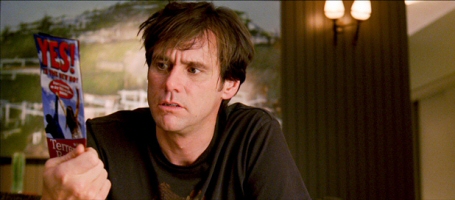
I’m glad Jim Carrey has been trying different things over the years. He’s a pretty good actor, though he could probably use some help weeding out bad scripts when he wants to take dramatic roles. Maybe he sould focus on small indie films instead of big studio releases when he wants to try new things. In any event, it’s nice to see he can still make us crack up in a silly comedy.

It’s been a while since Jim Carrey has put out such a funny film and he knows it. His desperation to reclaim his former glory hit an all-time low earlier this year when he went on “American Idol” wearing a pair of elephant ears to promote “Horton Hears a Who.” Thankfully, “Yes Man” should put an end to Carrey’s involvement in any more embarrassing marketing tactics, as it’s his best comedy in years. There’s no way he’ll ever be as big as he once was now that Judd Apatow and gang have retooled the genre, but fans will just be happy to see him back to his old antics.

Get ready for “The Wrestler”

Bullz-Eye.com’s Jason Zingale explains how Mickey Rourke lives up to the hype with a memorable performance in “The Wrestler.”

An engaging character study of a man seeking redemption, “The Wrestler” may be overly sentimental and even a bit long, but Randy is such an interesting subject that you don’t really mind. This is the movie Sylvester Stallone wish he made with “Rocky Balboa,” and though the story itself is predictable, it’s the smaller moments within that elevate the character to something beyond just a two-dimensional clown in a pair of flashy tights. Mickey Rourke’s powerhouse performance is a heartbreaking tour de force that only gets better with each passing minute, and though he has some stiff competition from the likes of Frank Langella, you’d be kidding yourself if you don’t think Rourke will still be a frontrunner at this year’s Oscars.

Bruce Springsteen wrote and sang one of the songs from the film, as you can hear in the trailer below. Rourke explains how that came about:

“I wrote Bruce a letter, because we’ve known each other over twenty years, and he knows what I used to be, or whatever. Where I went. What I’d been reduced to. I told him how I felt lucky now and didn’t have to end up being this guy, being Randy (character from The Wrestler). A while later I got a call in the middle of the night: he said he’d written a little song, for nothing. It’s fucking beautiful, right? I was honoured he took the time, because he’s a busy cat. I mean, I’m so goddam proud of this magical movie and to have Bruce’s input… ain’t nobody in Hollywood with all their millions can just ring the man and he’ll do a song, y’know?”

Aki Kaurismäki’s Proletariat Trilogy

Radio humorist Garrison Keillor gets a great deal of mileage poking fun at the taciturn ways of Swedish and Norwegian-Americans in the bleak Midwest. By comparison, Aki Kaurismäki’s similarly Nordic Finnish Fins make the citizens of Lake Wobegone seem like a bunch of raging drama queens. Kaurismäki is known for blending clever ultra-deadpan comedy and classical neorealist filmmaking, and since I love the former and just barely tolerate the latter, his works tend to be a hit and miss affair for me. Nevertheless, the definite class of this no-frills three-disc set from Criterion’s Eclipse line — comprised of three short feature-length movies about the lives of working folks who get themselves into bad, bad trouble — is also, however, the least overtly funny. 1990’s “The Match Factory Girl” is an ultra-dry twist on the pathos-heavy Hans Christian Anderson tale starring Kati Outinen — the female lead of Kaurismäki’s terrific 2002 art-house hit “The Man Without a Past” — as a trodden-upon lass who finally has enough of her vile parents and her even more vile boy-enemy (you can’t call him a friend). Ned Flanders-mustached Matti Pellonpää, who appears un-credited as the cruel seducer, also plays major roles in the less melodramatic, less reliably entertaining, but also very deftly made, films that round out the set: 1986’s “Shadows in Paradise,” a romantic comedy of sorts, and 1988’s “Ariel,” an out of sorts heist picture.

“Match Factory Girl” aside, this is the kind of material that will test the patience of viewers who don’t love such neorealist tropes as watching characters make tea for 15 seconds of real time. On the other hand, if kitchen sink realism and downbeat, ultra-subtle humor is your thing, they all may be your cup of tea. An ecological note: Given that all three features combined run just over 3.5 hours (the longest is an epic 76 minutes) and there are zero extras, someone should ask Criterion why was it necessary to package this brief trilogy on three separate discs.

Click to buy “Aki Kaurismäki’s Proletariat Trilogy”

« Older posts Newer posts »

© 2026 Premium Hollywood

Theme by Anders NorenUp ↑