Category: External Movies (Page 196 of 336)

Hollywood, land of confusion

Today, much of the confusion appears to be ethnic.

* Patrick Goldstein presents the U.K. based “Case of the Vanishing and Less Famous African-Americans.

* Universal is “circling” a director of commercials named Carl Erik Rinsch for a shot at the big time for a new action flick, writes Michael Fleming. Rinsch, who I never heard of until now, turns out to have an pretty interesting visual approach (more about that in tonight next’s post), but these days every third movie is from some first-timer whose made his or her name doing commercials. Also, Keanu Reeves is the star. Nothing surprising or strange about that, I guess. No, what’s of interest here is that the movie is a new version of the story of the loyal 47 Ronin (leaderless samurai), an oft-filmed national legend — in Japan, that is.

47_ronin_1941_2

Okay, so Reeves is part-Asian, but his looks are sort of those of a vaguely ethnic white guy, which is usually neither here nor there, but this isn’t “Shogun” or “The Last Samurai” — it’s not a story about some random westerner who finds himself in 18th century Japan. Or maybe it is now. I don’t like pre-judging movies but this just gives me a bad feeling. The 47 Ronin is a dearly held national legend of Japan and they’re going to make a seemingly super-Americanized English language version, and starring this guy?

I know there’s such a thing as non-traditional casting, but this is just weird. Samurai are not merely part Japanese and really can’t be. Remember Boss Tanaka from “Kill Bill” and his reaction to taking orders from a woman who was Chinese-Japanese American? Quentin  Tarantino is one big-time Western filmmaker who knows something about Asian culture; I wonder if there are any others. If any movie were to give Japan’s growing nationalist far-right a boost, this could be it.

But it’s only a movie, right? So, let’s see some Japanese filmmakers get to do a version of the Alamo or the Shoot-Out at the O.K. Corral starring some vaguely Caucasian-looking Japanese actor as Wyatt Earp/Davey Crockett and film it in Japanese. I wonder how that would do in the States. I also wonder what our own ranting nativists would make of that.
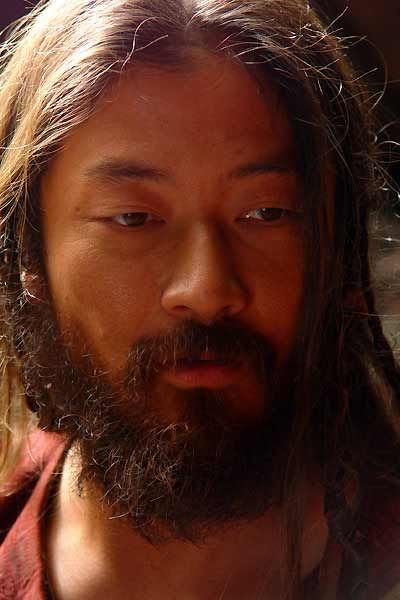
Tadanobu Asano* But poetic semi-justice is swift, because also from the mighty pen of Michael Fleming comes the word of casting the “Warriors Three” by Kenneth Branagh of the upcoming “Mighty Thor” flick. Alongside the traditionally more or less Nordic looking Stuart Townsend and Ray Stevenson (who I guess will be wearing a fat suit of some sort as Valstagg or gaining a lot of weight, or will just be the trimmest Falstaff knock-off ever), Branagh has taken the interesting step of going full mongol on the character of Hogun, who was partially modeled on Charles Bronson, by casting the Japanese actor who actually starred in “Mongol” (and Takashi Miike’s probably-never-to-be-seen-by-me gangster gorefest, “Ichi the Killer”), Tadanobu Asano. Yes, this is not your father’s lily-white Asgard.

* Mel Gibson adds to the confusion/mystery around “Max Max 4.”

* And, finally, in non-ethnically based confusion, Nikki Finke reports Carl Icahn appears to be mucking about with the MGM sale, and the ever-opinionated Devin Faraci (well, he’s a pussycat next to Ms. Finke, but who isn’t?) has some interestingly contentious thoughts on the state of geek-oriented film journalism and Julia Stiles/Spiderman/Black Cat rumors.

Of movies and madness on a Monday

Movie news bits and pieces tonight.

* Universal may be having a bad year, but Sony is doing just fine.

* Disney has apparently ditched a McG-spearheaded sort-of prequel to “20,000 Leagues Under the Sea” focusing on the “origin” of Captain Nemo and his fabulous submarine, the Nautilus. Apparently, pirates on the water are better than mysterious antiheroes underneath it.

20000_leagues_under_the_sea_1954

* Kim Masters introduces us to “the movie theater of the future,” which sounds an awful lot like no movie theater at all to me. With people buying fewer DVDs, I supposed it’s necessary for the studios to experiment with delivery systems and new approaches, but undercutting theater owners won’t help anyone in the long run. The focus should be largely on making moviegoing better, cheaper (or at least providing more value), and more of an event for filmgoers of all ages — while also maybe utilizing our enormous numbers of screens to offer more choices. Just a thought.

* Have you ever heard of fifties B-movie and sixties TV director Paul Wendkos? I just barely recognized the name and I’m a gigantic geek. C. Jerry Kuttner has some thoughts on his passing.

* That item above is via The Auteurs Daily and so is this item. Extreme meta and some inside baseball is involved, so caution is advised. So, was using the expression  “screw-up,” a screw-up? That’s the question facing Anne Thompson who, in post I linked to and left a brief comment at last week about a new job for L.A. Weekly movie critic Scott Foundas, had in passing pretty much said that former New York Film Festival programmer Kent Jones had apparently been guilty of some sort of big mistake, with the implied result being his departure. Anyhow, Mr. Jones has friends and one of them was Manohla Dargis of the New York Times. I really don’t know any of the specifics enough to even contemplate a comment on whose right and wrong here — the ins and outs of festivals and their personnel hasn’t exactly been on my radar — but fans of excess verbiage might want to take a look at the ‘net equivalent of a non-lethal multi-car pile-up that eventually involved Mr. Foundas as well.

* Bad news for cinephiles. Edward Copeland, whose  involvement in the movie-geek blogosphere predates my own and lots of others by some time, is taking a break from blogging because of health concerns. For as long as his break lasts, he will certainly be missed. Get better soon, Edward.

RIP Edward Woodward

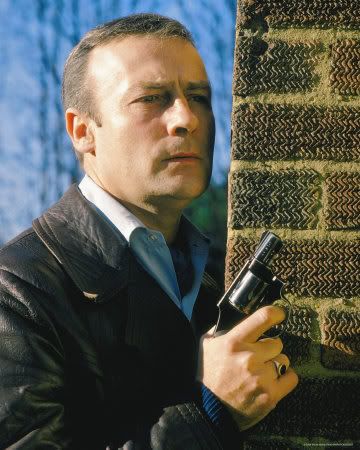
Edward WoodwardI was very sorry to hear earlier this morning of the death at age 79 of a personal favorite of mine, Edward Woodward.  Although he may still be best known for his roles in the acclaimed fact-based war drama, “Breaker Morant,” the espionage/crime-vigilante TV series, “The Equalizer,” and by our friends in England as the cynical, super-tough spy “Callan,” his role in what was once a fairly obscure cult film all but buried by its studio, the 1973 “The Wicker Man,” is getting the lion’s share of attention in most of his  press obituaries, that’s including the very touching one issued by the BBC this morning.

“The Wicker Man” has been one of my favorite movies since I was teenager and remains so now — not even the worst imaginable remake can touch that film, and that proposition has now been tested.  Still, my admiration of the actor Woodward goes well beyond one single role. He was the kind of performer you could rely on to be great in anything and so he was on countless television programs.  A master of understatement who knew when and how to go big (the oft-spoiled ending of “The Wicker Man” being a case in point), he was a real virtuoso whose un-showy approach probably doomed him to being underrated to a certain degree. Still, he didn’t seem to mind and judging from the press accounts I’ve been reading, he was a real gentleman and as fun to be around as his best known characters were definitely not. He was also, by the way, an accomplished Shakespearian stage actor and a fair-to-middling pop singer. It’s a shame he rarely got to do either on screen, though his voice can be heard to powerful effect during the final scene of “Breaker Morant.” (If you don’t mind learning the fate of his title character, or already know it from history, you can see the conclusion here.)

Two of his more devoted fans appear to have been Edgar Wright and Simon Pegg, who were smart enough to cast Woodward in “Hot Fuzz,” and you can read their thoughts at Wright’s blog and via a message board post by Pegg. (Big h/t to Beaks.) Wright’s piece is really lovely and I strongly recommend you read all of if . However, here’s one line that tickled me, in the spirit of “it’s funny because it’s true.”

I also remember telling him that Quentin [Tarantino] was a huge fan of his film ‘Sitting Target’ (another great soundtrack – btw) and he looked shocked. I’m not sure anyone had ever complimented him on it. He replied “Well, you must tell your friend he is very strange indeed”.

And so it goes, another great lost. I do want to echo Edgar Wright’s entreaty that, especially you’ve never seen it, you watch the 1973 “The Wicker Man” as fast as possible and avoid any place where spoilers about the ending might be found, which seems to be about 99% of what’s been posted about it recently. (I tried to avoid giving too much away in my 2000 review linked to above.)  Woodward’s portrayal of a repressed, bitter, humorless, but also decent, principled, and compassionate man is, to me, very much what acting is all about.  So, why are we surprised to hear about what a funny and regular guy he was in real life? He was acting — extraordinarily well.

Greg of Cinema Styles has more. Highly recommended.

Film geek Sunday

A segment from an English TV documentary about director Sergio Leone and composer Ennio Morricone’s collaboration on “The Good, the Bad, and the Ugly”  and “Once Upon a Time in the West” and more good stuff, including Claudia Cardinale and food, and Rudy Giuliani-loving Republican actor James Woods’ apparent semi-agreement with the European Marxist interpretation of American history back in 2000. Interesting stuff all around and, of course, Quentin Tarantino is in it. Like they could keep him out of it.

It’s the end of the world as we know it; Sony feels fine

zz2b3db644

I’m sure Roland Emmerich who, according to Nikki Finke, is receiving 25 percent of the grosses for his $200 million budgeted “2012,” is also feeling pretty good. Of course, now he has to figure out if he about to earn enough money for his own end-of-world-blocking fortress of solitude in case all those prophesies he used to come up with his critically dismissed thriller come true.

Emmerich’s latest multi-star epic earned an estimated $65 million, at the very highest end of the most optimistic projections put forth by Jolly Carl DiOrio that I mentioned on Thursday night. If you throw in the worldwide figures going back to the film’s international release last Wednesday, then you get to a figure of around $225 million so far. As per Variety‘s Pamela McClintock, assuming there are no surprises, this puts Sony’s PG-13 epic in the #9 spot on the top 10 for international opening weekends.

Disney's At #2 spot this weekend is the Disney/Jim Carrey/Robert Zemeckis CGI-3D revisit of “A Christmas Carol,” which, despite character designs that embody the unpleasant after effects of a visit to the uncanny valley, is holding up extremely well after what was deemed a disappointing opening last weekend. Charles Dickens’ unkillable holiday perennial only dropped about 25-26% or so, about half of what many films do, and collected a very respectable estimated $22.3 million. After it’s a truly steep fiscal drop all the way down to an estimated $6.2 million for “The Men Who Stare at Goats.” It seems to me there’s nothing more problematic at the box office than a prestige picture with a critical/online buzz response that amounts to “meh” — or in this case “meeeahhhh.” That’s an apparent 52% “many films” drop from last week.

Indeed, this week brings us the spectacle of a goat herd of A-listers being upstaged by an abused, severely overweight teen as the critically lauded by overtitled “Precious: Based on the Novel ‘Push’ by Sapphire” shot up to #4 spot despite being in only 174 theaters. That means it earned it roughly $6.1 million on 2,279 less screens that “Goats” needed to earn an additional $0.1 million.

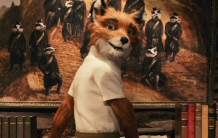
However, as good as the $35,000 per screen average for “Precious” was, taking a look at the Box Office Mojo weekend chart, the highest per screen went to Fox’s “Fantastic Mr. Fox.” The old-school puppet animation comedy earned a very nice estimated average of $65,000 on four screens and is, weeks before its wide release, already going a long way toward burnishing the reputation of writer-director Wes Anderson who, as far as this writer is concerned, has never shot an uninteresting foot of film.

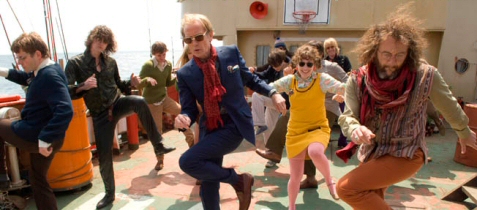
Still, it wasn’t all hearts and flowers for the indies this weekend. Despite some outstanding coverage by Mr. Will Harris at our fabulous sister site, “Pirate Radio” failed to receive the Bullz-Eye bump. The ensemble comedy, inspired by illegal British broadcasting outfits of the sixties and seventies that competed with the BBC by blasting out the latest in rowdy beat music, earned a very non-rocking  estimated $2.9 million, slipping just below Richard Kelly’s $3.2 million 10th place thriller, “The Box.”  On the other hand, that does mean that “Pirate Radio” went to 11.

« Older posts Newer posts »

© 2026 Premium Hollywood

Theme by Anders NorenUp ↑