Author: Ross Ruediger (Page 8 of 16)

October Road: The Complete Second Season

After having been left in something of a quandary after watching the abbreviated first season of “October Road,” it seemed only fair to give the show another chance with its second – and now final – season. The good news is that if you enjoyed the first batch, then you’ll likely find just as much to appreciate here. The bad news is that it’s still the same syrupy bittersweet material that has the power to deliver an instant jolt of maudlin nostalgia to the nervous system. If you hated the show before, nothing here will change your mind. “October Road” is obsessed with – even dependent upon – the past. It’s like the “Family Guy” bit that starts with “Remember the time when…” only instead of a punchline to follow it up, there are just straightforward memories and flashbacks. It seems like Knights Ridge is where the characters from “Dawson’s Creek” might end up in their late twenties, replete with all the same overwritten, trite dialogue that reached its apex ten years ago.

To be fair, over the course of these 13 episodes, the show manages to breathe a bit more than in its 6-episode freshman season. It morphs from being “the show around which a bunch of satellites orbit Bryan Greenberg” into far more of an ensemble drama, with many storylines overlapping so that each character gets his or her day in the crisp New England sun. It’s a soap opera for that guy or girl you know who still swears the best time of their life was high school. Ah, but there I go, once again picking on the poor, defenseless (and now canceled) “October Road.” It’s not a fair fight, so I might as well just admit it: it’s ridiculously addictive entertainment, and one evening I effortlessly sped through five episodes in a row. And, yet, I’m glad it’s canceled, because I don’t need to be addicted to shows I don’t even like.

The DVD contains an extra ten-minute coda that was filmed after the cancellation that aims to tie up loose ends, which it does surprisingly well in a very short amount of time. It looks a bit cheap compared to the series, but since it was a simple little labor of love for the cast and crew, it can’t be faulted, especially in this day and age of canceled series that get no resolution.
Click to buy “October Road: The Complete Second Season”

The Last House on the Left (Collector’s Edition)

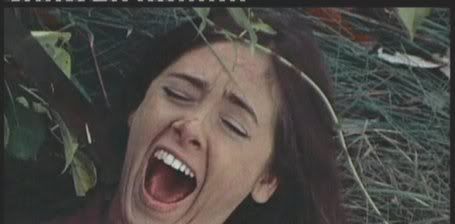
If the aim of filmmaking is to provoke a response in the viewer, then Wes Craven’s original “The Last House on the Left” must be considered a massive success. For anyone with even a shred of decency, it’s a tough movie to sit through, and I found it be just that some 15 years ago when I first saw it. With the remake in theatres, a DVD re-release of the 1972 “classic” was a no-brainer, and I figured I’d give it another spin and see how I felt about it today. The good news is that my decency-ometer must still be working, because the first half of the film had me squirming and made me feel ill. On the other hand, as I’ve since seen far more depraved fare such as Pasolini’s “Salo” and Will Ferrell’s “Talladega Nights,” I also came away from it with more of an appreciation for what Craven unleashed all those years ago. One wonders if the Manson family killings were an influence on the piece, as it strongly evokes that time and place.

The story, if you can call it such, revolves around escaped convict Krug (David Hess) and his posse of animal followers, and what happens when they kidnap two teenage girls, Mari (Sandra Cassel) and Phyllis (Lucy Grantham). What follows amounts to little more than rape, torture and death. It goes on seemingly forever, and it’s all done in a documentary style for maximum effect. The happenings are juxtaposed with scenes of two bumbling, ineffective cops, who might be there for comic relief, but really serve the narrative’s third act, which is all about taking the law into your own hands. In the last half-hour, Krug and Co. by chance arrive at the home of Mari, where her parents discover the fate of their daughter and exact revenge against the lunatics. Once you get past the generally off-putting nature of the entire affair, the biggest problem with “Last House” is that the climax isn’t anywhere near as harrowing as the setup. You never really feel that Krug and his cronies get what’s coming to them, although there may be a point buried somewhere beneath it all that people such as the parents could never achieve the same levels of brutality as Krug. Finally, there’s the weird, folksy score written and sung by Hess himself, which serves as unsettling narration. If the movie weren’t twisted enough, those songs take it to a whole other level of sickness.

Click to buy “The Last House on the Left”

Being There: Deluxe Edition

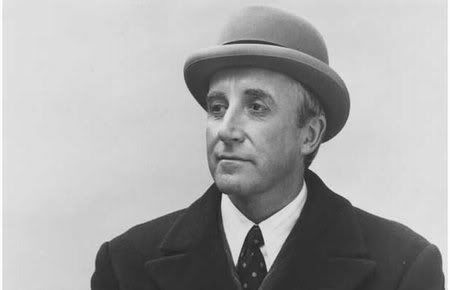
These days, it seems almost impossible to bring up “Being There” without some unimaginative goon coming along and comparing it to “Forrest Gump.” That’s unfortunate, because if, like me, you’ve got little patience for that particular Zemeckis opus, you may be inclined to skip “Being There” altogether. This would be a grave mistake. The big difference between the two films is that “Gump” wants to be an important film, but in doing so, it achieves the opposite. “Being There,” on the other hand, has no such aspirations and manages to become an important film because it isn’t trying so hard. And if you’ve never seen the film and think you know everything there is to know about Peter Sellers, then “Being There” will show you the actor as you’ve never seen him before.

Chance (Sellers) is a middle-aged man best described as “simple.” He’s seemingly spent his entire life living with and tending to the garden of a very rich man. Since the old man is dead at the start of the film, we’re given very little information about Chance. Where did he come from and how did he come to be in the employ/care of the old man? We never find out. Chance is the blankest of all slates, and his only real exposure to the outside world has come through the television. He seems to enjoy the news and “Captain Kangaroo” equally. But now that the old man has passed on, Chance is given no choice but to go out into the world on his own, for the very first time, and it’s a strange place that doesn’t necessarily work as it does on TV.

Continue reading »

Savage Grace

Tom Kalin unleashed “Swoon,” his unsettling, arthouse take on the Leopold and Loeb murder case (the same crime that inspired “Rope” and “Compulsion“), way back in ’92. He then disappeared from the world of features for 16 years, and has now returned with this film, based on a lesser-known, yet equally perverse, true crime. “Savage Grace” traces the society-driven, globe-hopping antics of the Baekelands – Brooks (Stephen Dillane, “John Adams”), Barbara (Julianne Moore), and their son, Tony (Eddie Redmayne) – from the 50s through the early 70s. From the very beginning, it’s obvious that Brooks has to put up with a lot. Barbara is theatrical, obnoxious, clingy and probably bipolar, and the last thing she needs is a child. As Tony grows up, the mother-son bond tightens and he seems to inherit some of her nastier traits. Before long, Brooks can’t take it anymore and runs off with Tony’s girlfriend (really, you can’t blame him), leaving mother and son to inflict heaping helpings of emotional damage on one another – a situation that eventually ends in twisted tragedy. What’s most interesting is how, rather than cover snippets of time from the 20-plus year long haul, Kalin instead chooses a handful of pivotal days from the timeline to focus on.

“Savage Grace” isn’t anywhere near as hypnotizing as “Swoon,” and yet it’s hardly a bad film – just a deeply unpleasant one. What was Kalin’s goal in making the piece and how much of it is true? Regardless of intent, he’s ultimately created a cautionary tale about the pitfalls of being wealthy and bored – an ugly combination destined to go sour. It’s also a must-see for fans of Julianne Moore, as she once again proves that she’s willing to go the distance for whatever material she signs on to help interpret.

Click to buy “Savage Grace”

Jurassic Fight Club: The Complete Season One

“The following is a graphic depiction of a violent prehistoric battle. Viewer discretion is advised.” That’s the warning presented at the top of each installment of “Jurassic Fight Club,” and a hat must be tipped toward the producers for coming up with a title guaranteed to grab attention. Thankfully, the show very much delivers on the promise of the title. Over the course of 12 episodes, there’s quite the variety of bloody prehistoric smackdowns involving T. Rex, Raptors and Allosaurus recreated via a mixture of CGI and loads of scientific supposition. Based on the remains of various critters – usually located in close proximity to each other – dino experts piece together the circumstances leading up to the demise of many a different creature. Each episode tackles a separate battle, with the dots being connected based on evidence, slowly leading up to the big brawl.

It crossed my mind numerous times, however, what if they’re just plain wrong? Then I came to my senses and realized it was much more fun to just go with it, and bask in the unbridled carnage. There are a couple surprises along the way, too, such as a non-lizard installment pitting the ice age specimens the Giant Short-Faced Bear against the Mega Lion, and an episode that takes place deep beneath the ocean surface. The season ends with a massive finish entitled “Armageddon,” which recreates what it may have been like when the giant asteroid collided with Earth, bringing to an end the species for good. At this point, the warning is accordingly changed to “The following is a graphic depiction of a prehistoric apocalypse.” Good stuff? You bet Jurassic. (Sorry, I couldn’t resist.)

Click to buy “Jurassic Fight Club: The Complete Season One”

« Older posts Newer posts »

© 2026 Premium Hollywood

Theme by Anders NorenUp ↑