Author: Jason Zingale (Page 3 of 154)

Forget about your favorite scary movie. Ghostface wants to know: What’s the worst horror sequel?

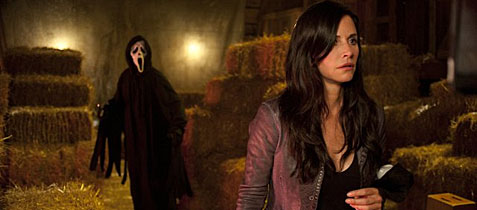
With “Scream 4” arriving in theaters this weekend, there’s been a lot of discussion over the Web about which “Scream” movie is the worst. Though reaction to the fourth installment has been pretty mixed, the general consensus seems to be that it’s a lot better than most people expected. Even our own David Medsker gave the film an enthusiastic 3 1/2 stars, suggesting that while it may not top the 1996 original, it should still satisfy fans of the series.

That’s not bad for a horror franchise whose last film (the terrible “Scream 3”) played a big role in why it’s taken 10 years to get another installment in theaters, especially because most horror franchises only seem to get worse with each successive sequel. The guys over at ScreenCrave recently put together a list of the five worst horror sequels ever made, and it’s hard to find any fault with their choices, even if there are plenty of candidates that could have easily been substituted. Check out the full list at ScreenCrave, along with breakdowns as to why they selected each film.

Stephen Colbert sings “Friday” on Late Night with Jimmy Fallon

Let me begin by saying that, despite having been aware of the whole Rebecca Black media blitz that’s occurred over the past two weeks, I had yet to experience the hypnotic badness of Black’s debut single, “Friday,” until a few days ago when my curiosity got the best of me. I won’t get into how terrible the song is, because you can find much wittier commentary on the subject somewhere else on the Web, but I’m really glad that I finally caved in, or I wouldn’t have been able to enjoy the sheer awesomeness of Stephen Colbert’s performance of the song on last night’s episode of “Late Night with Jimmy Fallon.” Check out the video below, and be sure to watch the whole thing so you don’t miss any of the cameos or Auto-Tune fun.

SXSW 2011: A Bag of Hammers

Not every film that played at SXSW this year was fortunate enough to walk away with a distribution deal (in fact, very few did), but if there’s one movie that deserved to, it’s “A Bag of Hammers.” A relatively clichéd dramedy with all the markings of an indie film, Brian Crano’s directorial debut nonetheless manages to carve out an identity of its own thanks to a great script and an even better ensemble cast. Jason Ritter and Jake Sandvig make an excellent team as childhood best friends Ben and Alan, a pair of misfit conmen who run a bogus valet service at funerals in order to steal cars and sell them for cash. It’s not the most lucrative career, but in addition to the money they earn from renting out the house in front of their laidback bachelor pad, they get by. But when their new tenants – the recently divorced Lynette (Carrie Preston of “True Blood”) and her neglected son Kelsey (Chandler Canterbury) – begin to attract unwanted attention, Ben and Alan decide to step in and create the family they’ve always needed.

a_bag_of_hammers-sm

Consider Crano incredibly lucky for getting the actors that he did, because it’s hard to imagine “A Bag of Hammers” working quite as well without them. Sandvig and Ritter are especially good in the film’s more comedic moments, while even Rebecca Hall manages to make the most of a role that requires she wear a silly waffle hat and perform an ever sillier dance. The real standout, however, is Preston, who delivers what is easily the most heartbreaking performance that I’ve seen this year as the hopelessly desperate single mother. Additionally, while the constantly shifting tone between quirky comedy and grim family drama may annoy some people, Crano actually handles it remarkably well, particularly when the movie enters some pretty dark territory midway through the story and never looks back. It’s a shame that he didn’t see that version of the film through to the end, because while there’s nothing wrong with the happy ending he opts for, “A Bag of Hammers” would have been so much more memorable with the disheartening, more realistic finale that he teases just before it.

SXSW 2011: The Greatest Movie Ever Sold

If there’s one thing you should know about Morgan Spurlock, it’s that he’s a remarkable showman. While his documentaries always contain some kind of academic value, his main intention seems to be entertaining the audience, and there’s absolutely nothing wrong with that. It’s what helped “Super Size Me” become such an immense success, and it played a big part in making “Where in the World is Osama Bin Laden?” – Spurlock’s much weightier follow-up – a lot more interesting than it would have been in the hands of another filmmaker. His latest project, “The Greatest Movie Ever Sold,” doesn’t pretend to be about anything nearly as important as the issues he’s tackled in the past (obesity and the war on terror), but it’s without a doubt his funniest and most creative documentary to date.

It’s no secret that product placement has become an integral part of the entertainment industry, with billions of dollars spent every year by corporations looking to inundate our movies and television shows with subliminal advertisements. In an attempt to learn more about the process of this rapidly growing business (and hopefully make people more aware of what they’re being exposed to), Spurlock has set out to make a documentary about branding, advertising and product placement that’s funded entirely by product placement. It’s an ingenious idea, as the film operates both as an eye-opening lesson in brand integration and a satirical, first-hand account of how movie studios obtain financing from corporations.

The first half of the documentary focuses on Spurlock’s attempt to pitch his idea to various Fortune 500 companies, with many refusing to even take a meeting with the infamous director at the risk of looking like a fool. After Ban Deodorant comes on board as the first official sponsor, however, Spurlock has more luck persuading corporate executives to invest in the movie – including companies like Jet Blue, Mini Cooper and Old Navy – with POM Wonderful agreeing to pay $1 million to buy the above title rights.

the_greatest_movie_ever_sol-sm

But what Spurlock soon discovers is that there are consequences that come with accepting that money, with some companies demanding creative control over the final cut of the movie or setting certain stipulations that he’s legally obligated to follow. Like, for instance, the idea that once POM Wonderful becomes the official drink of “The Greatest Movie Ever Sold,” he can no longer be filmed drinking anything made by their competitors. Obviously, Spurlock plays this for big laughs as he blurs out entire walls of Coca-Cola and Pepsi while shopping at the grocery store, and makes a point of zooming in on bottles of POM during interviews, but he also posits a good question about how much corporate interference is too much before you’re considered a sellout.

While guys like Ralph Nader and Noam Chomsky offer their opinions on the matter, Spurlock also speaks with those who have a little more experience dealing with brand integration in movies, including Quentin Tarantino, J.J. Abrams, and Brett Ratner, who not only admits that product placement is necessary, but when asked how it affects his artistic integrity bluntly replies, “Artistic integrity? Whatever.” You have to give Ratner credit for being honest, but Spurlock knows a great moment when he sees one, and his film is littered with other nuggets of comedic gold just like it – even manufactured ones, like a running joke involving Mane ‘n Hair shampoo with an awesome payoff in the end.

That may disappoint some people who feel like Spurlock’s shenanigans only dampen the impact of his message, but many moviegoers wouldn’t even be willing to sit through a documentary about product placement if it wasn’t so entertaining. The film will still teach you a thing or two along the way, but if you’re going to learn, you might as well as enjoy yourself while you do, because although it may not have the same cultural effect as “Super Size Me,” “The Greatest Movie Ever Sold” is Spurlock at the top of his game.

SXSW 2011: Being Elmo

Most documentaries these days tend to be about one of three things – the economy, the environment, or the war – so it’s nice to see a movie come along that’s not only about something entirely different, but isn’t afraid to make you laugh or cry along the way. Narrated by Whoopi Goldberg, “Being Elmo” is the light-hearted story of Kevin Clash, the man behind the overly affectionate Muppet known as Elmo, who eventually skyrocketed into pop culture stardom as the new face of “Sesame Street.” From his early years watching “Captain Kangaroo” and performing his own puppet shows for the neighborhood kids, to his inevitable rise to the top with the help of Jim Henson, Kermit Love, and even a little luck, “Being Elmo” is an inspiring story that only reaffirms why kids should follow their dreams.

being_elmo

Using interviews with friends and family mixed with archival footage of Clash’s pre-“Sesame Street” career, director Constance Marks assembles a fairly straightforward narrative that unfortunately never amounts to more than just a bullet point presentation of all the Big Moments. That doesn’t make the material any less fascinating – like in a sequence where Clash trains the French cast of “Sesame Street” by showing them how to give the puppets different expressions and a lifelike rhythm to their movement – but it does feel flat at times. For instance, though Marks briefly touches upon how Clash’s dedication to his craft may have affected his relationship with his ex-wife and daughter, she never digs any deeper, possibly to avoid portraying him in any sort of negative light. The film does lean suspiciously in his favor, but while “Being Elmo” isn’t without its flaws, Clash is so immensely likeable, talented and charitable, that it’s hard not to just sit back and enjoy this celebration of the human spirit. Elmo would approve.

« Older posts Newer posts »

© 2023 Premium Hollywood

Theme by Anders NorenUp ↑