Many people are going to see this movie simply because it was Heath Ledger’s last role. That’s all well and good, but “The Imaginarium of Doctor Parnassus” has a lot more to offer. The film, which Terry Gilliam directed and co-wrote, began production in December of 2007 and was given a budget of $30 million. Over the years, Gilliam has gathered a worldwide recognition, and many fans have been eagerly awaiting this film, which is his first since 2005’s “Tideland.” Perhaps best known as the only American in Monty Python, he also directed their films “Monty Python and the Holy Grail” and “The Meaning of Life.” Gilliam later went on to direct such classics as “Brazil” and “Fear and Loathing in Las Vegas.” After Ledger unexpectedly died, Gilliam and co-writer Charles McKeown made some changes to this script, which now had Ledger’s character going through physical transformations. Thus, Johnny Depp, Jude Law, and Colin Farrell were cast to play different versions of Ledger’s character. Outside of some entertaining comedies, it’s been a pretty dry year for movies. Thankfully, it looks like “The Imaginarium of Doctor Parnassus” won’t disappoint.
Oh, and Tom Waits plays the devil in it. Need I say more?
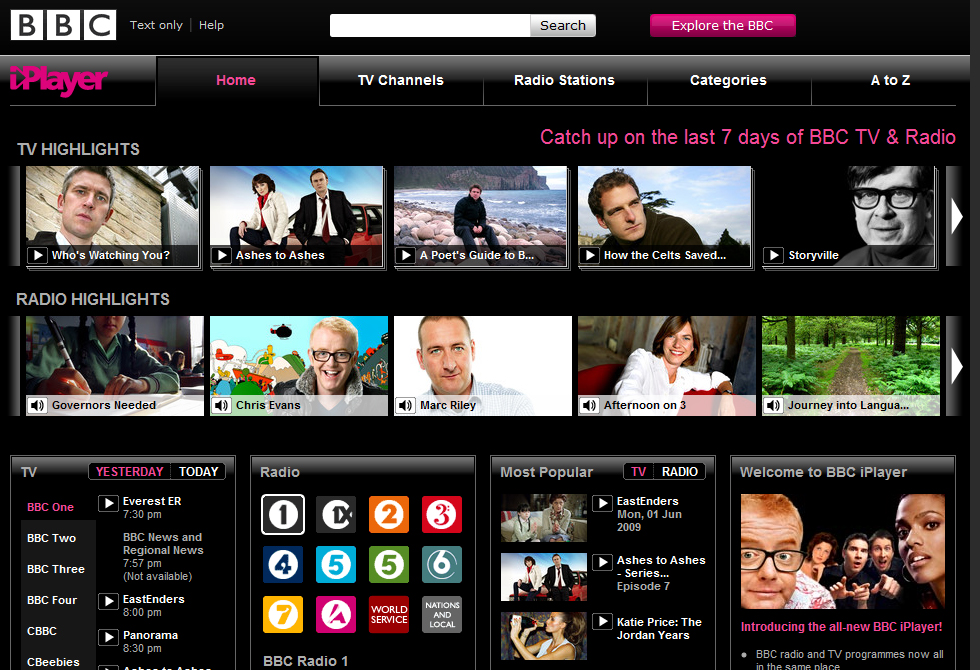
The survey said viewers’ awareness of broadcasters’ on-demand sites, such as the BBC’s U.K. iPlayer service, had overtaken that of both YouTube and iTunes at 84% compared with 76% and 64% respectively.
Deloitte’s media and telecoms partner James Bates said: “In an ironic twist to earlier expectations, broadcasters and independent producers may, in the medium-term, be those that benefit most from online television.
“Broadcasters may increasingly use online television to support their core, traditional objective of maximizing broadcast audience size and quality.”
Bates added that online video clips, distributed via TV companies’ own websites and third-party platforms, spark interest in broadcasters’ shows while catch-up services enable auds to keep up with programs they’ve missed.
This has long been evident in the United States, where networks started coming down on YouTube and other sites that were illegally hosting their programming. In a rather smart move, the major networks partnered to create Hulu, a site supported by commercials that allows viewers to watch their favorite shows on the Internet for free. It’s currently impossible to watch a full episode of an American show on YouTube and few fans want to pay the fee iTunes charges. When watching an episode for free on Hulu or the network’s webpage, the viewer only has to sit through about three minutes of commercials. I’m happy this is working out with Brtish TV fans. The networks just have to hope the writers don’t complain.
Love him or hate him, it’s hard not feel something during his take on America’s health care companies. Never have I heard words spoken so eloquently on this issue that is so divisive. It’s a shame that people have turned off Bill Maher in the past because he’s crossed a line or spoken so adamantly against one of their views that they retreat towards a safer form of commentary. True, “The Daily Show” might have you laughing harder, but it’s lost that edge over the years that once made it so captivating. I remember when Comedy Central used to tout the show as “irrelevant” and “controversial,” but the show show is mere husk of its former self. The most compelling by far is “Real Time,” which seems somehow to have escaped the attention of young America.
Since I began watching a year ago, I’ve been saying it’s the best thing HBO has in their lineup. Like other talk shows, the schedule is privy to bouts of hiatus because of Maher’s stand-up schedule. Neverthless, new episodes are run throughout the year as it’s obvious this is what Maher enjoys the most. What’s great about the show is that Maher feels like he’s accomplishing something by being engaging.
I think people often forget that you don’t have to like the host. In the past, I thought Maher was smug, wordy, and unfunny. Well, he is smug, but I think that’s part of his appeal. Over time, I realized that I wasn’t tuning in for the jokes. I was tuning in because of his panel discussions and most importantly, his closing arguments. Interspersed with humor, the show’s final minutes are so passionate at times that I can’t help but actually listening instead of mindlessly taking in language. Also, I don’t mean “passion” as in “speaking loudly with force.” When I say “passion,” I mean that Maher feels like he cares about this species in a way that his erudition can actually motivate us to change. That praise is putting him in quite a position of authority, I know, but really, where else are you going to turn to on television to feel motivated about issues? “The Daily Show” abandoned that mission statement a long time ago and it’s obvious that the pundit shows on MSNBC and CNN aren’t very inspiring. Maher’s show is the opposite.
How about this for a New Rule: Not everything in America has to make a profit. It used to be that there were some services and institutions so vital to our nation that they were exempt from market pressures. Some things we just didn’t do for money. The United States always defined capitalism, but it didn’t used to define us. But now it’s becoming all that we are.
Hard to feel offended by anyone but the health care companies in that statement. So, give “Real Time” a shot, even if you hate the host.