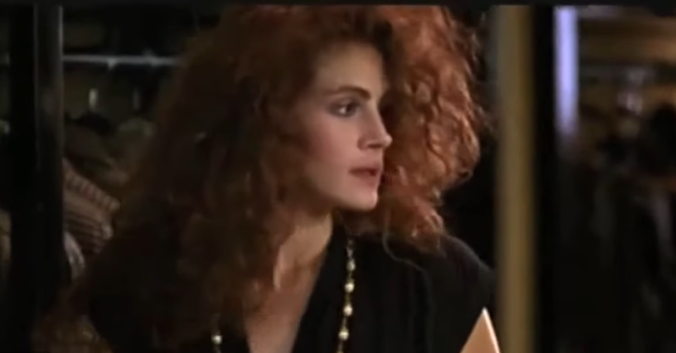
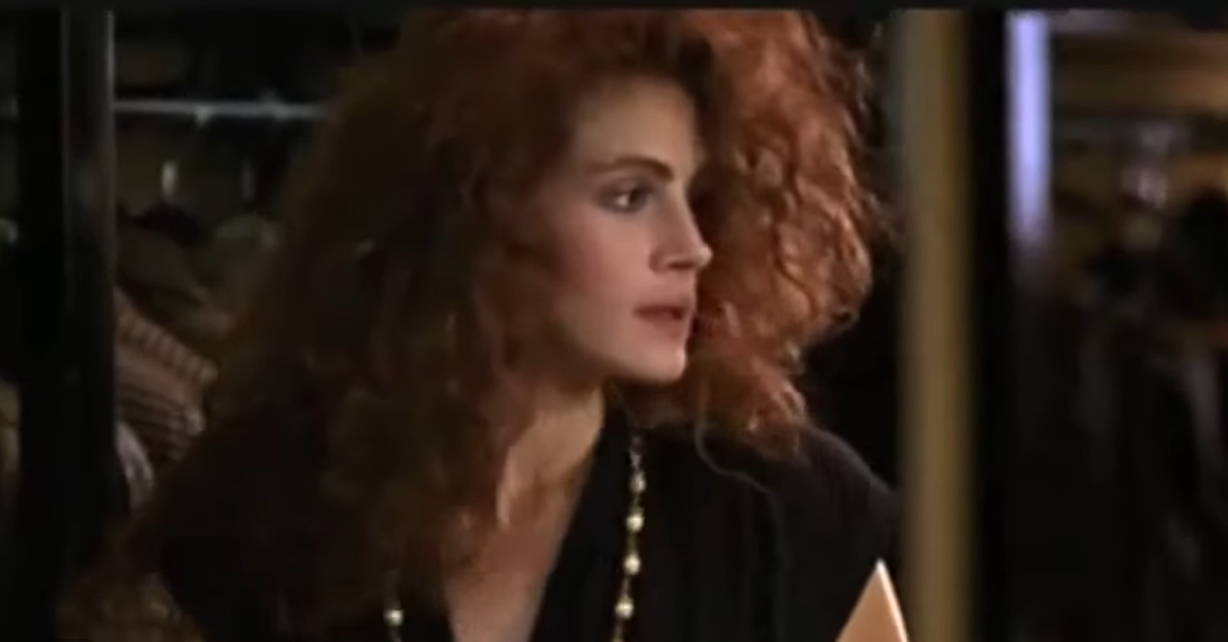
“Pretty Woman” turned 35 on March 23, 2025. The film cost less than $15 million to make and returned over $463 million at the global box office. Those numbers tell part of the story. The rest lives in every romantic comedy that came after it, borrowing its structure, its beats, its insistence that money and love are the same thing.
Vivian Ward works as a sex worker on Hollywood Boulevard. Edward Lewis runs a corporation that acquires other corporations and sells them off in pieces. They meet by accident when Edward gets lost driving a borrowed sports car. By the end of the week, he has paid her $3,000 for her company, bought her a wardrobe, taken her to the opera, and fallen in love. The film presents this sequence as a fairy tale, complete with a white limousine, a fire escape, and a final kiss.
The Template That Stuck
Julia Roberts earned her first Academy Award nomination for the role, along with a Golden Globe. Her performance made her a star, and the film made a template. A woman in financial trouble meets a wealthy man. He introduces her to a world she could not afford on her own. She softens his heart. He rescues her from her circumstances. The credits roll.
This structure predates “Pretty Woman” by centuries. The Cinderella story exists in nearly every culture, with variations that span from ancient Egypt to 17th century France. Pretty Woman updated it for audiences who wanted something closer to their own time. The glass slipper became a designer dress. The fairy godmother became a hotel manager with good taste. The ball became an opera.
The Prince Charming Problem
“Pretty Woman” asks viewers to root for Edward Lewis, a corporate raider who buys companies and dismantles them for profit. He pays Vivian three thousand dollars for a week of her time. The film frames this as romance, but critics have long pointed out that Edward functions as a glorified sugar daddy with a private jet and a penthouse suite. His wealth solves every obstacle in the plot. Vivian gets new clothes, a new life, and a man who rescues her from the streets. The power imbalance between them never gets addressed.
The film earned over $463 million worldwide and established a formula that romantic comedies still copy. A woman in difficult circumstances meets a rich man who transforms her world through spending power and access. Julia Roberts won a Golden Globe for the role, and the story became shorthand for modern fairy tales. The 2018 Broadway adaptation with music by Bryan Adams broke box office records, proving the fantasy still sells. Pretty Woman made wealth look like love, and audiences bought it completely.
What the Copies Got Wrong
The romantic comedies that followed tried to recapture the same chemistry. “Maid in Manhattan” put Jennifer Lopez in a hotel uniform and Ralph Fiennes in a senator’s suit. “The Proposal” had Sandra Bullock as a publishing executive and Ryan Reynolds as her assistant. “27 Dresses,” “Two Weeks Notice,” “Sweet Home Alabama.” Each film paired a woman with a man of higher status, and each film treated his resources as part of his appeal.
None of them sold as many tickets as “Pretty Woman.” The original film holds the record for the highest number of ticket sales in the U.S. for a romantic comedy. Part of that success came from timing. The film arrived in 1990, when audiences had an appetite for optimism and gloss. Part of it came from Roberts, whose performance carried warmth that her imitators could not manufacture.
The Stage Version
In 2018, a Broadway musical adaptation opened with original music by Bryan Adams. The production broke box office records during its run and later toured Germany and the UK. Audiences paid to see the same story performed live, with songs added to the shopping montage and the fire escape finale. The show proved that the fantasy still had currency, 28 years after the film first played in theaters.
Why It Endures
“Pretty Woman” works because it promises something simple. A hard life can become an easy one. The right person can appear and make everything better. The film does not apologize for its fantasy or complicate it with realism. Vivian leaves sex work behind. Edward stops destroying companies. They live happily ever after in a penthouse that most viewers will never see.
The film became the second-highest-grossing production in the U.S. in 1990. It made Julia Roberts a household name. It gave romantic comedies a playbook that writers still follow. Every rom-com protagonist who falls for a billionaire owes something to Vivian Ward, standing on a fire escape in a red dress, waiting for her prince to arrive.
The story remains effective because it taps something old and persistent. The wish for rescue. The belief that love and security can arrive together, wrapped in the same package. “Pretty Woman” did not invent this wish. It gave it a penthouse suite and a Rodeo Drive shopping spree, and audiences have been buying tickets ever since.

