
Life during wartime is getting to English weapons researcher and bomb disposal expert Sammy Rice (David Farrar). He’s in constant pain from an artificial foot and his preferred method of medication, whiskey, is highly problematic. It gets worse because his struggle to avoid drinking is just one of a few thorny issues that’s giving Susan (Kathleen Byron), his very serious girlfriend, some equally serious doubts about their future. Oh, and those damned bloody Nazis have taken to leaving a new kind of tricky unexploded bomb laying around, and it’s killing local soldiers and Prof. Rice’s own colleagues.
Based on a famed wartime novel by Michael Balcon, 1951’s “The Small Back Room” is one of the less well known films from “the Archers,” the writing and directing team of Michael Powell and Emeric Pressburger. Best known for ravishing and slightly insane Technicolor spectaculars like “A Matter of Life and Death,” “The Red Shoes,” and their masterpiece, “The Life and Death of Colonel Blimp,” the influential pair also had a flair for creating genuinely captivating black and white thrillers and love stories. “The Small Back Room” is a bit of both and possesses a degree of complexity and implied sexuality unusual in its time, and also today. Still, the film maybe bites off a bit more than it can chew resulting in a relatively distancing second act, and one semi-dream sequence involving a giant whiskey bottle shows how Pressburger/Powell’s admirable creative risk-taking could sometimes lead to unintended laughs. Still, there is humor, fine drama, suspense in the climactic bomb disposal sequence, and an amazing cast of some of Britain’s best local talent. This may not be the Archers at their absolute best but, trust me, that’s no insult.



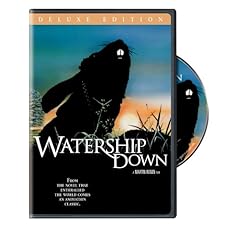 I saw “Watership Down” in the theaters as a little kid, and I remember being both fascinated and utterly terrified by it. In the animated adaptation of Richard Adams’ journey of a small group of rabbits looking for a new place to call home, death isn’t just a hazard – it’s a major character. Death, known as the Black Rabbit of Inlé in the movie, leads the prophetic Fiver to his injured brother Hazel, while Art Garfunkel’s “Bright Eyes” plays in the background. It is one of the most beautiful yet saddest things I’ve ever seen in an animated movie. All I knew about death as a child is that I was afraid of it, and while that sequence completely freaked me out, it also left an indelible mark in my memory that continues to this day.
