Category: Movie Dramas (Page 160 of 188)

Blu Tuesday: Pinocchio, Let the Right One In and The French Connection

Welcome to the latest column on Premium Hollywood, Blu Tuesday, where I’ll be covering some of the best and biggest high-def titles of the week. For those hoping this was a post about a New Order/Rolling Stones tribute band, I apologize, but you’ll have to keep holding your breath for that one, whoever you may be.

You see, when Blu-ray first hit the market, there weren’t very many titles to talk about other than the new releases that were already coming out on DVD. Now that the format is more popular with studios, however, my office has become overrun with high-def titles, and well, I just don’t have the time to cover every one in as much detail as I’d like. That doesn’t mean they don’t deserve to be covered at all, however, and so I’ve created this column to help cleanse my conscience (and some office space) and keep you all in the know on some Blu-rays you might be looking forward to, as well as a few others you should add to your shopping list.

“Pinocchio” (Walt Disney)

One of my least favorite Disney classics after “Dumbo” and “Bambi,” “Pinocchio” is still a no-brainer when it comes to diehard collectors and fans of animated films. It’s been years since Disney last released this from their ominous vault and so they’ve not only put out a new DVD edition to celebrate the occassion, but a high-def version as well. As expected, the new digital restoration is incredible. The colors pop off the screen like they were freshly painted, and were it not for the fact that hand-drawn animation is virtually extinct, you’d swear this was made yesterday. The best part about the three-disc set, though, isn’t the new transfer or the fact that you get three different versions of the movie (Blu-ray, DVD and a digital copy), but the hours of bonus material that have been lovingly crammed onto the disc. You get all the usual stuff that you’d expect from a typical new release (audio commentary, making-of, deleted scenes), but somehow they just feel more special on a movie this old.

Continue reading »

Robert Benton on “Kramer vs. Kramer,” 30 Years Later

Robert Benton has seen more than one cinematic revolution in his time. He and his late screenwriting partner, David Newman, were major players in two films that forever changed movies: 1967’s “Bonnie and Clyde,” which brought European New Wave aesthetics into mainstream American cinema and permanently altered the portrayal of violence in American pop-culture, and 1978’s “Superman,” which created the big-budget superhero flick and convinced the world Christopher Reeve could fly. But as the writer and director of a little movie without violence, groundbreaking special effects, or even a whole lot of controversy, Robert Benton actually helped change real life with 1979’s “Kramer vs. Kramer,” about a careerist father (Dustin Hoffman) raising his son alone after being left suddenly by his wife.

Drawn from a novel by Avery Corman, the film was an immediate critical and box-office success, ultimately making over $100 million. It proved to be a star-making role for the twenty-something Meryl Streep, who won a Best Supporting Actress Oscar as Hoffman’s ex-wife, who endures a change of heart and sparks a painful custody battle. Moreover, it racked up a historic Oscar nomination for seven-year-old Justin Henry in the crucial role of Billy Kramer, and garnered both a Best Picture award and a Best Directing Oscar for Benton against an exceptionally strong group of nominated films that included “All That Jazz” and “Apocalypse Now.” Still, lots of movies have received acclaim, Oscars, and a tidy profit. “Kramer vs. Kramer” is a different story.

Continue reading »

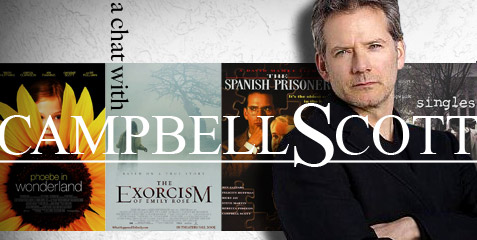
Campbell Scott talks “Phoebe in Wonderland,” “Singles,” and more

Although Campbell Scott is one of those actors who’s been happily flying under Hollywood’s radar for the past several years (he estimates the time frame as somewhere between eight and ten), his appearance within the ensemble of the buzz-heavy indie flick, “Phoebe in Wonderland,” may change that. And if it doesn’t…well, as he reveals in his interview with Bullz-Eye.com, it’s not like he doesn’t enjoy being able to ride the subway in relative anonymity.

Campbell Scott on “Singles”:

“I’m 47, I have gray hair, and yet people still come up to me on the street who are in their twenties, who weren’t even born when ‘Singles’ was made…well, they were pretty tiny, anyway…and they say, ‘Oh, I love that movie.’ And I always say, ‘How OLD are you?”

Campbell Scott on “Phoebe in Wonderland”:

“When you go and watch it, even if you’re thinking about being a parent or if you have a little sister, anything like that, it becomes this little journey. And people either go for it or not. It ain’t ‘Die Hard,’ let’s face it! But it’s very, very provocative, I think.”

Campbell Scott on “The Spanish Prisoner”:

“Steve (Martin) is fascinating. I really like that guy. He’s really smart. You know, the thing I always think about Steve is that, like most really, really brilliant comedians, he’s a very serious dude. People who are funny in a profound way, when you meet them, they are totally serious. I don’t mean they’re severe or boring or unfunny to be with – they’re hysterical – but they are definitive in their work habits.”

Check out the entire interview by clicking right here…or, of course, you could always just click on this big ol’ image below:

The Films of Michael Powell

England’s Michael Powell was a rare twofer as a director – both a great visual stylist and one of filmmaking’s most adept and original storytellers. While movie history played some very nasty tricks on Powell, depriving him of his rightful status alongside such contemporaries as Alfred Hitchcock and David Lean, his cult continues to grow. Indeed, after a day or two watching this package of two rare films making their long-overdue DVD debuts, you might be joining me for some genius-spiked Kool-Aid.

The first of half of this stunning double bill is 1946’s “A Matter of Life and Death,” one of a number of classics Powell made with Emeric Pressburger, his long-time filmmaking partner with whom he shared writing, producing, and directing credits. Originally released in the U.S. as “Stairway to Heaven,” this post-war romantic fantasy features a young David Niven as a downed RAF pilot whose apparently impossible survival and subsequent love affair with a sweet-natured American (Kim Hunter) arouses celestial interference from the heavenly powers that be – or, perhaps, that what he’s imagining, as a brilliant neurologist (Powell/Pressburger favorite Roger Livesey) grows increasingly concerned about his apparent hallucinations. This might sound like familiar romantic comedy-drama material, but there is a reason this was Powell’s personal favorite of all his films. It is a cinematic brew so rich and strange that on some levels it feels like a rom-com “Pan’s Labyrinth”; this one sneaks up on you.

“Age of Consent” isn’t on the same exalted level, but despite a shaky start and some unfortunate choices, it’s still aces. This rapturous, and often very funny, 1969 tale of initially semi-platonic May-December love stars then-newcomer Helen Mirren (“The Queen,” “Prime Suspect”), as a 17-year-old Aussie island waif, and aging star James Mason as a painter in need of inspiration. Far less giggle or squirm inducing than you could possibly imagine, “Age of Consent” appears to have been the first major-studio film to feature significant nudity (provided, of course, by Ms. Mirren). Despite hitting it big in Australia, it was butchered for its worldwide release and has been almost impossible to see ever since. Fortunately, this DVD does Powell’s last feature proud, including charming reminiscences from the now Queen-aged Ms. Mirren and Powell’s close late-life friend and number one fan, Martin Scorsese.

Click to buy “The Films of Michael Powell”

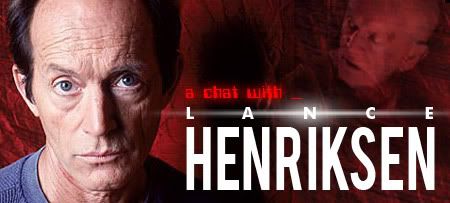
A Chat with Lance Henriksen

In the midst of our discussion with Lance Henriksen, I unabashedly called him out for having carved himself a career as a “that guy” in Hollywood. You know what I mean. He was part of the supporting cast of the original “Terminator” flick, he played Bishop in two “Alien” movies (and even turned up in one of the “Aliens vs. Predator” films), and he played Frank Black…not the one who fronts the Pixies but, rather, the lead character in “Millennium.” And, yet, when I told people I was talking to Lance Henriksen, only a handful knew who I was talking about before I started numbering off the items on his resume…and as soon as I did, they immediately said, “Oh, right: that guy!” On a related note, if you’re a fan of “Screamers,” then you might already be aware that there’s a sequel to the flick – “Screamers: The Hunting” – that’s on video store shelves at this very moment, so when you see Mr. Henriksen’s name on the cover, try to remember this discussion, so you don’t have to wait until he appears on screen to say…well, you know.

Bullz-Eye was fortunate enough to score the opportunity to talk to Henriksen on the occasion of “Screamers: The Hunting” hitting video, and in addition to asking about his experiences on the film, we also did the requisite quizzing about his latest projects (did you catch him on “NCIS”?), his work on “Millennium” and the chances of seeing any new adventures of Frank Black, what it’s like to be under the direction of James Cameron, and how he came to appear in – of all things – a Brazilian soap opera.

Sit back and stay tuned for…

Continue reading »

« Older posts Newer posts »

© 2026 Premium Hollywood

Theme by Anders NorenUp ↑