Category: Documentaries (Page 10 of 43)

Joaquin around (updated)

Well, Roger Ebert will be “seriously pissed” if it turns out to be the hoax, but don’t expect the “is it ‘real’?” discussions about the apparent Joaquin Phoenix human-trainwreck documentary directed by Casey Affleck to die down any time soon. The already controversial film with a high squirm factor and a couple of notoriously disgusting scenes is getting a relatively high profile limited release and will be viewable on 19 screens this weekend.

Below is the full length trailer, a bit better than the teaser I ran here back in August. But don’t touch that mouse when its through, because following it is a rather amusing clip where Mr. Phoenix pays a visit to Sean Coombs, who is eager to help out with Phoenix’s musical ambitions, assuming he gets paid, that is.

Whatever else may be true, Coombs here is, in a subtler way, very nearly as funny as he was in “Get Him to the Greek.”

UPDATE: Since I wrote this, a review has surfaced at our sister site, Bullz-Eye, by our own David Medsker. He’s not a fan.

Midweek movie news

You’d think Jewish New Year and Labor Day coming so close together would slow down the pace of movie news a little, but leisure is for suckers and Yahweh is just another bit player in this hard luck town.

* The talk of the geek-o-sphere for some time is going to be the announcement of a massive and potentially trendsetting film/television cross-over adaptation of Stephen King’s multi-volume “The Dark Tower” mega-epic. Universal, which has had some very tough times lately, is taking what I’m guessing could be a make-it-or-break-it gamble on the project, the news of which was broken by Mike Fleming earlier.  I’m not a King reader, but I am intrigued by the fact that it’s a western-science fiction-horror cross-breed. In any case apparently the plan is to start with a movie, go to a 22 episode not-so-mini-series, and then onto another movie, another series, then wrapping it all up with movie. The idea being to provide fans with both the grandeur of theatrical films and the detail and time of a television series.

the_dark_tower

It’s intriguing but laden with potential pitfalls. One is that it demands an awful lot of time and people who aren’t following the series may feel shut out of the latter two movies. The other is that, quite frankly, I feel the “A Dangerous Mind” creative team of director Ron Howard and writer Akiva Goldsman — who I gather will be writing and directing the first two films and the entire first series at least, which could be some kind of record if that’s what’s really going to happen — simply haven’t indicated they’re up to this kind of material. I hate to say it but winning Oscars can be negative indicator sometimes.

It’s not that I doubt their ability to crank it all out. Howard is obviously a very competent director who knows how to make highly professional material and I have tremendous respect for him as an individual and one of the more positive forces in Big Moviedom. However, he’s always shown a tendency to play it safe and often a bit dull when the chips are really down creatively as a director and none of Goldsman’s movies have been all that inspiring to me either. All I’m saying is that I had a good feeling about Peter Jackson taking on “The Lord of the Rings” and I have a bad feeling about it, though I’d seriously love to be wrong.  Something tells me this project needs a real lunatic and Ron Howard is one of the sanest guys in show business. Huge King fan Quint at AICN has similar misgivings. He has a more riding on this than I.

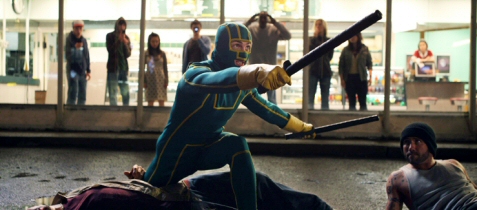
* Simon Abrams is right re: “Kick-Ass” doing a lot better than people assumed. Even though I cover the weekend grosses here, we all make way too much of those openings and fail to look at the overall picture. Calling a movie a bomb that makes nearly half its budget in its opening weekend is just idiotic anyhow. The actual success of the film may have figured in the ongoing financial struggles between Lionsgate and Carl Icahn.

Aaron Johnson is

Continue reading »

Weekend box office: “The Expendables” hold their ground, otherwise things pretty much “Suck”

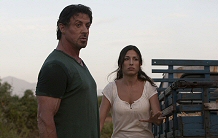
Sylvester Stallone in I guess all Americans should all be grateful to the very patriotic Sylvester Stallone and company for “The Expendables” for being #1 at the U.S. box office, even with a not-terribly leggy performance of $16.5 million in week 2, a 53% drop. That’s because him and his studly posse turned out to be only standing between us and the spectacle of “Vampires Suck” being the #1 movie in the U.S. of A.

Yes, I know I never have, and probably never will, see more than a minute or two of the parody. However, a very tiny minority of films and filmmakers are so bad and so devoid of even the minimum level of dramatic/comedic acumen that a minute or two is really all you need to see and, from its titles to its sub-idiot-mentality trailer, this is one of those rare films, unless my cine-spider senses totally have failed me.

Yet, the PG-13 “Twilight Saga” spoof, so rated because, if you’re over 13, you should be too old to find anything in its trailer remotely funny, did far better than it surely deserved. It seems the Twi-hards really wanted a spoof movie to call their own, so many went and the film earned an estimated $12.2 million, just barely edging out the roughly $12 million second weekend of “Eat, Pray, Love.” Somebody really blew an opportunity a few years back to rush a quickie adaptation of the Harvard Lampoon’s legendary “Bored of the Rings.”

Overall, this  weekend should be familiar to we Democrats in that it was a real circular firing squad, with too many new movies competing for attention and, I suspect, sort of canceling each other out. Nobody really did that well though some did better than you might assume.

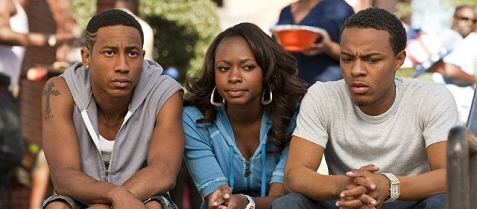
The so-called “urban demos” appeared to turn out for the comedy “Lottery Ticket” which netted an estimated $11.1 million. Not at all bad considering it’s thrifty $17 million budget.

Lottery Ticket

As for nerd male demos, “Piranha 3D” fell squarely into an amount I’m going to just go ahead and name the “geek zone” with an estimated $10 million despite the boost from 3D ticket prices. Despite lots of gore, I’m guessing the movie just didn’t seem scary enough for today’s trauma-loving hardcore horror fans and naked breasts are available in many venues these days. Even so, since that movie cost $24 million, extremely modest especially considering the amount of effects involved, I wouldn’t rule out an even lower budget “Piranha 4D” or something. That might have been a disappointing number, nevertheless, but it still managed to beat two films some analysts apparently expected to do significantly better, the family comedy “Nanny McPhee Returns” and the relationship comedy, “The Switch.”

I’m running short on time this week and there’s a lot more interesting stuff going on. So, I’ll simply refer you the source for my numbers this and most weeks, the mighty Box Office Mojo weekly chart. Also, on the arthouse side, there was good news for the outstanding documentary “The Tillman Story” and liked-by-everyone-but-me folk tale “Get Low,” among many other interesting tidbits. For that, as always, I refer you to Indiewire’s detailed coverage.

“I’m Still Here” — the teaser trailer, the myth, the legend

If you follow movies at all, I don’t think there’ll be any way to avoid Casey Affleck‘s film about his friend and brother-in-law, Joaquin Phoenix. For starters, there’s the whole “is it live or is it Memorex” question of whether the film is a documentary about an actor going off his rocker or a mockumentary in which the actor endures humiliations and tortures that he’d have to be crazy to undergo if he were not, in fact, going off his rocker. And then there are the alleged scandals surrounding the making of the film, as if intended to create another circle of weirdness around this thing.

Okay, then, just watch the damn trailer

So, who’s the older gent with the deep voice talking there? Any ideas? He reminds me slightly of spoken word artists Joe Frank and Ken Nordine who are both old enough now that they’re voice could be that scratchy, but I don’t think he’s either one. Also, how long before this film plays on a double with Todd Haynes’  Bob Dylan anti-biopic,  “I’m Not There”? Everyone’s going to mix them up anyway.

TCA Press Tour, Summer 2010: Days 9 and 10

Although the TCA Press Tour actually ended on July 8th, there were so many things going on and so many different series and specials being covered that I simply didn’t have time to tackle them all while I was still out there. Plus, let’s be honest: once we get past the broadcast networks, do you really need full-fledged coverage on every single one of them?

Well, maybe you do…and if you do, then I’ll be glad to give it to you, since it’s never too late for a TCA member to delve back into the archives and produce the highlights of the tour’s various panels.

In the meantime, though, here’s a quick list of what was covered during the course of PBS’s two days of the tour, along with what the network itself has to say about the programs in question. If you want a straighter strain of dope on any of them, just say the word…

* American Experience: Freedom Riders:

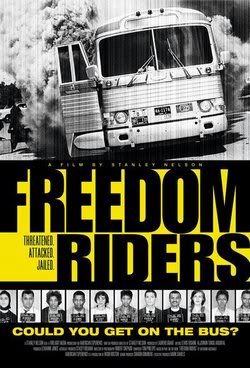
Award-winning filmmaker Stanley Nelson returns to the Sundance Film Festival with his latest documentary “Freedom Riders,” the powerful, harrowing and ultimately inspirational story of six months in 1961 that changed America forever. From May until November 1961, more than 400 black and white Americans risked their lives—and many endured savage beatings and imprisonment—for simply traveling together on buses and trains as they journeyed through the Deep South. Deliberately violating Jim Crow laws, the Freedom Riders’ belief in non-violent activism was sorely tested as mob violence and bitter racism greeted them along the way.

“Freedom Riders” features testimony from a fascinating cast of central characters: the Riders themselves, state and federal government officials, and journalists who witnessed the rides firsthand. Despite two earlier Supreme Court decisions that mandated the desegregation of interstate travel facilities, black Americans in 1961 continued to endure hostility and racism while traveling through the South. The newly inaugurated Kennedy administration, embroiled in the Cold War and worried about the nuclear threat, did little to address domestic Civil Rights. Organized by the Congress of Racial Equality (CORE), the self-proclaimed “Freedom Riders” came from all strata of American society—black and white, young and old, male and female, Northern and Southern. They embarked on the Rides knowing the danger but firmly committed to the ideals of non-violent protest, aware that their actions could provoke a savage response but willing to put their lives on the line for the cause of justice.
null

Each time the Freedom Rides met violence and the campaign seemed doomed, new ways were found to sustain and even expand the movement. After Klansmen in Alabama set fire to the original Freedom Ride bus, student activists from Nashville organized a ride of their own. “We were past fear. If we were going to die, we were gonna die, but we can’t stop,” recalls Rider Joan Trumpauer-Mulholland. “If one person falls, others take their place.” Later, Mississippi officials locked up more than 300 Riders in the notorious Parchman State Penitentiary. Rather than weaken the Riders’ resolve, the move only strengthened their determination. None of the obstacles placed in their path would weaken their commitment. The Riders’ journey was front-page news and the world was watching. After nearly five months of fighting, the federal government capitulated. On September 22, the Interstate Commerce Commission issued its order to end the segregation in bus and rail stations that had been in place for generations.

“This was the first unambiguous victory in the long history of the Civil Rights Movement. It finally said, ‘We can do this.’ And it raised expectations across the board for greater victories in the future,” says Arsenault.

“The people that took a seat on these buses, that went to jail in Jackson, that went to Parchman, they were never the same. We had moments there to learn, to teach each other the way of nonviolence, the way of love, the way of peace. The Freedom Ride created an unbelievable sense: Yes, we will make it. Yes, we will survive. And that nothing, but nothing, was going to stop this movement,” recalls Congressman John Lewis, one of the original Riders.

Says Stanley Nelson, “The lesson of the Freedom Rides is that great change can come from a few small steps taken by courageous people. And that sometimes to do any great thing, it’s important that we step out alone.” (Winter / Spring 2011)

* American Masters: LENNONYC:

This fall, as the world remembers John Lennon on what would have been his 70th birthday, and the 30th anniversary of his death, American Masters airs “LENNONYC,” a new film that takes an intimate look at the time Lennon, Yoko Ono and their son, Sean, spent living in New York City during the 1970s. “New York became a part of who John and I were,” said Ms. Ono. “We couldn’t have existed the same way anywhere else. We had a very special relationship with the city, which is why I continue to make this my home, and I think this film captures what that time was like for us very movingly.”
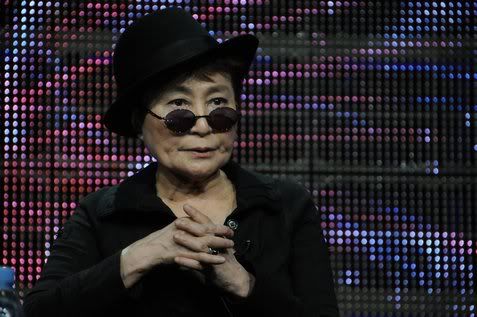
Following the breakup of the Beatles, Lennon and Ono moved to New York City in 1971, where Lennon sought to escape the mayhem of the Beatles era and focus on his family and private life. At the same time, he created some of the most acclaimed songs and albums of his career, most of them written at his apartment at The Dakota on Manhattan’s Upper West Side, including “Mind Games,” “Whatever Gets You Thru the Night,” “I’m Losing You,” and “Woman.” He also remained highly active in the anti-war movement as well as numerous other progressive political causes. As much as New York made an impact on Lennon and Ono by offering them an oasis of personal and creative freedom, so too did they shape the city. At a time when New York faced record high crime, economic fallout and seemed to be on the verge of collapse, Lennon and Ono became a beloved fixture in neighborhood restaurants, at Central Park, at sports events and at political demonstrations.

Lennon and Ono also bonded with millions of their fellow New Yorkers in their experience as immigrants. The film traces their struggle to remain in the U.S. when the Nixon administration sought to deport them, supposedly based on a narcotics violation, but which Lennon insisted was in response to his anti-war activities. “LENNONYC” features never-before heard studio recordings from the Double Fantasy sessions and never-before-seen outtakes from Lennon in concert and home movies that have only recently been transferred to video. It also features exclusive interviews with Ms. Ono, who cooperated extensively with the production and offers an unprecedented level of access, as well as with artists who worked closely with Lennon during this period, including Elton John and photographer Bob Gruen (who took the iconic photograph of Lennon in front of the skyline wearing a “New York City” t-shirt). (Nov. 22, 2010)

Continue reading »

« Older posts Newer posts »

© 2026 Premium Hollywood

Theme by Anders NorenUp ↑