Author: Jason Zingale (Page 23 of 154)

Lost 6.9 – Ab Aeterno

Is it just me, or was tonight’s episode completely underwhelming? The mystery behind Richard Alpert has been built up so much over the course of the last few seasons that I can’t help but feel like we were all expecting something more. It’s not that the episode was bad (Nestor Campbell delivered one helluva performance, and Titus Welliver was brilliant yet again as the Man in Black), but rather that when it ended, I didn’t have very much to say. And considering that we’re already midway through the final season, shouldn’t every episode be somewhat memorable?

It may have ended well – and really, that’s all anyone is going to remember when people gather around the water cooler to discuss the episode tomorrow – but the first half was dreadfully boring. Granted, we now know approximately how old Richard is, as well as where he comes from, but did they really need to spend so much time on the death of his wife, his inadvertent murder of the local doctor, and his eventual incarceration? Just get him to the damned island already, because while it may seem important that he got there by way of the Black Rock (and as a slave no less), none of it really matters once he meets Jacob and the Man in Black.

lost_6-9

Their feuding relationship is far more interesting than anything in Richard’s history, namely because the writers still haven’t given us a reason to believe that one is good and the other is evil. Obviously, the Man in Black is being set up to be the villain of the pair, but for someone who so desperately wants to get off the island, he sure has the patience of a saint. Okay, so maybe he doesn’t always tell the truth (I don’t believe for a second that Jacob is the Devil), but why didn’t he kill Richard along with the rest of the Black Rock survivors? It can’t be because Richard is a candidate, or Jacob wouldn’t have to worry about finding a successor. And if all the Man in Black wanted was someone to kill Jacob for him, couldn’t he have picked someone that was more likely to do the deed? (Like, say, that crazy officer who started stabbing all the slaves.)

Then again, maybe he just needs to prove to Jacob that Richard is capable of killing again. That’s certainly Jacob’s theory, who tells Richard that he brings people to the island to challenge the idea that it’s human nature to sin. But how does that make him any better than the Man in Black? He may not be asking anyone to kill for him, but he’s still interfering with their lives by dragging them to the island. The island, of course, isn’t Hell like Richard thinks. Instead, Jacob likens it to a cork on a wine bottle that acts as a barrier to Hell. So essentially, it’s like a Hellmouth, only instead of Sunnydale, it’s located in the middle of the Pacific Ocean.

All kidding aside, I think the island is like some sort of Purgatory. Not in the religious sense (that theory was debunked as far back as Season Two), but rather as a gateway between the two realities I’ve come to call Earth-1 and Earth-2. Prove yourself worthy of atonement and you’ll be rewarded by being sent to the reality where Oceanic Flight 815 doesn’t crash. Fail to repent for your sins, however, and you’ll be stuck on the island for eternity; or at least, until you can find a loophole of your own. I know it’s not a perfect theory, but it’s the best I’ve got.
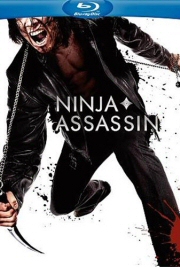
What Else Ya Got? “Ninja Assassin”

James McTeigue’s “Ninja Assassin” certainly has its share of problems (the acting is subpar and the script is even worse), but while it definitely chooses style over substance, that style features so many killer action sequences that it’s still worth checking out. The Blu-ray release smartly hews towards those strengths, resulting in a nice collection of bonus features that fans of the film will definitely appreciate.

The Myth and Legend of Ninjas

This 18-minute featurette delves into the history of the ninja, using interviews with real-life ninja masters to discuss how the warring states of Japan during the 16th century led to the demise of the ninja. There’s also a brief discussion about the various kinds of weapons used (some basic and some so specialized that only a certain clan was proficient in it), as well as how ninjas have become a pop cultural icon in comic books and movies over the last few decades. It’s not a particularly well-made special, but diehard martial arts buffs will enjoy it nonetheless.

The Extreme Sport of a Ninja

By far the best of the bunch, this stunt featurette offers a brief glimpse at the making of every major action sequence in the film. Though the stunt team consisted of the usual suspects, it’s also revealed that other likeminded athletes (like free runners and gymnasts) were also recruited and trained as stuntmen in order to provide the ninjas with a unique style. There’s so much raw awesomeness packed into this 10 minutes that by the time it’s over, there’s a good chance you’ll want to change career paths.

Training Rain

This featurette follows the grueling martial arts and body fitness training that Rain was put through in order to transform him from a Korean pop star into a super-ripped badass. The stunt guys have nothing but praise for the wannabe actor, admitting that his background in dance helped him pick up and memorize the complex fight choreography so quickly. The comparisons to Bruce Lee are mostly unwarranted, but it’s easy to see why these guys are so impressed.

Additional Scenes

You’re not really missing anything here, as most of the so-called deleted scenes are mostly just missing bits from events that still take place in the film. There’s a brief flashback to the ninja camp during the Laundromat scene, another where Raizo jacks a car, and two more involving the Europol characters getting chewed out by their respective bosses.

The story doesn’t really benefit from any of the additional material, so they were probably best left on the cutting room floor. The other extras, however, are all interesting in their own right, and they more than make up for a lack of an audio commentary or proper making-of featurette. The two-disc set also includes a digital copy of the film and a sneak peak at the upcoming “Clash of the Titans” movie. It might not be Warner Brother’s finest hour, but it’s certainly more than I would have expected from one of the studio’s less successful films of 2009.

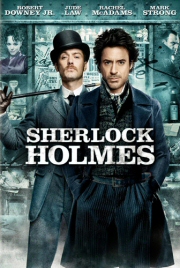
What Else Ya Got? “Sherlock Holmes”

When a movie makes as much money as “Sherlock Holmes” did at the box office (certainly not “Avatar”-sized numbers, but still respectable for its budget), you expect the studio to reward its audience with some cool DVD bonus features. Unfortunately, that isn’t the case here, as Warner Brothers has only included a 14-minute making-of featurette called “Sherlock Holmes: Revisited” that, although not as shallow as the typical EPK, doesn’t go into nearly enough detail for being the only extra on the disc.

Among the topics discussed include how this rendition of Holmes is actually closer to Arthur Conan Doyle’s original vision; Guy Ritchie’s originally plans to cast an actor in his late 20s to play the title character before meeting Robert Downey Jr.; and why Jude Law’s Watson is unlike any other we’ve seen before. In other words, it’s information that anyone following the film would have already read about, rendering the featurette fundamentally pointless. It’s a real shame, too, because there had to be some other bonus material (like bloopers or deleted scenes) sitting around in the vault that fans would have liked to have seen. Though the Blu-ray edition gets the added incentive of WB’s awesome Maximum Movie Mode, even that seems a bit light for such a major release. The history behind Holmes is simply too rich to receive such a lackluster treatment, and though I’ve never been a very big proponent of studio double dips, this time around, it’s almost necessary to make up for such a major blunder.

SXSW 2010: SATURDAY NIGHT

“Saturday Night Live” has been harshly criticized over the years for failing to deliver quality episodes each and every week, but have you ever stopped to think just how difficult that really is? In James Franco’s all-access documentary, “SATURDAY NIGHT,” audiences finally get a behind-the-scenes look at the arduous task of putting together a 90-minute live show. Capturing every step of the creative process – from the actors and writers pitching their ideas to the week’s host (in this case, John Malkovich) to putting on the final show – the film delivers an honest look at the high-stress, dog-eat-dog world of sketch comedy. With only 24 hours to conceive and write their sketches (and guys like Will Forte seemingly sleepwalking through most of it), it’s amazing that any of them can be funny at all. Perhaps more shocking, however, is that only nine of the 50 proposed ideas actually make it into the final show.

saturday_night

“SATURDAY NIGHT” focuses on just a handful of them, and it’s here that we see the evolution that each one goes through along the way, including rewrites and last-minute edits that come out of rehearsals. We also learn that while some sketches (like one lampooning the Empire Carpet commercials) bring down the house during the initial round of table reads, by the time it comes to performing it at dress rehearsal only hours before the live show, it falls flat with the audience, forcing the producers to pull it from the line-up. Franco gets some good interviews with the cast and crew, even putting himself on camera to discuss his own hosting experience, but he doesn’t really document anything that someone with the exact same access couldn’t do. “SATURDAY NIGHT” is still a fascinating study of a particular facet of the entertainment industry, and if there’s anything to take away from the documentary, it’s that these guys are only human. As one producer aptly declares when discussing future cast members: “If you’re a perfectionist, don’t come here, because nothing is ever perfect.”

SXSW 2010: Four Lions

Interested in testing the limits of the moviegoing public? Make a comedy about terrorism. At least, that’s what Christopher Morris has done with his feature film debut, “Four Lions,” a movie that will no doubt stir up controversy if it ever finds a distributor brave enough to release it in theaters. A pitch-black satire in the same vein as “Dr. Strangelove,” Morris has created a film so relevant to our current political climate that many will feel guilty just for watching it, let alone laughing at all the gut-wrenching humor along the way. For as risqué as the material may be, however, it’s impossible to deny that “Four Lions” is one of the funniest, most provocative comedies of the last decade – and one that has more to say than any of the numerous self-important war movies that Hollywood has been cranking out for years.

The film follows a group of wannabe suicide bombers from Britain who are so inept at being terrorists that they’re more dangerous to themselves than any potential target. Omar (Riz Ahmed) is the most level-headed of the bunch, but when he’s kicked out of an Al-Qaeda training camp in Pakistan because of his dim-witted friend, Waj (Kayvan Novak), they return home to find that their partners in crime, Fessal (Adeel Akhtar) and white Islamic convert Barry (Nigel Lindsay), have recruited a fifth member (Arsher Ali) to the cause. Desperate to save face, Omar informs the others that they’ve been ordered to blow themselves up at the London marathon.

four_lions

But for this team of bumbling idiots, that’s a lot harder than it sounds. When they’re not busy attaching bombs to crows, embarrassing themselves in jihad videos, or coming up with new methods of anti-surveillance, they’re bickering among themselves like old ladies. The power struggle between Omar and Barry provides the catalyst for most of these arguments, because while Barry might seem like the ideal person to be in charge, he has such radical ideas (like blowing up a mosque so that the peaceful Muslims rise up and join their fight) that it’s easy to see why he would fail as a leader.

The intensity of a character like Barry, however, is what ultimately makes “Four Lions” so successful, because Morris treats the material with such veracity that the jokes hit harder as a result. These guys might be complete imbeciles, but that doesn’t change the fact that they’ve managed to stockpile a dangerous amount of explosives capable of doing some serious damage. In fact, for all the comedy bred out of the film’s set-up, there are still quite a few unsettling moments scattered throughout, including a thrilling finale in the streets of London. Even more disturbing is the relationship between Omar and his family. His wife doesn’t only support what he’s doing, but seems to encourage it, while his son has become so familiar with the idea of jihad that his bedtime stories feature Simba and his fellow animal friends from “The Lion King” as suicide bombers.

It’s this kind of dark humor that makes “Four Lions” more of a tragicomedy than a satire, because even though the would-be terrorists can hardly be considered the heroes of the story, Morris makes them so likeable that you don’t want anything bad to happen to them. We know their intentions aren’t good, but because we’ve become so used to laughing at their blunders throughout the course of the film, we never really identify them as much of a threat. That’s mostly thanks to a brilliant script (co-written by Morris and two of the writers responsible for last year’s scathing political satire, “In the Loop”), which takes the buddy comedy formula and applies it to a hot-button topic with great aplomb. “Four Lions” may not be the first of its kind – Paul Weitz’s “American Dreamz” also flirted with the concept of mixing terrorism and comedy – but where that movie proved that no subject was taboo, Christopher Morris’ film demonstrates that sometimes it’s easier to get people to pay attention when you’re making them laugh.

« Older posts Newer posts »

© 2026 Premium Hollywood

Theme by Anders NorenUp ↑