Hugh Jackman showed off some impressive singing and dancing skills as he opened the 2009 Academy Awards. He also seems to have a decent sense of humor. It looks like he’ll be a great host tonight.
That said, they rolled out five actresses to introduce the Best Supporting Actress Award. Pretty boring so far. Is this what we’ll be seeing all night?
Like many fans of the movies, I grew up watching Siskel and Ebert each week. Friday was the tenth anniversary of Gene Siskel’s death, and Roger Ebert wrote a moving tribute remembering his former partner.
Gene died ten years ago on February 20, 1999. He is in my mind almost every day. I don’t want to rehearse the old stories about how we had a love/hate relationship, and how we dealt with television, and how we were both so scared the first time we went on Johnny Carson that, backstage, we couldn’t think of the name of a single movie, although that story is absolutely true. Those stories have been told. I want to write about our friendship. The public image was that we were in a state of permanent feud, but nothing we felt had anything to do with image. We both knew the buttons to push on the other one, and we both made little effort to hide our feelings, warm or cold. In 1977 we were on a talk show with Buddy Rogers, once Mary Pickford’s husband, and he said, “You guys have a sibling rivalry, but you both think you’re the older brother.”
Once Gene and I were involved in a joint appearance with another Chicago media couple, Steve Dahl and Garry Meier. It was a tribute to us or a tribute to them, I can’t remember. They were pioneers of free-form radio. Gene and I were known for our rages against each other, and Steve and Garry were remarkable for their accord. They gave us advice about how to work together as a successful team. The reason I remember that is because soon afterward Steve and Garry had an angry public falling-out that has lasted until this day.
Gene, Thea Flaum and I during an early taping
Gene and I would never, ever, have had that happen to us. Unthinkable. In my darkest and moodiest hours, when all my competitiveness and resentment and indignation were at a roiling boil, I never considered it. I know Gene never did either. We were linked in a bond beyond all disputing. “You may be an asshole,” Gene would say, “but you’re my asshole.” If we were fighting–get out of the room. But if we were teamed up against a common target, we were fatal. When we were on his show, Howard Stern never knew what hit him. He picked on one of us, and we were both at his throat. [see YouTube below]
We both thought of ourselves as full-service, one-stop film critics. We didn’t see why the other one was quite necessary. We had been linked in a Faustian television format that brought us success at the price of autonomy. No sooner had I expressed a verdict on a movie, my verdict, than here came Siskel with the arrogance to say I was wrong, or, for that matter, the condescension to agree with me. It really felt like that. It was not an act. When we disagreed, there was incredulity; when we agreed, there was a kind of relief. In the television biz, they talk about “chemistry.” Not a thought was given to our chemistry. We just had it, because from the day the Chicago Tribune made Gene its film critic, we were professional enemies. We never had a single meaningful conversation before we started to work on our TV program. Alone together in an elevator, we would study the numbers changing above the door.
Making this rivalry even worse was the tension of our early tapings. It would take eight hours to get one show in the can, with breaks for lunch, dinner and fights. I would break down, or he would break down, or one of us would do something different and throw the other off, or the accumulating angst would make our exchanges seem simply bizarre. There are many witnesses to the terror of those days. Only when we threw away our clipboards and 3×5 cards did we get anything done; we finally started ad-libbing and the show begin to work. We found we could tape a show in under an hour.
Movie buffs love predicting Oscar winners, but stats guru Nate Silver decided to look at hard data and trends to come up with his own predictions. Political junkies are familiar with Silver, as his blog became one of the top resources for interpreting polls and predicting election results in the last cycle.
After spending most of 2008 predicting the success of political actors—also called politicians—it’s only natural that Nate Silver (FiveThirtyEight.com) would turn his attention to the genuine article: the nominees in the major categories for the 81st Annual Academy Awards (Feb. 22 at 8 p.m. on ABC). Formally speaking, this required the use of statistical software and a process called logistic regression. Informally, it involved building a huge database of the past 30 years of Oscar history. Categories included genre, MPAA classification, the release date, opening-weekend box office (adjusted for inflation), and whether the film won any other awards. We also looked at whether being nominated in one category predicts success in another. For example, is someone more likely to win Best Actress if her film has also been nominated for Best Picture? (Yes!) But the greatest predictor (80 percent of what you need to know) is other awards earned that year, particularly from peers (the Directors Guild Awards, for instance, reliably foretells Best Picture). Genre matters a lot (the Academy has an aversion to comedy); MPAA and release date don’t at all. A film’s average user rating on IMDb (the Internet Movie Database) is sometimes a predictor of success; box grosses rarely are. And, as in Washington, politics matter, in ways foreseeable and not. Below, Silver’s results, including one upset we never would have anticipated.
Check out the article for his predictions. There aren’t many surprises, but it’s interesting to see the probability percentages he allocates to each category.
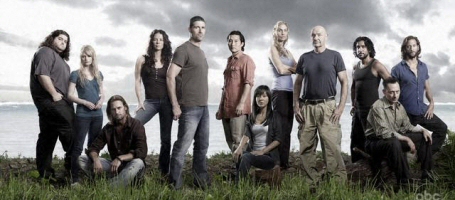
Lost, Saturday Night Live and Grey’s Anatomy were December’s three most popular entertainment TV programs streamed from tagged network websites and embedded network video players, according to VideoCensus data from Nielsen Online (via MarketingCharts).
In its first public release of ratings for online individual TV programs, Nielsen reported that ABC.com’s Lost had 1.4 million unique viewers in December — the most among streamed online broadcast TV network entertainment programs. NBC.com’s Saturday Night Live was a close second, with 1.1 million unique viewers, followed by ABC.com’s Grey’s Anatomy with 879,000 unique viewers in December.
The network websites included were from broadcast networks that had tagged their online offerings: ABC.com, CBS Television, CWTV.com, FOX Broadcasting, and NBC.com. The rankings exclude Hulu, which currently does not report VideoCensus data at the program level.Rankings include unique viewers who viewed a full episode, part of an episode or a program clip during the month.
“As I see it, the broad diversity of top television network entertainment programs online suggests that there is more to online viewership than a simple extension of the TV audience,” said Jon Gibs, VP of media analytics, Nielsen Online. “While the online popularity of some shows, like Grey’s Anatomy suggests that some people are using the internet to catch up on programs they usually watch on TV, the online popularity of other programs like Saturday Night Live, indicates that there is a web audience that might otherwise not watch these programs at all. These viewers are driven by a morning-after water-cooler effect.”
Nielson’s reports are incomplete until they start including numbers from Hulu as well, and we also need information about how these numbers stack up against popular online video sites.
It would have been interesting to see numbers from Novemeber and October, as “SNL” surely led the way with its political coverage.
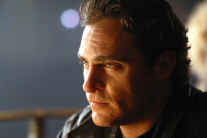
Joaquin Phoenix has created quite a stir with his bizzare appearance on the David Letterman Show last week. Was this real? Is he really quitting acting to pursue a career as a rapper, or might this be an elaborate hoax?
Chris Willman offers some interesting observations about Phoenix and the rumored hoax.
What to make, then, of the grainy video footage of this erstwhile perfectionist stumbling around on stage in Las Vegas, kicking off his supposed new career as a rapper? Of the announcement that he was retiring from movies to achieve new levels of excellence in his true calling, hip-hop? The documentary cameras tracking his every suddenly awkward move? Even if Phoenix never previously seemed like Mr. Levity, it seemed easy enough — to me, anyway — to write off his intentions to be the new Eminem (or Everlast) as a very elaborate gag. But after his appearance as a heavily bearded, disheveled catatonic on Letterman Wednesday night, which ended with the host invoking Farrah Fawcett as a comparatively more lucid guest, the stakes suddenly got higher. Columnists and bloggers predicted the end of Phoenix’s career, even if he should abandon hippity-hop and come crawling back to movies. Fans and detractors lamented his transformation from the potential Brando of his generation into the poster child for “just say no” (to drugs, Vanilla Ice, or both). Half the viewers thought the standoff with Dave was hilarious, and half deeply sad, but in either case, most figured the laughs or tears were on Phoenix.
Which makes this potentially one of the greatest performances any modern actor has ever given — or at least one of the most baldly courageous. The closest comparison would have to be Andy Kaufman’s utter commitment to his obnoxious Tony Clifton persona, but Phoenix is going Kaufman one braver here, by not slapping a fake name on the alter ego bur rather inviting the audience to mistake his damaged doppelganger for himself, over an indeterminate length of time that could leave his “real” career hanging in limbo. There is an end in sight: Phoenix’s pal Casey Affleck is shooting all this for what insiders presume is a mockumentary about the breakdown of a burned-out actor. The risk, of course, is how lame it might turn out to be if Phoenix and Affleck remove the masks and say “just kidding” when it’s time for their film to finally come out. My hunch is that if they’re taking it this far — and watching Letterman, it was clear that Phoenix is in deep, deep, deep cover — they might take it all the way into and past the premiere and continue insisting that Phoenix’s actorly dissolution was legit.

 Joaquin Phoenix has created quite a stir with his
