When it was first announced that “Doctor Who” was taking a break from normal seasons in 2009, I thought, “I can handle that – not a big deal.” After all, aside from the Fox TV movie with Paul McGann in 1996, I’d lived without new televised “Who” for 16 years before the show came back in ’05. Each new season since then has been like a little gift. Surely one year with “only” four specials would be a breeze? As 2009 droned on, however, it seemed an interminably long wait for new outings of the series, and it didn’t help matters that the one outing we did get – “Planet of the Dead” – was a subpar piece of storytelling at best. The other three specials are all finally being unveiled on BBC America in the last weeks of the year (actually, the big finale will play on the second day of 2010!). Anyway, this was my roundabout way of illustrating how much I’ve come to take the new series for granted, and thankfully “The Waters of Mars” is as strong a slice of “Who” as just about anything the series has done up to this point. It is, in fact, everything “Planet of the Dead” wasn’t, which may very well have been the point.
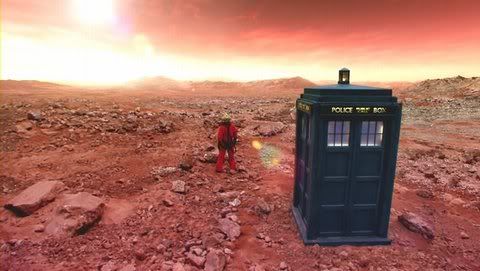
The Doctor (David Tennant), still traveling alone, lands on Mars in the year 2059. He trudges across the desolate, red landscape and bumps into a robot, called Gadget, that takes him to its leader on Bowie Base One, which is a clever enough joke – although one that’s a bit old hat for anyone who’s basked in the wonder that is “Life on Mars,” which coincidentally (or not) starred John Simm, who we’ll be seeing more of next week. Inside the base, the Time Lord meets the crew, led by Captain Adelaide Brooke (Lindsay Duncan), and quickly realizes who they are, and is as awestruck as any fanboy we’ve ever seen. Bowie Base One holds humanity’s first group of colonists on Mars, only the Doctor knows they all mysteriously died on the 21st of November, 2059. Guess what the date is? He quickly realizes that he should go, as this is an instance where he shouldn’t meddle with time. He sees it as a fixed point in the universe, and, as he explains later in the episode, “What happens here must always happen.” But events conspire to prevent his exit, and before long the crew begins succumbing to what ends up being a virus – it transforms them into hideous, zombie-type creatures, with cracked faces and the ability to use water as a deadly weapon. Only “Doctor Who” can find an inventive, frightening way to use water as a killer, and its ideas such as this that make the show the unique concept it is.
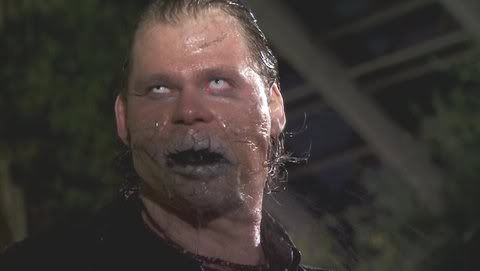
The episode efficiently speeds along: More people die, as more zombies are created. It’s in the water, you see, and even one drop has the power to affect mutation. The Doctor becomes closer to Adelaide, and he finds it increasingly difficult to leave the dire situation to the hands of fate. In one moment, after he’s nebulously explained to her the severity of the goings-on, she tells him a story from her childhood. The story takes place during the events of the Season Four two-part finale, when the Daleks had not only invaded Earth, but shifted it halfway across the universe as well. Adelaide was but a child, and her father told her to stay in her room, and then he left and she never saw either of her parents again. A Dalek appears in her window, hovering in the air like a ghostly harbinger of doom (because, after all, harbingers never seem to bring good news). The Dalek floats there, stares deep into the girl, and then simply goes away. She’s lived her whole life with the memory and believes that it was an indication that she was meant for something greater. The Doctor sees the story as further proof of his fixed point theory. She was indeed meant for something greater, and it’s her death on Mars that spurs on her granddaughter to carry on Adelaide’s vision, which in turn is of huge benefit to the human race. If Adelaide doesn’t die, none of this will happen. Finally, at about the 40-minute mark, in the midst of all hell breaking loose, the Doctor decides to take leave.

Once he does, the events on Bowie Base One shift into serious overdrive, and it all becomes a sort of mini-apocalypse, cross-cutting with the Doctor’s trek across the Martian landscape through the empty night. The further he moves, the darker the thoughts in his head become. Words he has spoken in the past come back to haunt him – stuff about the Time Lords and how he is the last one of his race. The words at one time had a sense of finality, but faced with an improbable predicament, and mixed with knowledge that the end is coming for the Tenth Doctor, he begins seeing them in a completely different light. He heads back to Bowie Base One to save the day.
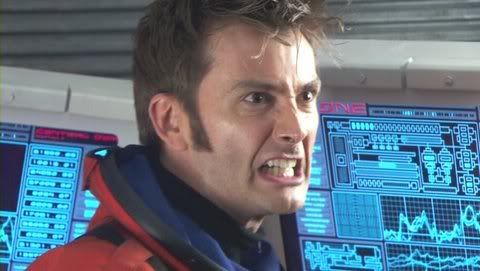
The Doctor: “There are laws – there are laws of time. And once upon a time there were people in charge of those laws, but they died. They all died. Do you know who that leaves? Me! It’s taken me all these years to realize the laws of time are mine, and they will obey me!”
Oh, man. There’s no way to accurately describe the way I felt while hearing Tennant deliver that speech for the first time. It was chilling, exciting, scary, hopeful, and dark all at the same moment. He’s become so accustomed to being the hero that he cannot let it, or his life, go. The Doctor (or rather Russell T. Davies and Phil Ford) rewrites everything he thought he knew in an instant. He has gone over the bend, and all has become madness. The show has most certainly flirted with his darker sides in the past, but he’s most always kept himself morally in check. Not so here. He’s playing God, and it’s not going to end well.
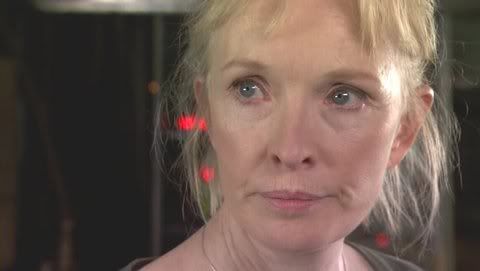
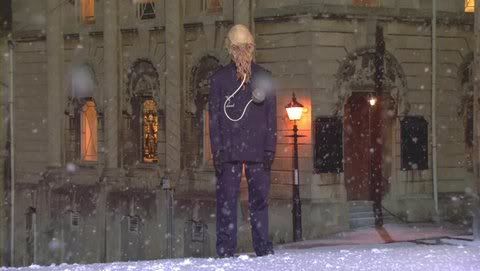
And it doesn’t. The Doctor uses the remote controlled Gadget to enter the TARDIS, and materialize it in the base. It’s something of a grand maneuver, because all too often when we watch “Doctor Who” we wish he’d just grab everyone, stick them in the TARDIS and go, and here he grants our wish by doing just that. Bowie Base One explodes behind them. The TARDIS materializes on Earth on the same day and time, in front of Adelaide’s home. She is aghast, as she had, in a very short amount of time, latched on to the idea that her death was imminent, and that she was dying for something greater, but now she’s very much alive and the threat is gone, and maybe the future as well. The Doctor beams. He’s gone against everything he believed in, and it seemingly worked. Adelaide is a smart woman, and even she realizes that what’s happened in just plain wrong. He doesn’t care. The timeline, in his mind, will work itself out regardless, and her granddaughter will find inspiration in another way. He says he’s thought of himself as a survivor (of the Time War) for all these years, but now he realizes that he was the victor, the “Time Lord Victorious.” The Tenth Doctor is often pompous, but there’s something about this particular casual disregard that’s more than a little unsettling. He wasn’t trying to save her life as much as he was trying to prove he could stave off his own death. Adelaide views him with disgust. She walks away, enters her home, and, right after the soundtrack subtly knocks four times, the sound of her gun goes off. She sacrifices herself for the greater good, which is something he’ll likely have to do shortly. The timeline is probably restored, but he still fucked things up royally, and maybe, with her blood on his hands, he realizes it. In the final moments, a vision of an Ood appears to him.
The Doctor: “I’ve gone too far. Is this it? My death? Is it time?”
The vision fades. He goes into the TARDIS, stands in front of the console as the Cloister Bell – another harbinger of doom – rings. He pulls the dematerialization lever and faintly says, “No.”
There’s so much to love about “The Waters of Mars.” It’s a deceptive piece, because for so much of the running time it feels like business as usual. We’ve seen this before, in fare such as “The Impossible Planet” and “42,” right? But the rug is so thoroughly pulled out from under in the last 20 minutes, as well as the definition of what Russell T. Davies’ vision of this series is about, that it becomes breathtaking, and future viewings of it will alleviate any kind of “been there, done that” vibe that may have been present on the first viewing. The implications of the third act inform everything that came before, and make the entire thing feel truly “special” (since this is a “special”). Lindsay Duncan fills the companion role with great ease and strength, and gives us something we’ve never seen before, which is the suicide of the Doctor’s closest confidant. That’s just freakin’ groundbreaking for this show.

The design of the hour is gorgeous, and it echoes “Silent Running,” which is punctuated by Gadget, who’s clearly a nod to Huey, Dewey and/or Louie, and, for the record, didn’t bother me in the slightest; in fact, I quite enjoyed the gimmick and the various ways it was used throughout. The monsters are completely effective, as are the various transformations throughout, each of which is given a different spin, which is no small triumph for a piece like this. The moment with the Dalek is a thing of beauty, and goes to show how powerful a concept the Daleks can be, when used in precisely the right way. They’ve never been used quite like this before, and probably never will be again – enjoy it while it’s there.
But the hour mostly belongs to Tennant. As the central character, he’s grasping at life, but it almost feels like, as an actor, he doesn’t want to let the role go. He is taking the Doctor into territories that the Doctor, onscreen, has never been taken over the course of 30 seasons! With any luck, this is just the tip of the iceberg, and I hope I’m back here next week with an equally enthusiastic review for “The End of Time: Part One.”
Lastly, allow me to talk about myself for a few sentences. I’ve been blogging the new series diligently since it first started. I rather haphazardly covered Season One at my own blog, The Rued Morgue. Then I covered the next three seasons far more thoroughly at The House Next Door, which is a fantastic blog, and I can only hope they’ll miss me the same way I’ll miss them (although I believe my position has already been filled), because this show is my TV passion. I decided to move my reviews over here to Premium Hollywood, because I do most of my writing here and at Bullz-Eye these days, so it seemed the sensible thing to do. Hopefully, if you’ve read this far, you’ll continue reading my “Who” breakdowns, which for the time being will only last three weeks. But come this spring, we’re going to get a whole new Doctor, and maybe even a whole new spin on “Who.” I’ll be here – hopefully you will, too.
_____________________________________________
NEXT WEEK: “The End of Time: Part One.” At the time of writing, I only know that there will be Ood and there will be the Master. There’ll probably be Bernard Cribbins’ Wilf and Catherine Tate’s Donna as well. Beyond that, your guess is as good as mine.
Classic Who DVD Recommendation of the Week: Well, with all the anticipation surrounding the imminent departure of Tennant’s Tenth Doctor, it seems unlikely that anyone will care about checking out some old “Who” at the present. Nevertheless, this is a staple of my “Who” reviews, so I’m recommending “The Deadly Assassin,” starring Tom Baker. It may just come in handy in the coming weeks.
(Thanks, as always, to Sonic Biro for the screencaps.)

